The 2027 Subaru WRX GD25 and BRZ ZC15 bring two different sports-car personalities into one anniversary celebration. Introduced at Boxerfest in York, Pennsylvania, they connect Subaru's American enthusiast community with a pair of distinctive production editions. Their names recall the original U.S.-market chassis codes and mark 25 years of WRX and 15 years of BRZ.
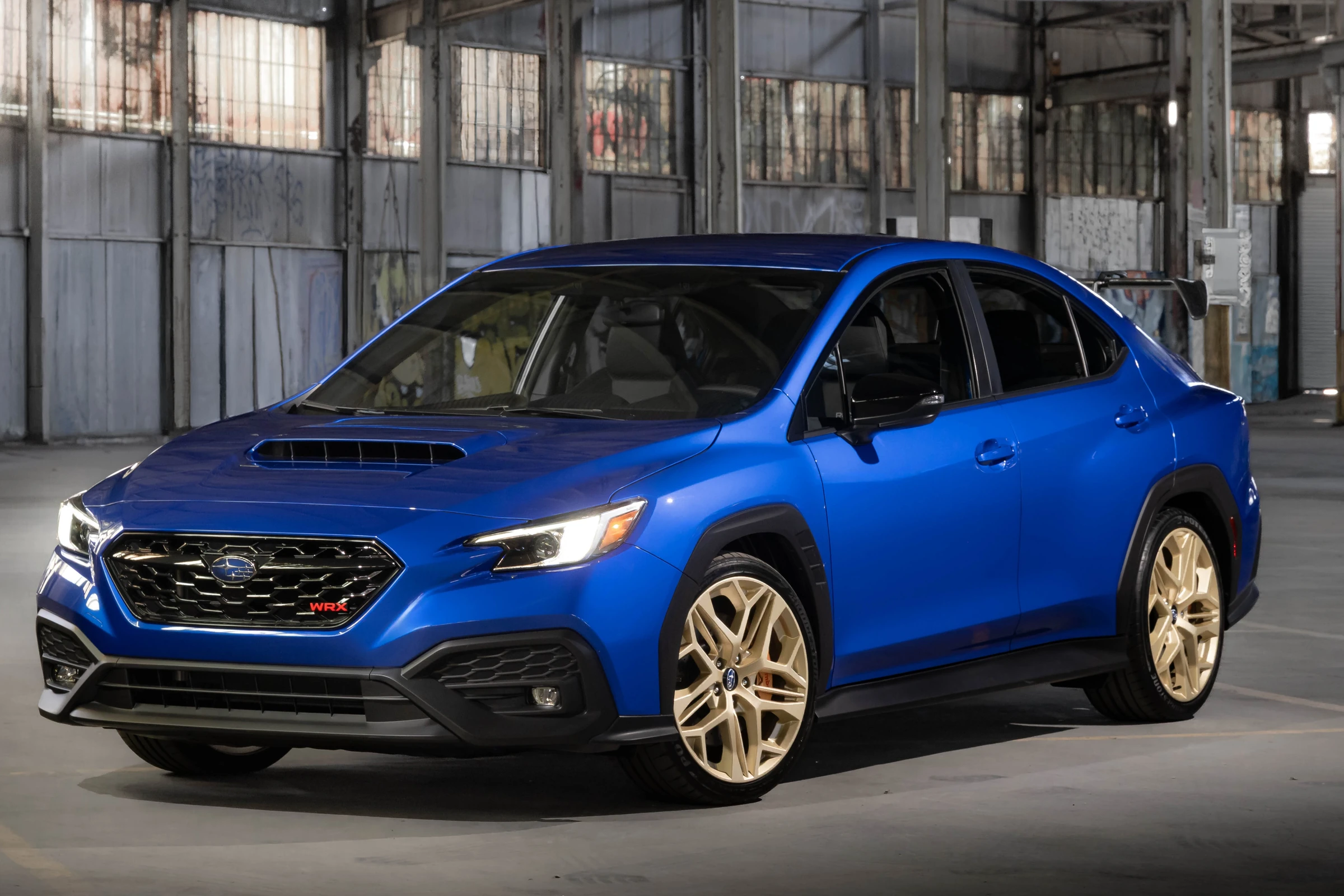
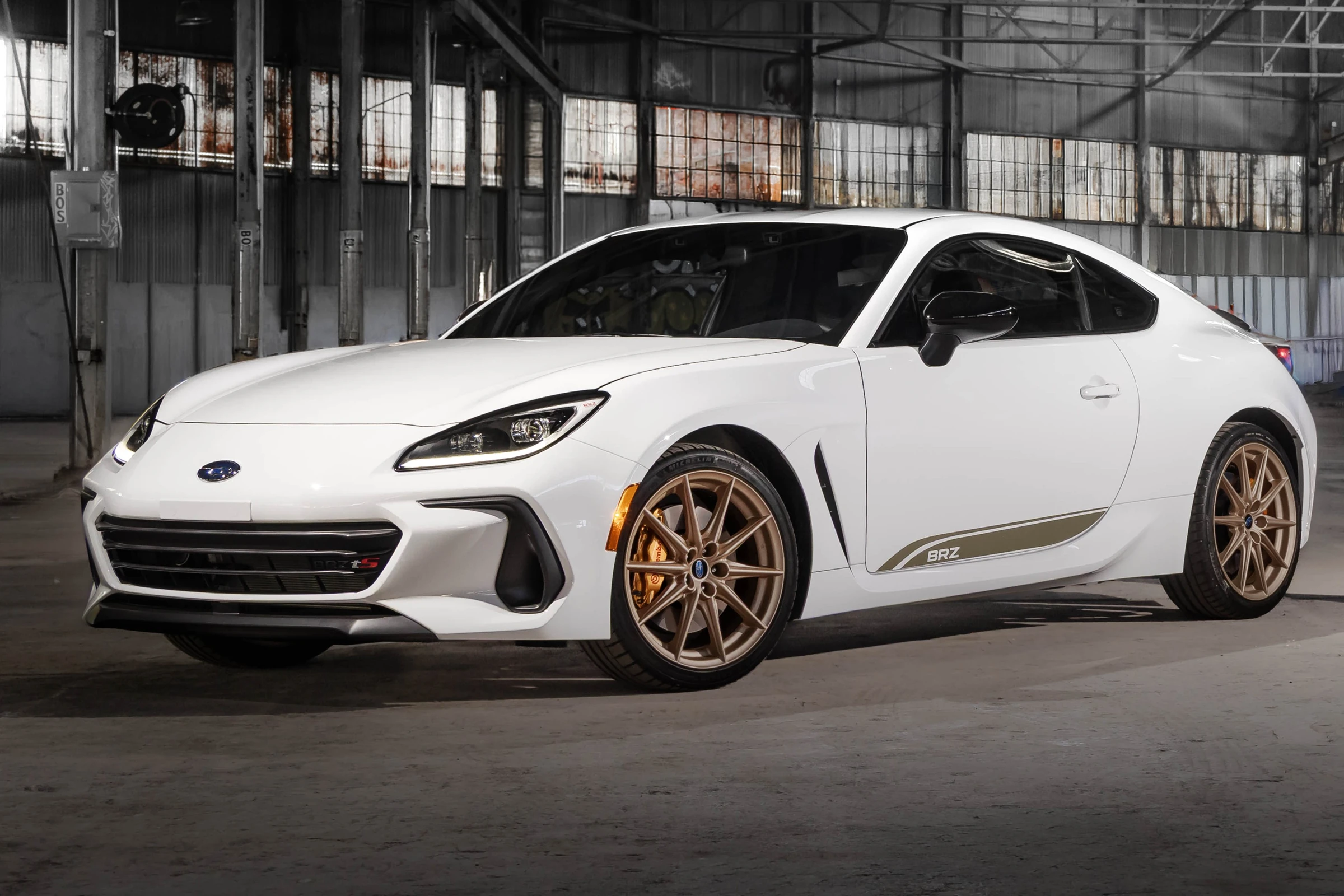
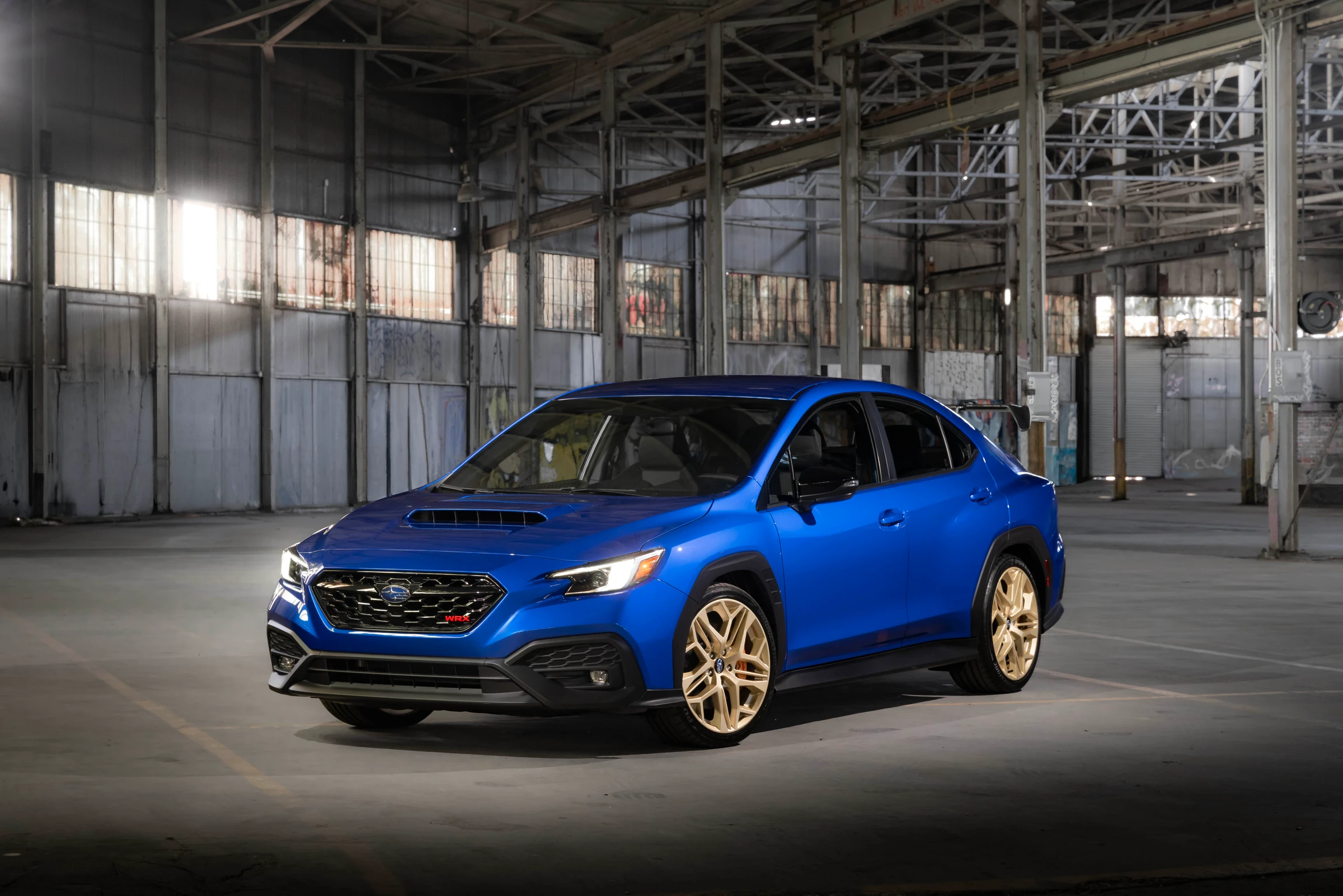
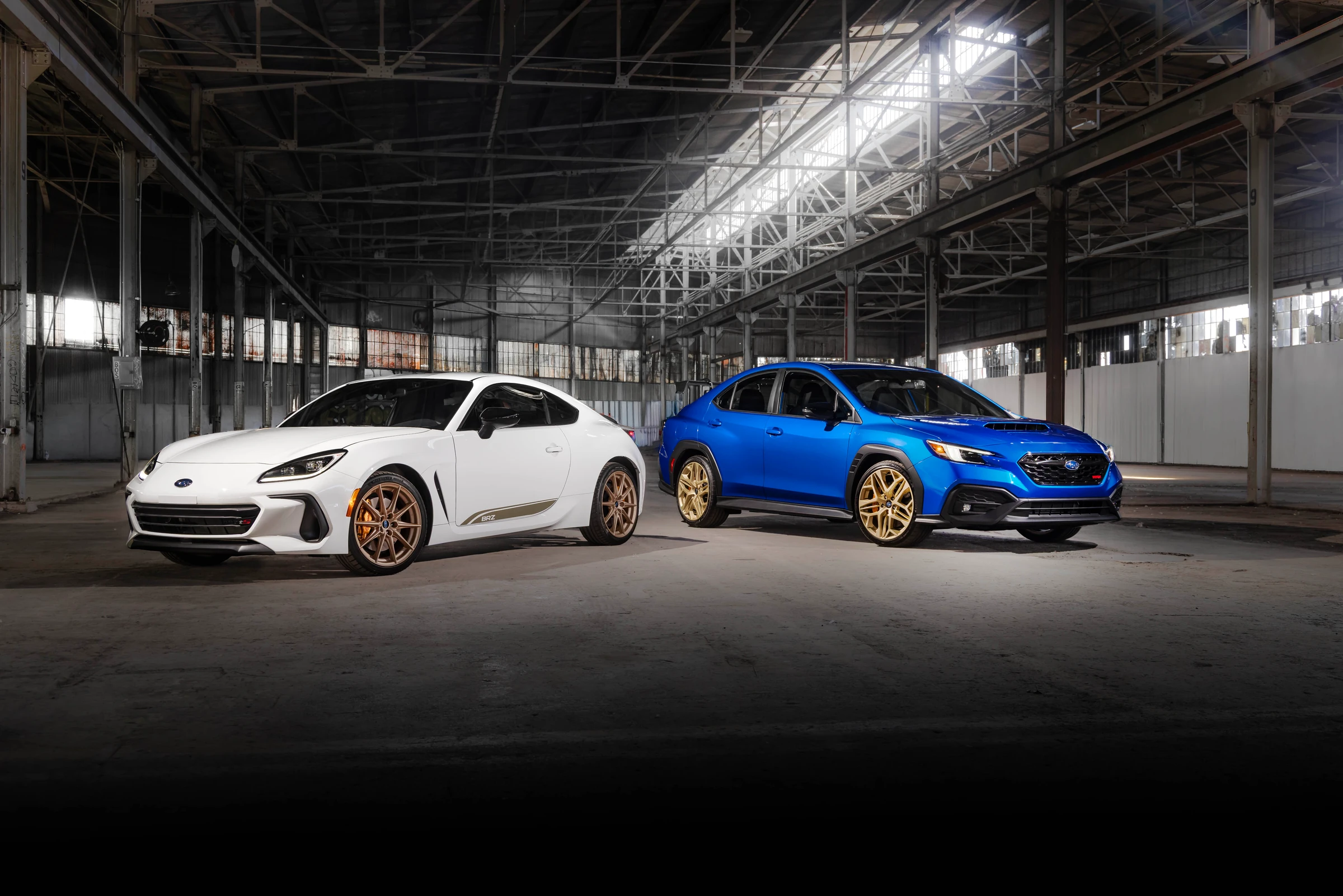
Seen together, the cars make an effective visual comparison. The blue sedan has a taller, more substantial outline and a conspicuous rear wing. The white coupe sits lower, with a flowing roof and a restrained rear spoiler. These photographs show why a shared badge and similar engine capacity do not necessarily produce the same kind of sports car.
WRX GD25: anniversary details
The GD25 combines World Rally Blue paint, gold 19-inch wheels and Brembo calipers, Potenza S007 tires, stiffer springs, revised damping and a flexible strut brace. Its STI carbon-fiber swan-neck wing is shared with the WRX ARA25L rally car. Recaro seats have black Ultrasuede and red stitching; the manual gearbox gains an STI short shifter.
That specification puts the emphasis on the chassis and the driver's contact points. A brake package, tires, suspension settings and seating can each influence how a car feels without changing its engine output. They also need to work together: a more aggressive tire alone cannot describe the balance of the finished car. Assessing the GD25's ride and handling will require time behind the wheel.
The underlying WRX format is a four-door sports sedan built around a turbocharged flat-four and Subaru's Symmetrical All-Wheel Drive. The established model combines passenger access with performance-oriented steering and suspension. This is useful context for the anniversary edition: its practical body shape remains central to its appeal, alongside the more expressive exterior hardware.
BRZ ZC15: a different interpretation
The ZC15 pairs Ceramic White with matte-bronze wheels, bronze side decals, Brembo brakes, a black spoiler and a flexible V-bar. Its leather-trimmed cabin adds Bordeaux inserts, an anniversary plaque and an STI aluminum-and-leather short shifter.
In the exterior photographs, the bronze accents give the pale bodywork a warmer contrast than a conventional white-and-black treatment. The side graphic draws attention along the lower body, while the wheel finish supplies a second point of color. It is a coherent visual theme that remains easy to recognize in a full-car photograph or a closer crop.
The BRZ's basic architecture takes another route to performance. Subaru's current coupe places its engine at the front and sends power to the rear wheels. The broader 2027 range uses a lightweight, rigid structure, a low center of gravity and a limited-slip rear differential. Its compact sports-car proportions are part of that identity, alongside steering and suspension designed around responsiveness.
Confirmed 2027 Subaru WRX GD25 and BRZ ZC15 specifications
| Specification | WRX GD25 | BRZ ZC15 |
|---|---|---|
| Body | Four-door sedan | Two-door coupe |
| Engine | 2.4-liter turbo boxer | 2.4-liter boxer |
| Power | 271 hp | 228 hp |
| Drive | All-wheel drive | Rear-wheel drive |
| Transmission | Six-speed manual | Six-speed manual |
| U.S. allocation | 350 cars | 300 cars |
| Expected arrival | Summer 2027 | Early 2027 |
What the boxer layout contributes
A boxer engine arranges its cylinders horizontally on opposite sides of the crankshaft. Its pistons move in opposing directions, giving the layout its familiar name. Compared with a more upright arrangement, the flat shape allows substantial engine mass to sit relatively low in the car. Subaru also describes the opposing movement as a way to reduce vibration.
Those characteristics help explain why the same broad engine layout can suit both a sports sedan and a compact coupe. Low placement is useful to chassis balance, but it does not determine the entire driving experience. The position of other major components, suspension geometry, tires and body structure still matter. Sharing a boxer layout is therefore a technical connection between the two cars, rather than a guarantee of identical responses.
All-wheel drive and rear-wheel drive
The choice of driven wheels is one of the clearest differences here. An all-wheel-drive system can distribute propulsion across both axles. A rear-wheel-drive layout sends propulsion to the back wheels while the front wheels steer. These arrangements give engineers different starting points when balancing traction, packaging and the way a vehicle responds to driver inputs.
For a reader comparing the cars, this distinction is more useful than ranking them by horsepower alone. Conditions, tire selection and the intended use of the car all affect the comparison. Neither an engine figure nor a drivetrain label can stand in for a complete road test. The likely attraction of each model follows from its overall format, not a single specification.
A shared focus on manual driving
The six-speed gearboxes make the driver's involvement a common theme. Choosing a gear, operating the clutch and coordinating a shift are separate actions that become part of the journey. For enthusiasts who enjoy that process, the transmission is a substantial part of the purchase decision, even before considering an anniversary badge or paint finish.
The practical choice starts with everyday needs. A sedan's additional doors may matter more to someone regularly carrying passengers. A buyer drawn to a coupe may prioritize its proportions and seating environment. A useful test drive should include ordinary roads and familiar routines, as well as an opportunity to explore the controls. These editions deserve to be evaluated as complete cars.
Availability and what remains to be announced
Subaru plans reservations during 2026. Pricing and further specifications will follow nearer launch.
A complete comparison should eventually cover the price premium, the included equipment and the specification of the delivered car. Wheel and tire costs, seat fit and the usefulness of the body style are also worth considering during ownership. For a car chosen partly for its distinctive appearance, seeing the paint and trim in person can be as informative as studying the headline engine numbers.
The launch details establish the identity of both editions, but a purchase comparison will become more complete once the final equipment lists and prices are available. For now, the strongest distinction is already visible: one celebrates Subaru's performance-sedan character, while the other gives its compact coupe an individual finish. The exterior gallery below combines the full scene with closer views of each car.
Exterior