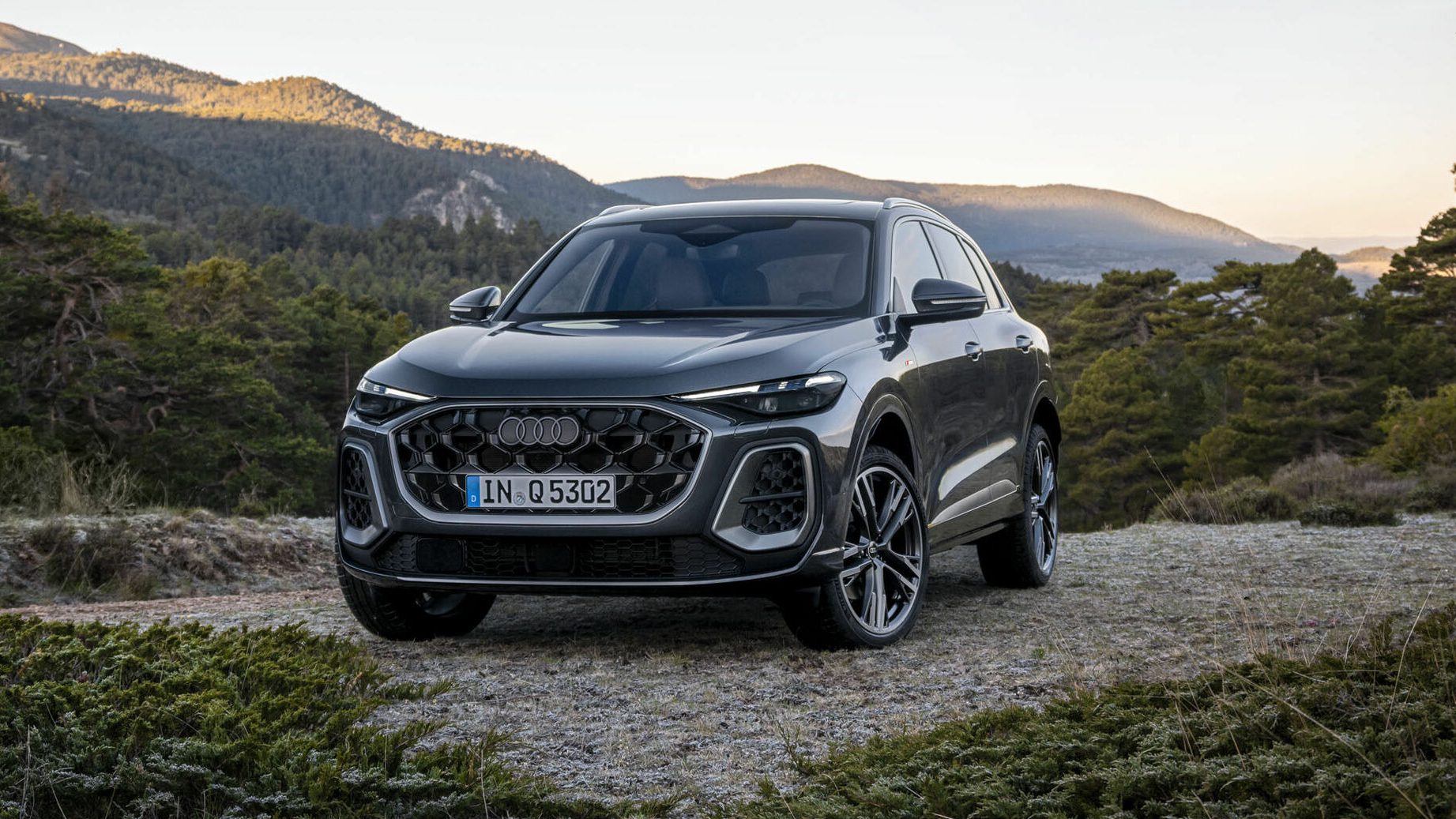
The third-generation Audi Q5 SUV is the core midsize SUV in Audi’s current combustion-engine range. It moves onto the Premium Platform Combustion (PPC), adds 48-volt MHEV plus technology across the launch powertrains, and introduces a much more digital cabin while keeping the upright, practical SUV body that has defined the Q5 since 2008.
The new generation is not simply a styling update. Audi changed the electronic architecture, infotainment system, chassis options, lighting technology and interior packaging, while also increasing the role of electrification around the combustion engine. The result is a Q5 designed to remain a long-distance family SUV rather than imitate a battery-electric model.
Key point
The Q5 SUV combines a 4,717 mm body, a 2,820 mm wheelbase, up to 1,473 litres of cargo space with the rear seats folded, MHEV plus assistance and Audi’s newest panoramic MMI display architecture.
Audi Q5 SUV at a glance
| Generation | Third generation |
| Platform | Premium Platform Combustion (PPC) |
| Length | 4,717 mm |
| Width | 1,900 mm; 2,155 mm including mirrors |
| Height | 1,647 mm |
| Wheelbase | 2,820 mm |
| Maximum cargo volume | Up to 1,473 litres with rear seats folded |
| Main display | 14.5-inch MMI touch display |
| Driver display | 11.9-inch Audi virtual cockpit |
| Passenger display | 10.9-inch optional |
| Wheel sizes | 17 to 21 inches, depending on version |
| Current combined fuel consumption | 7.9–5.9 l/100 km, model range figure |
Exterior design
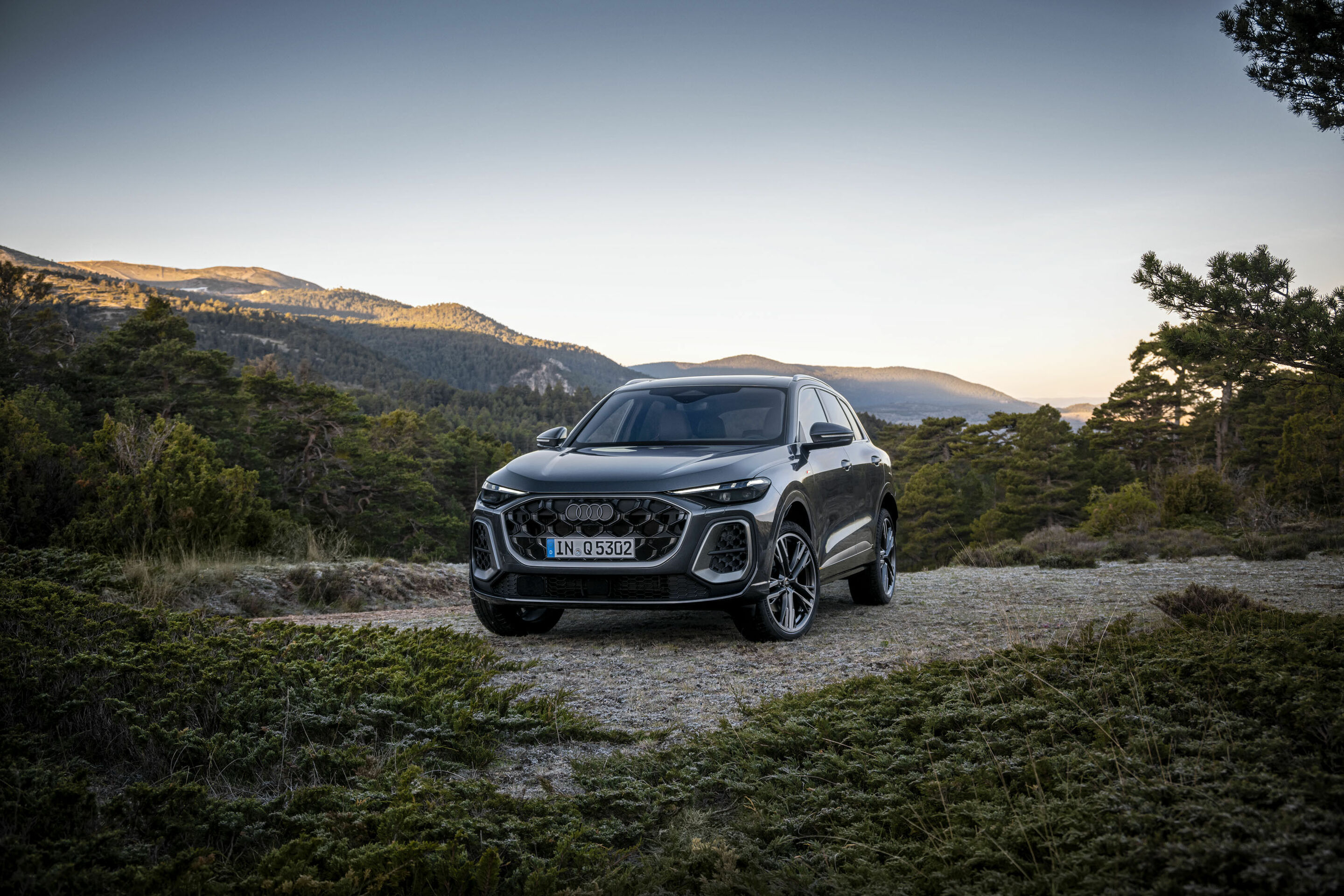
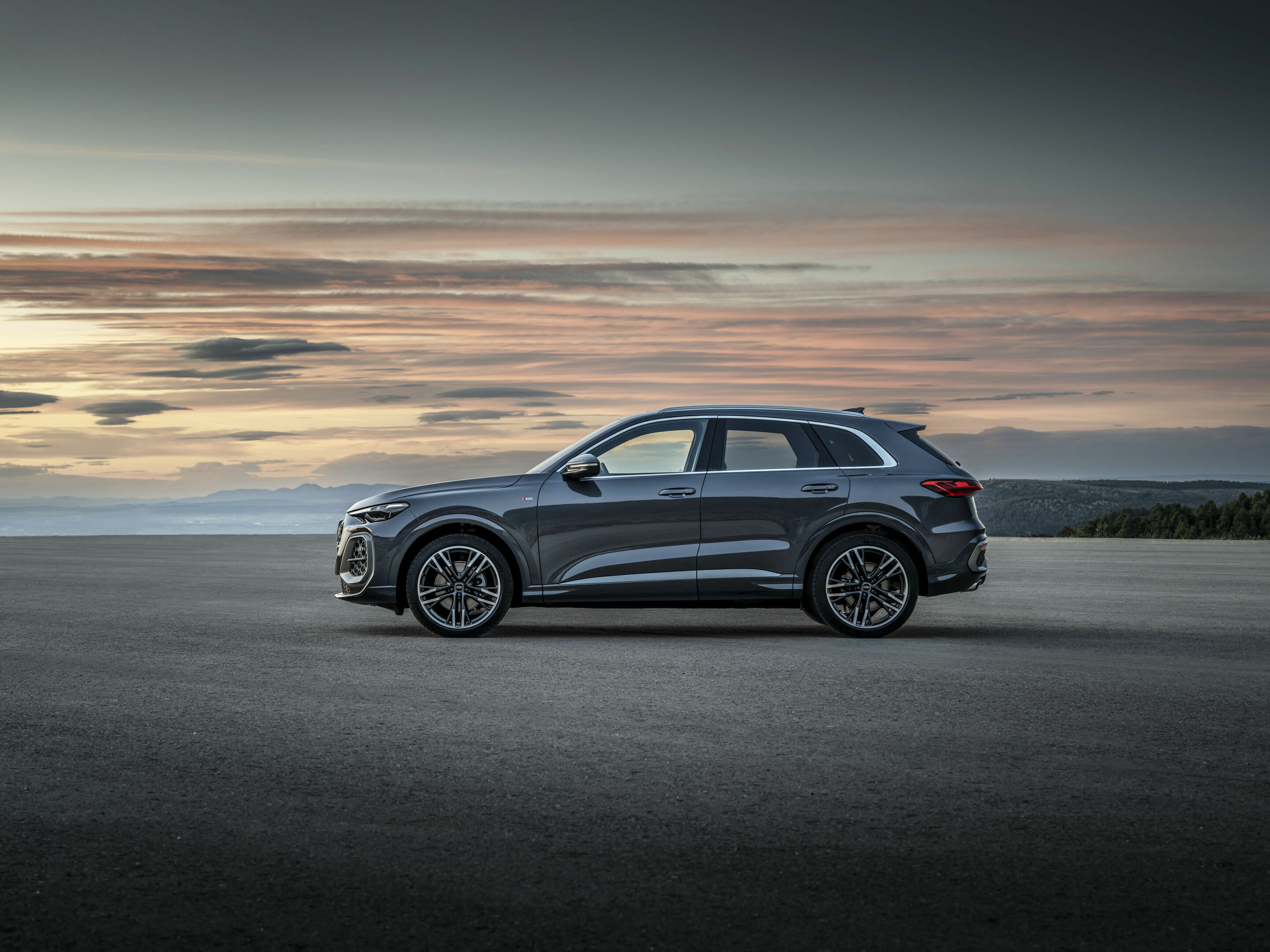
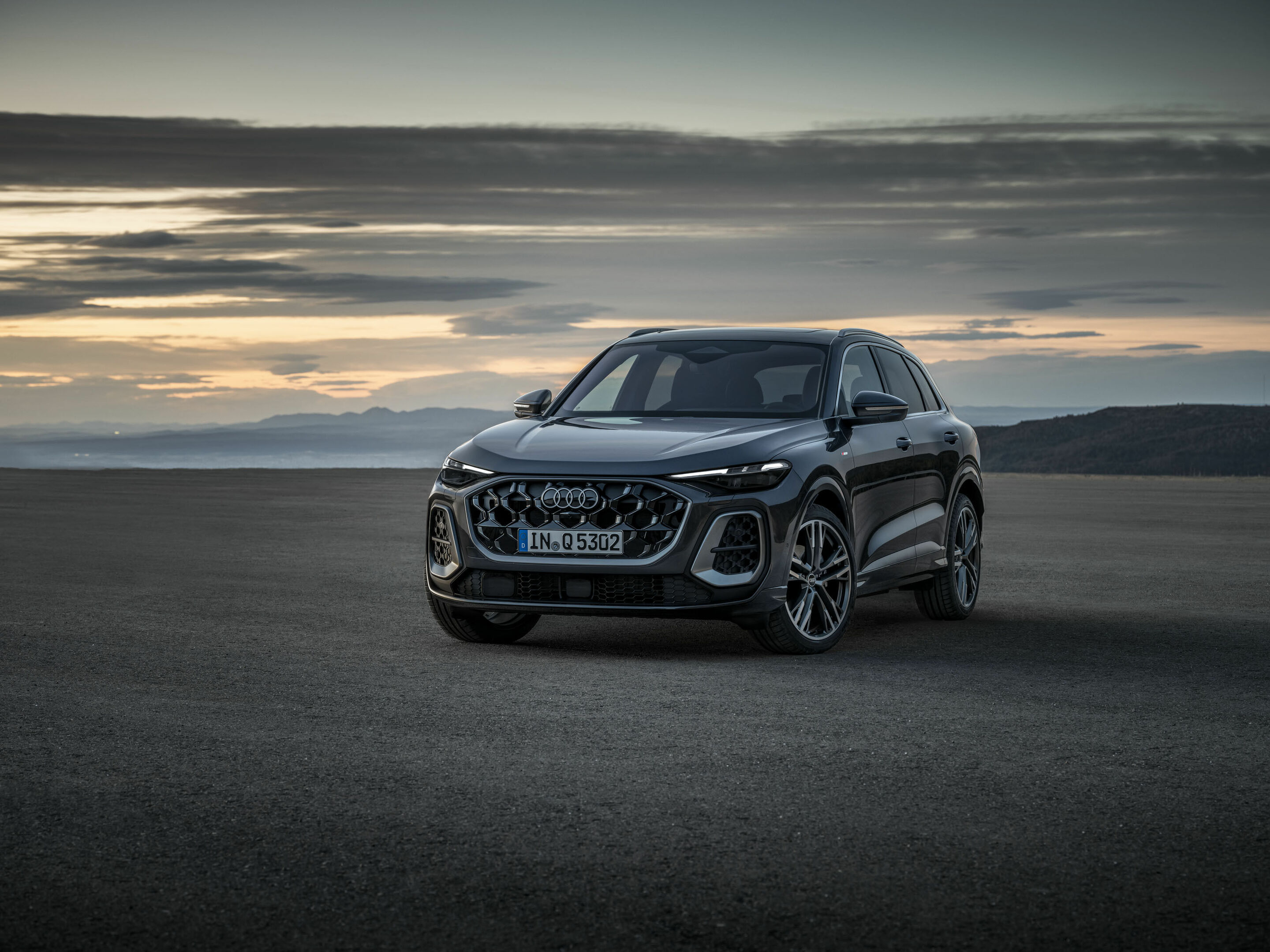
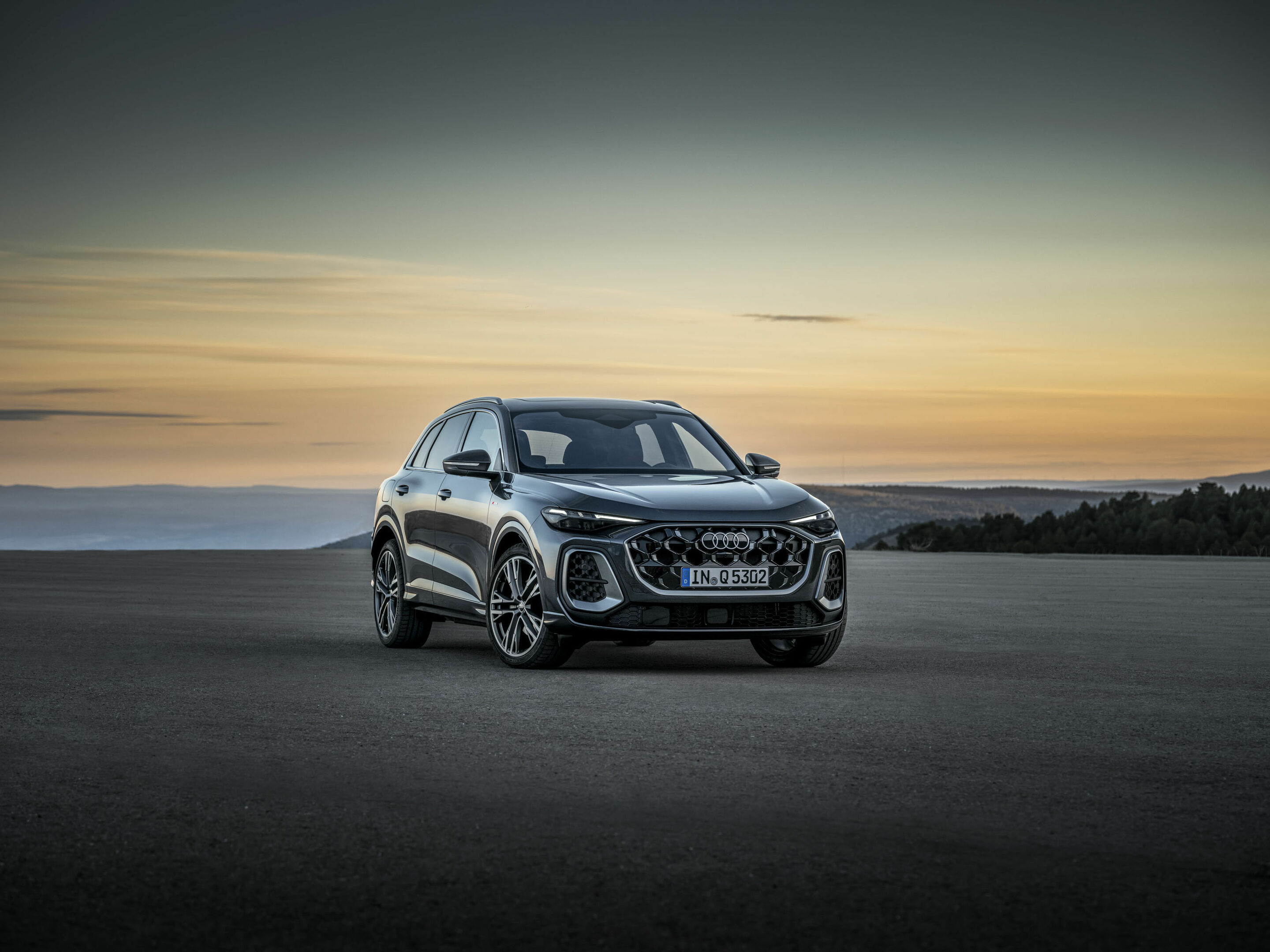
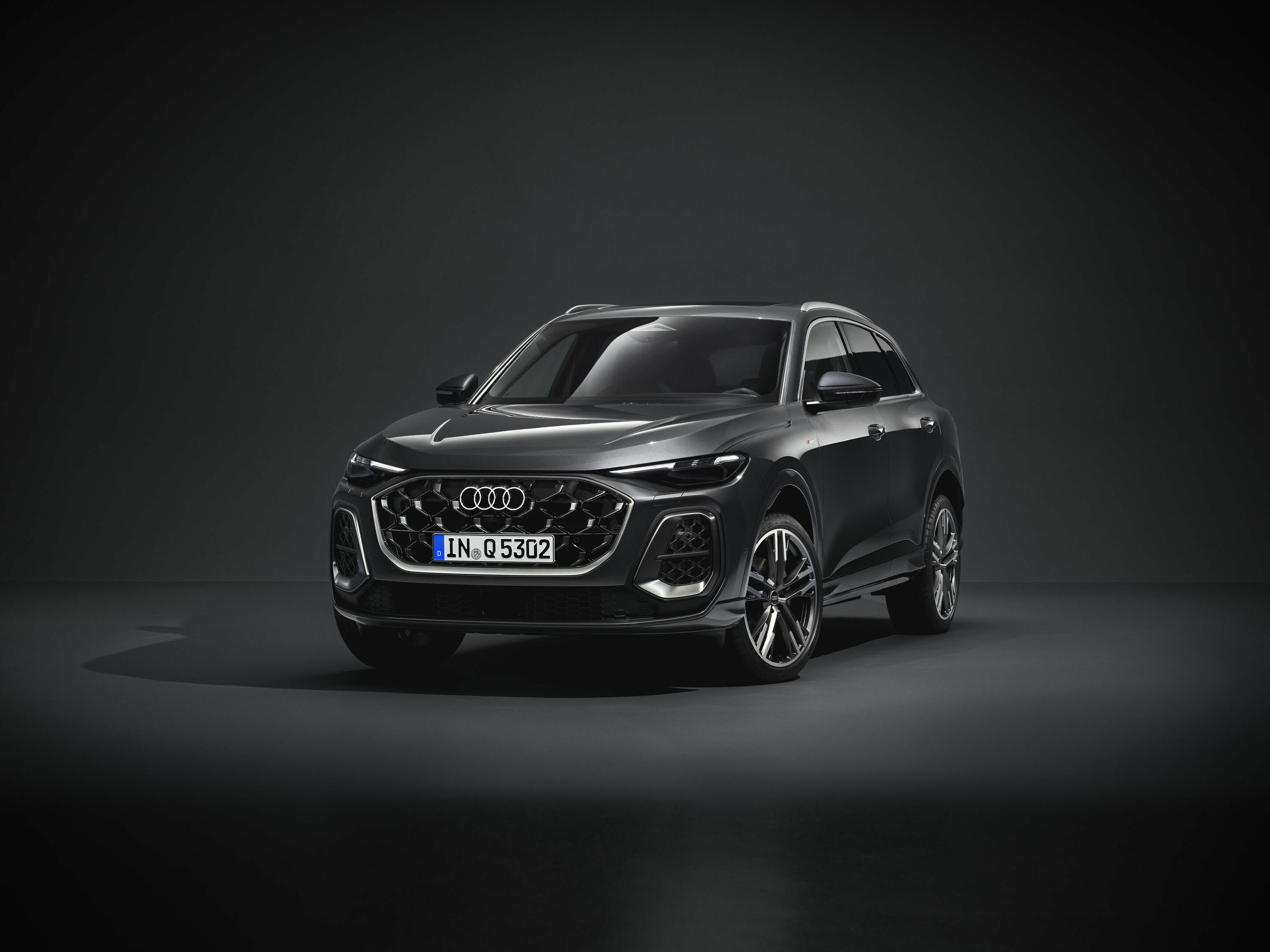
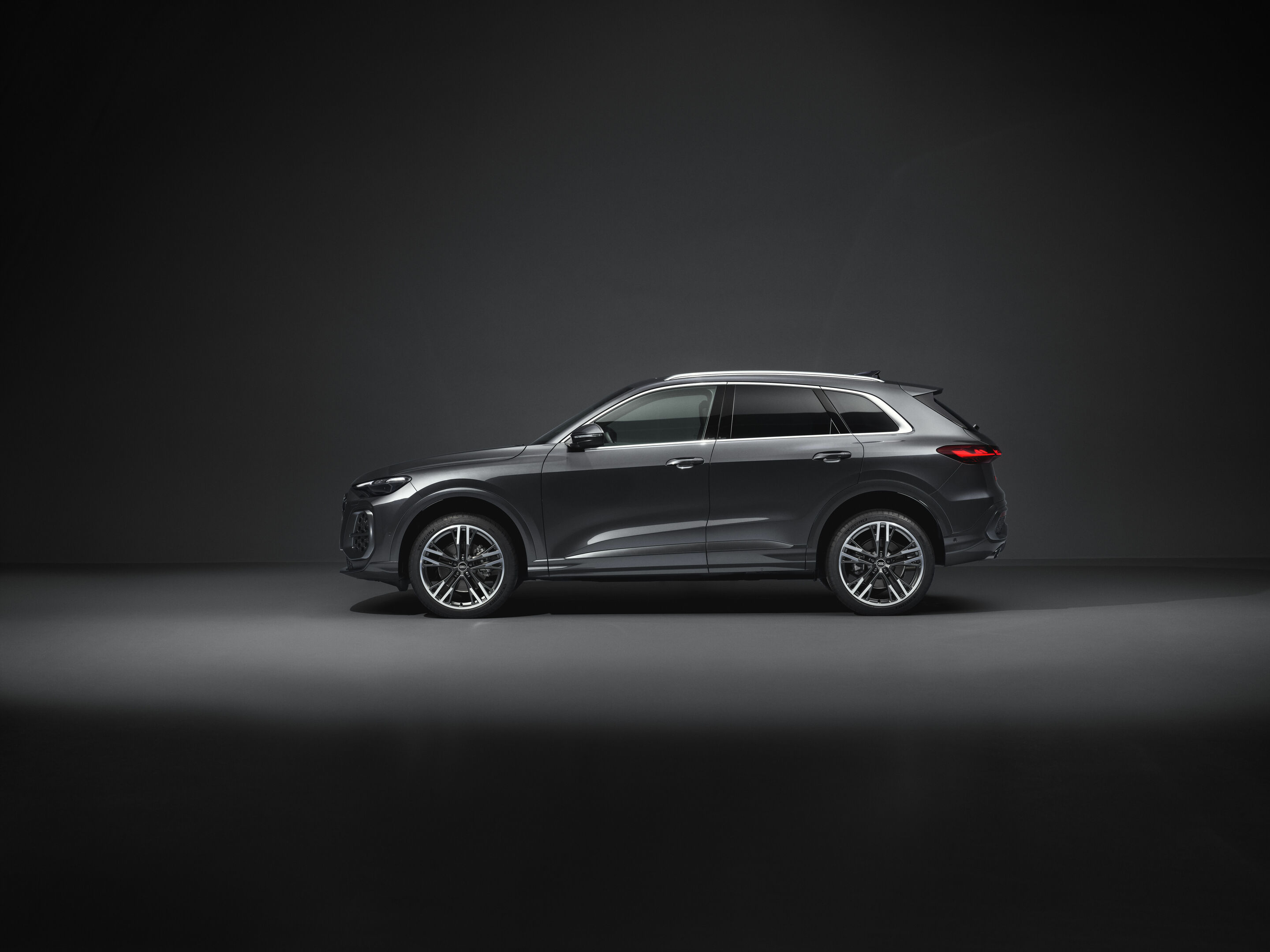
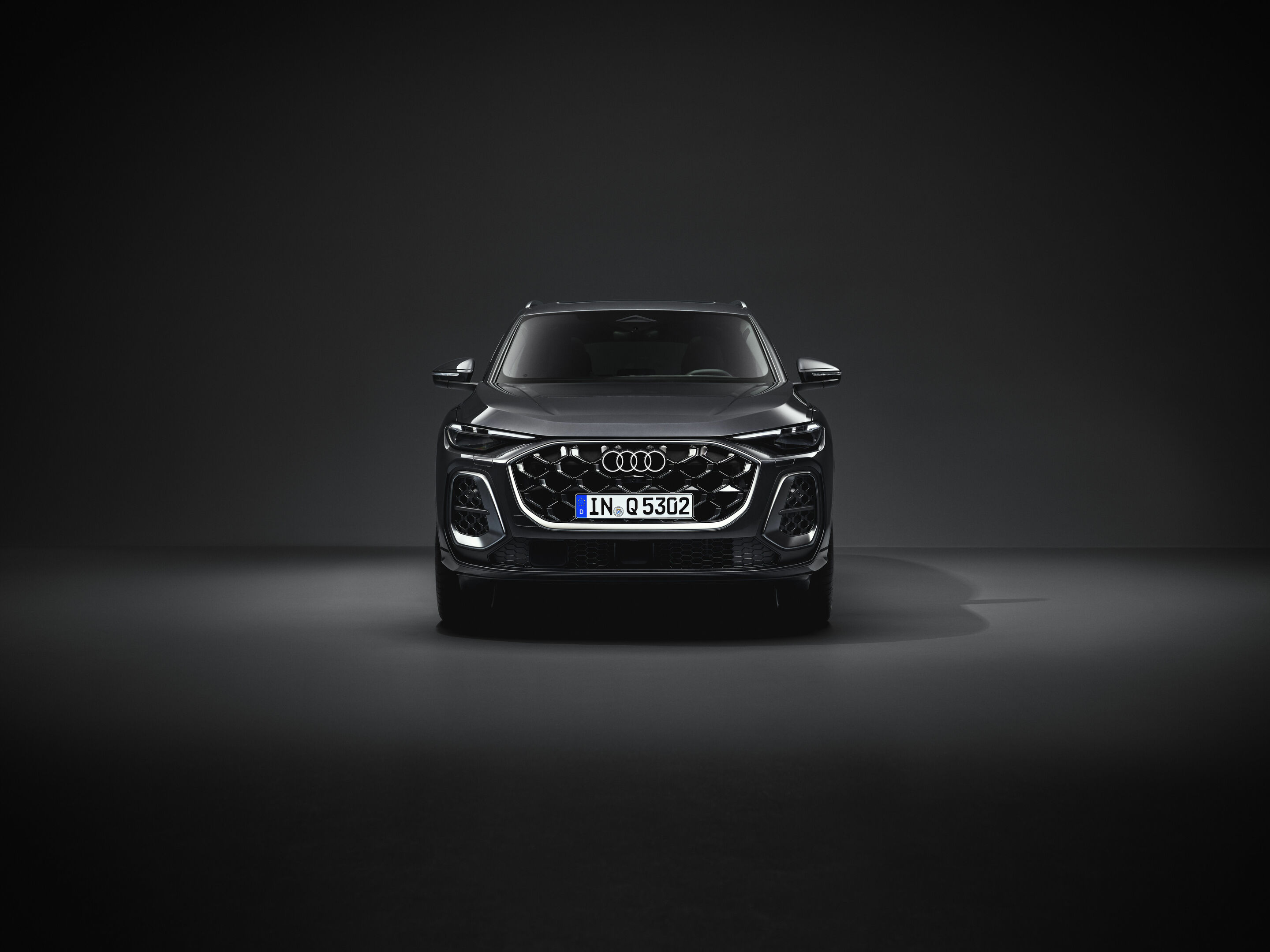
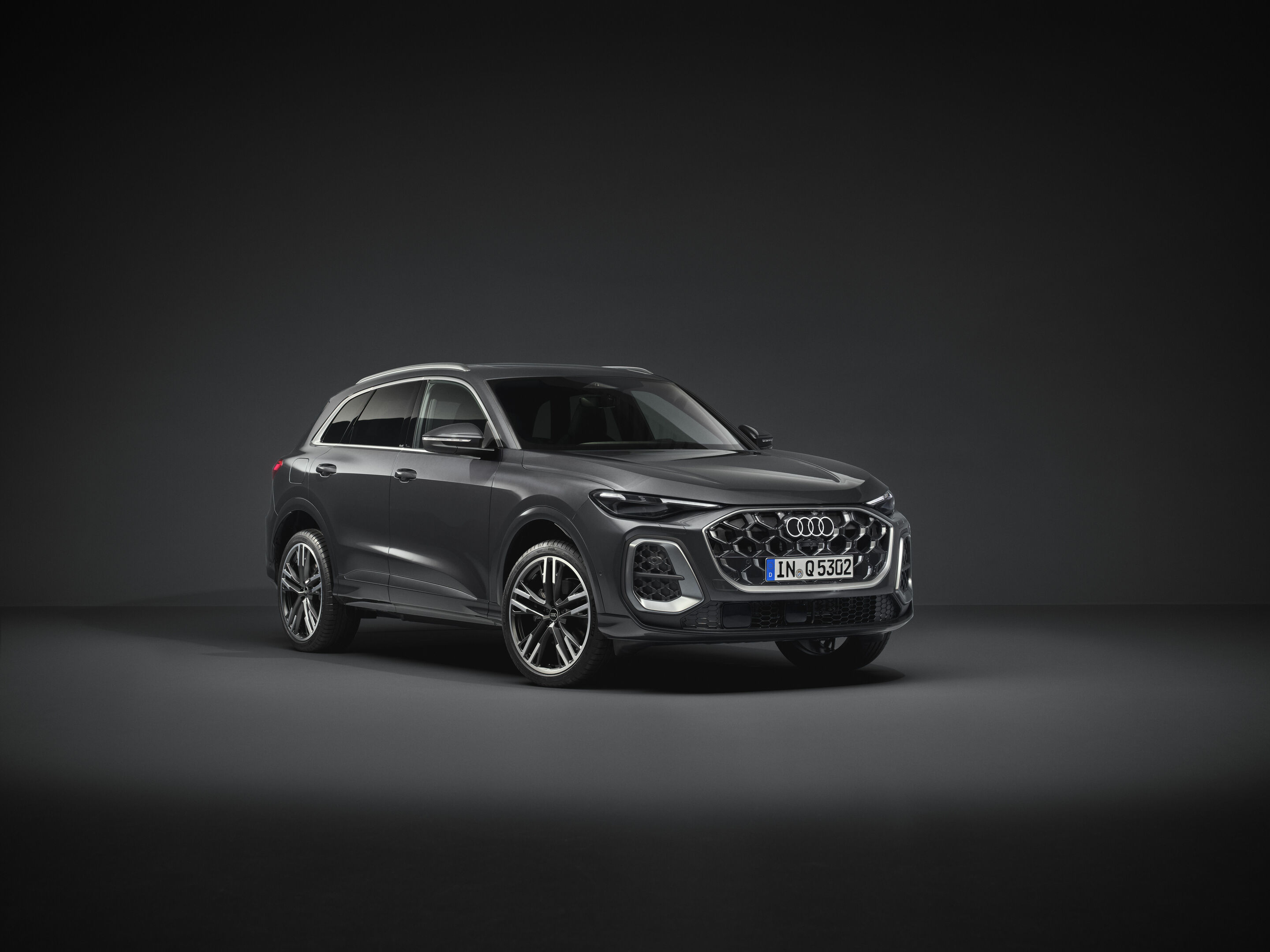
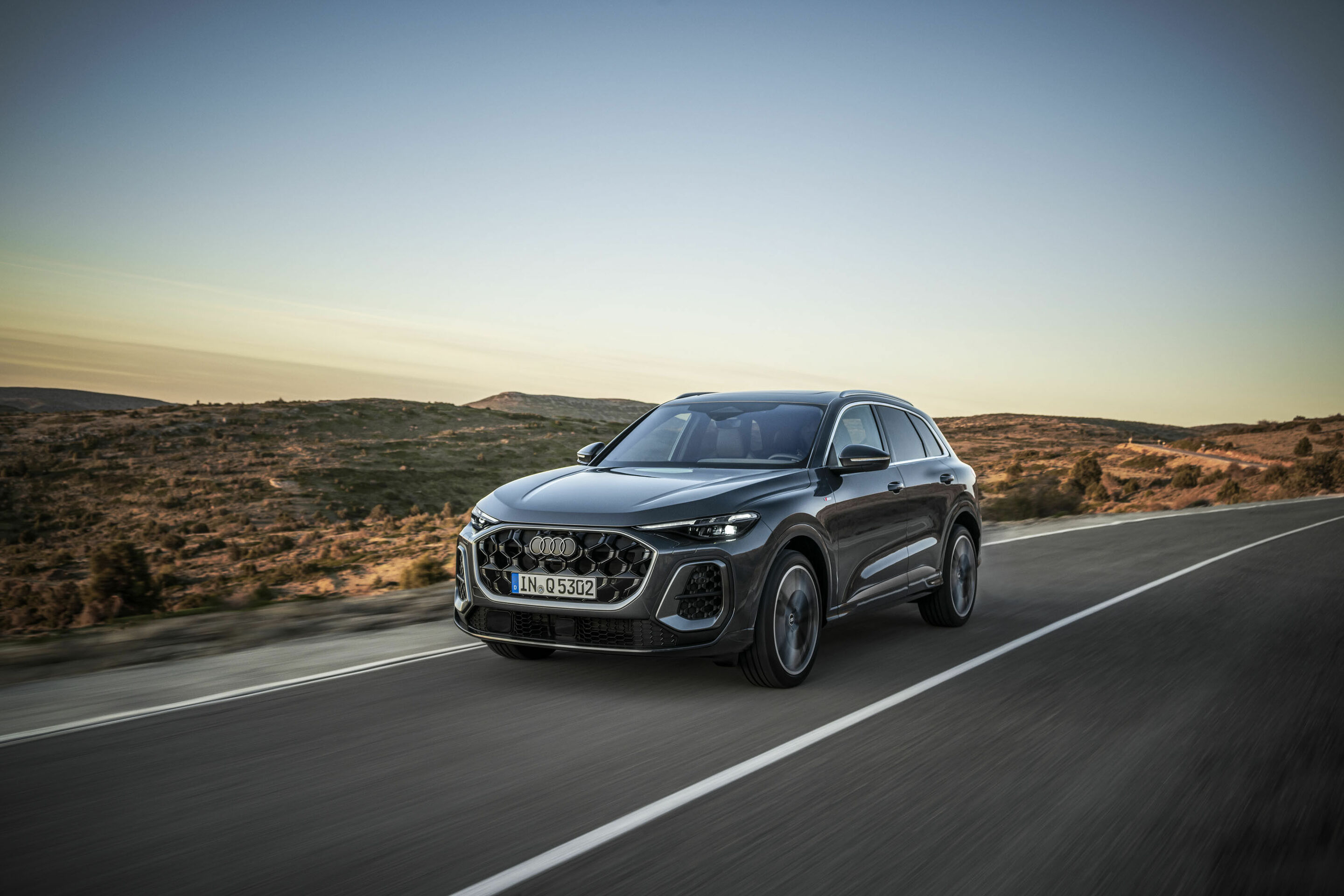
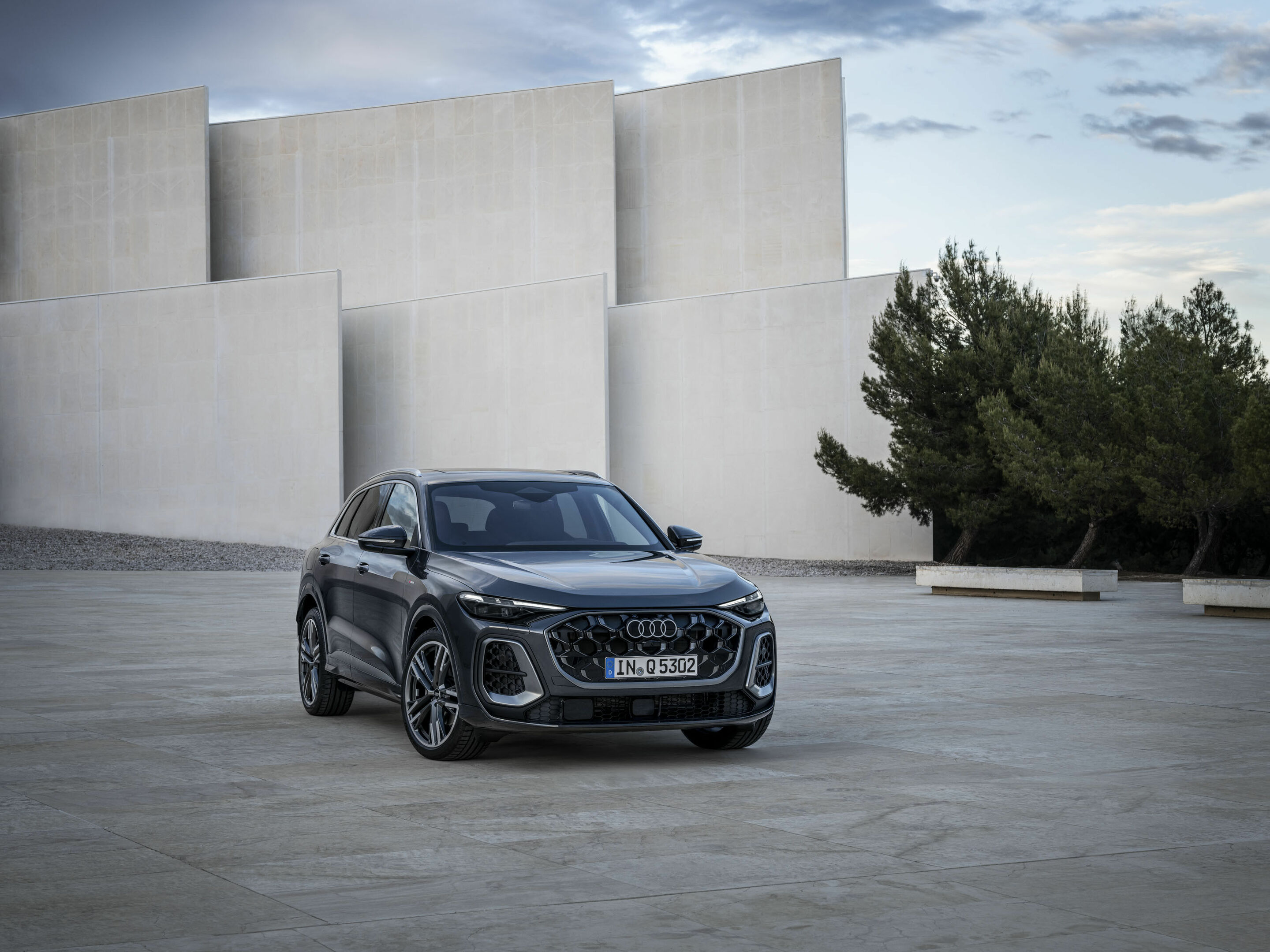
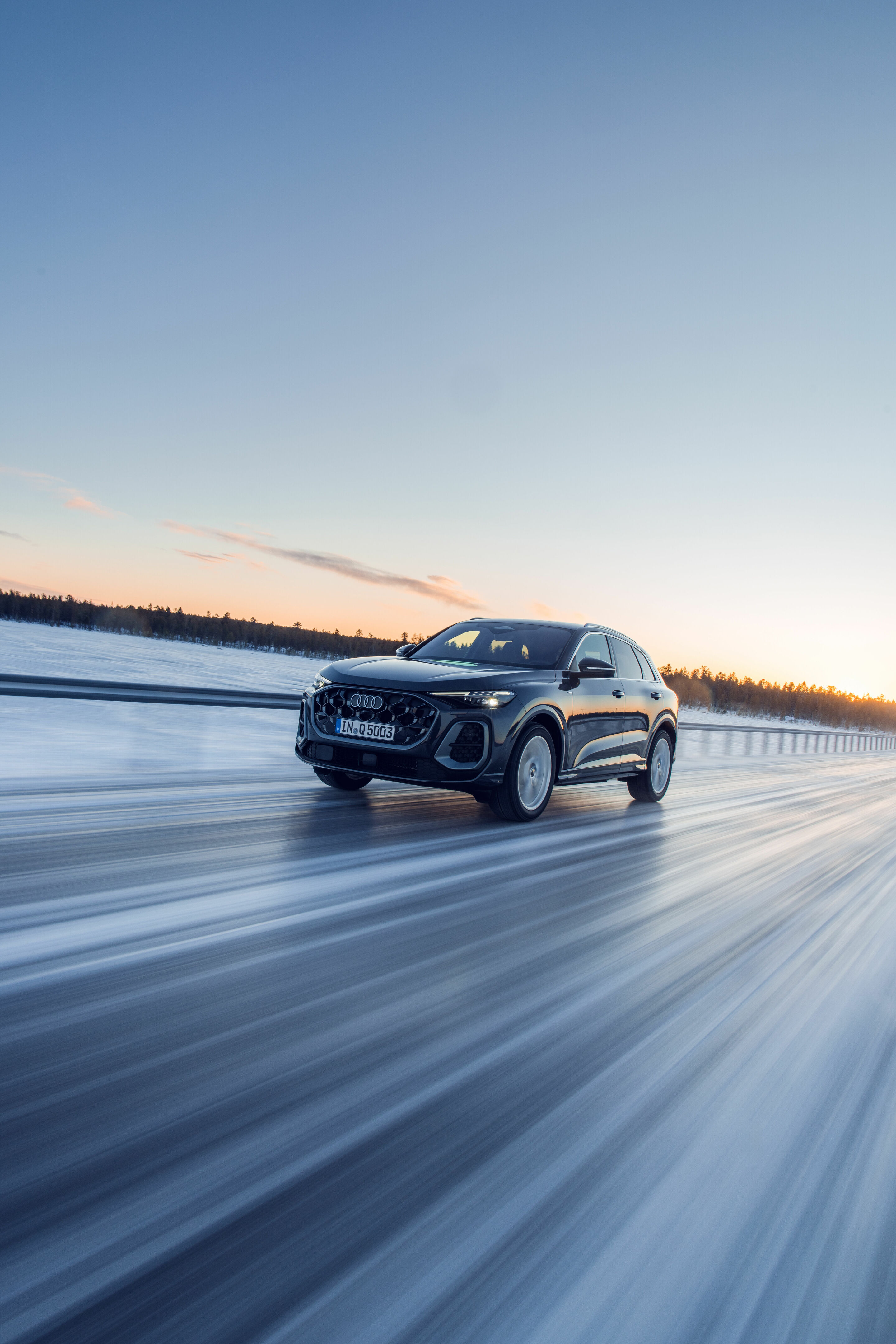
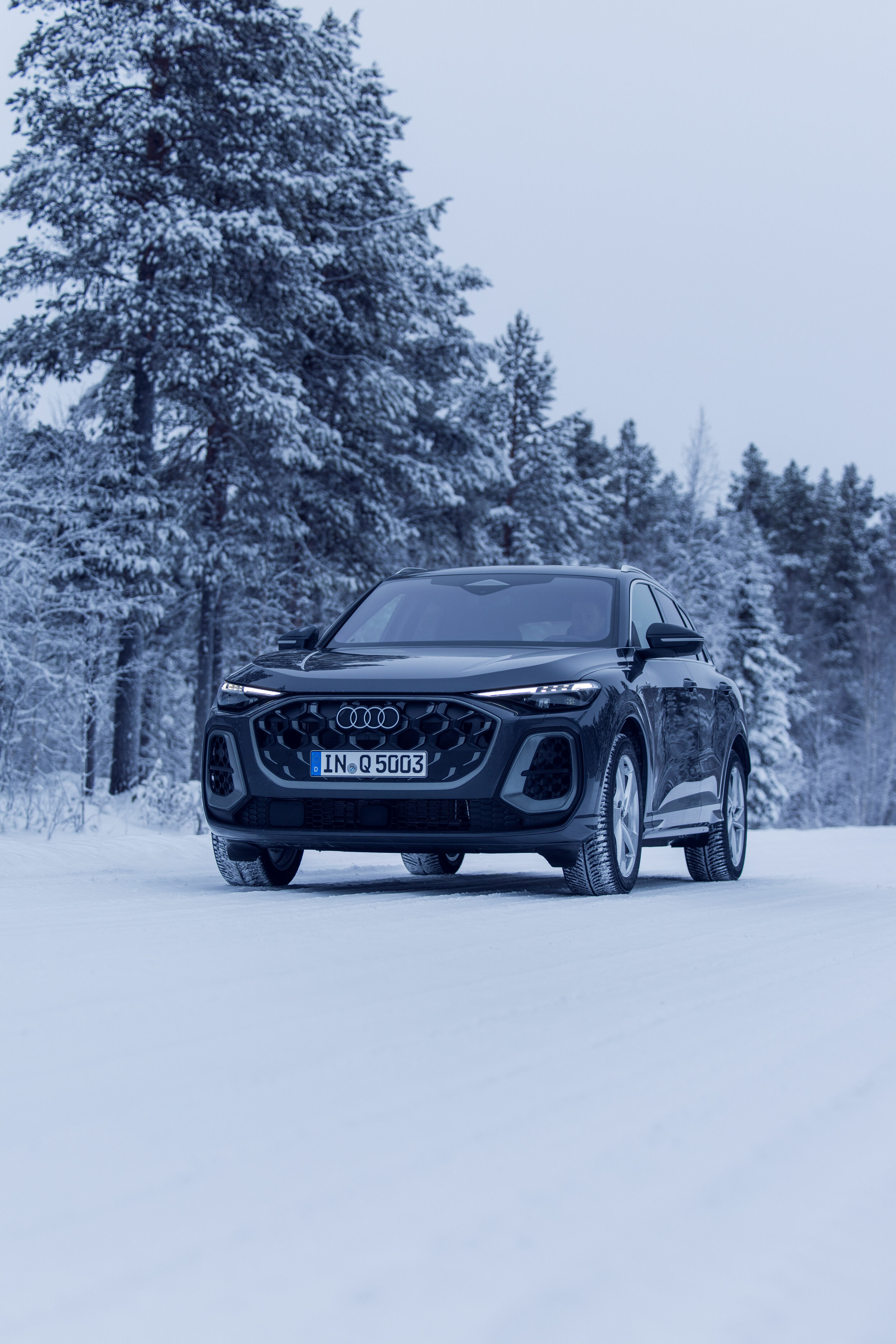
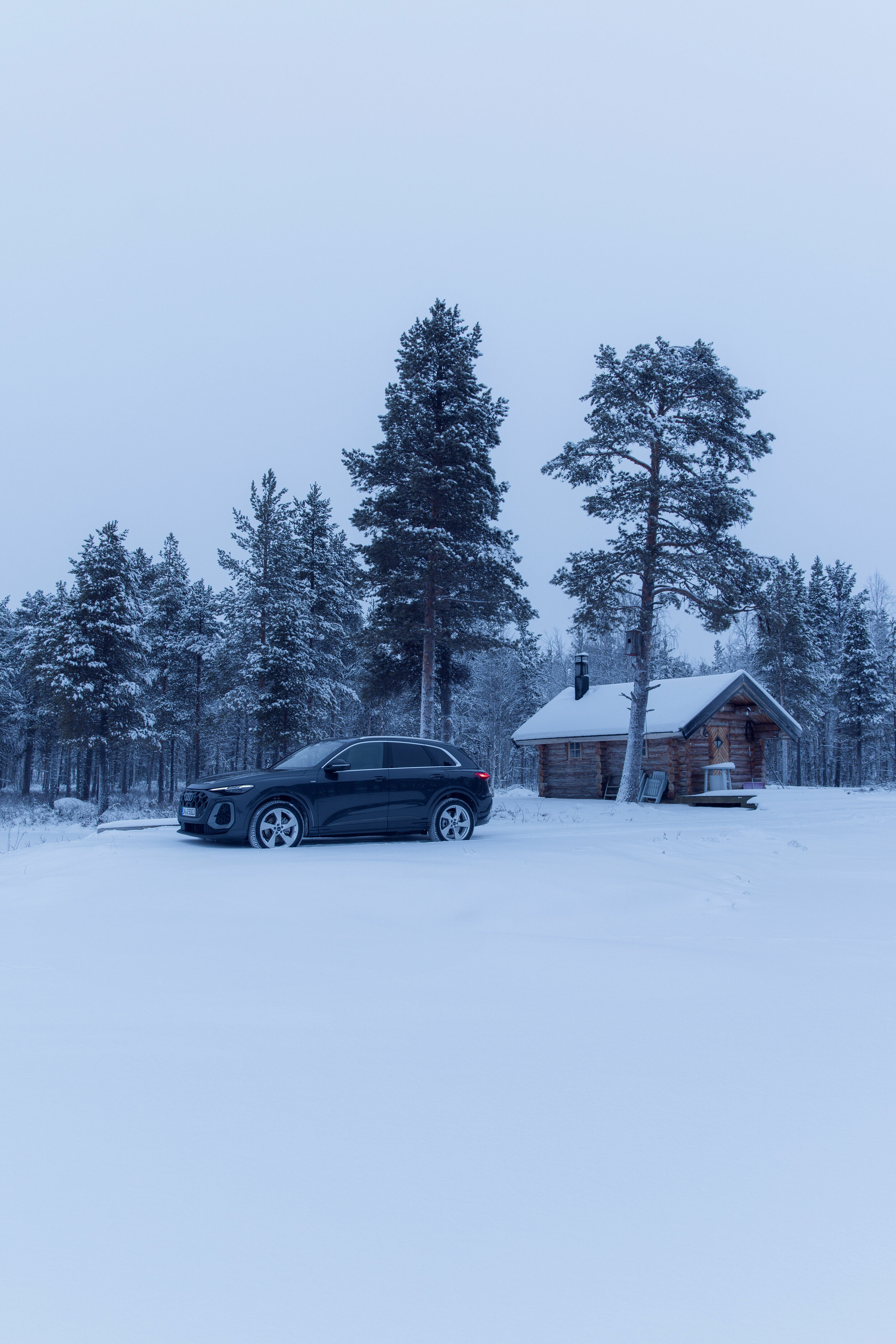
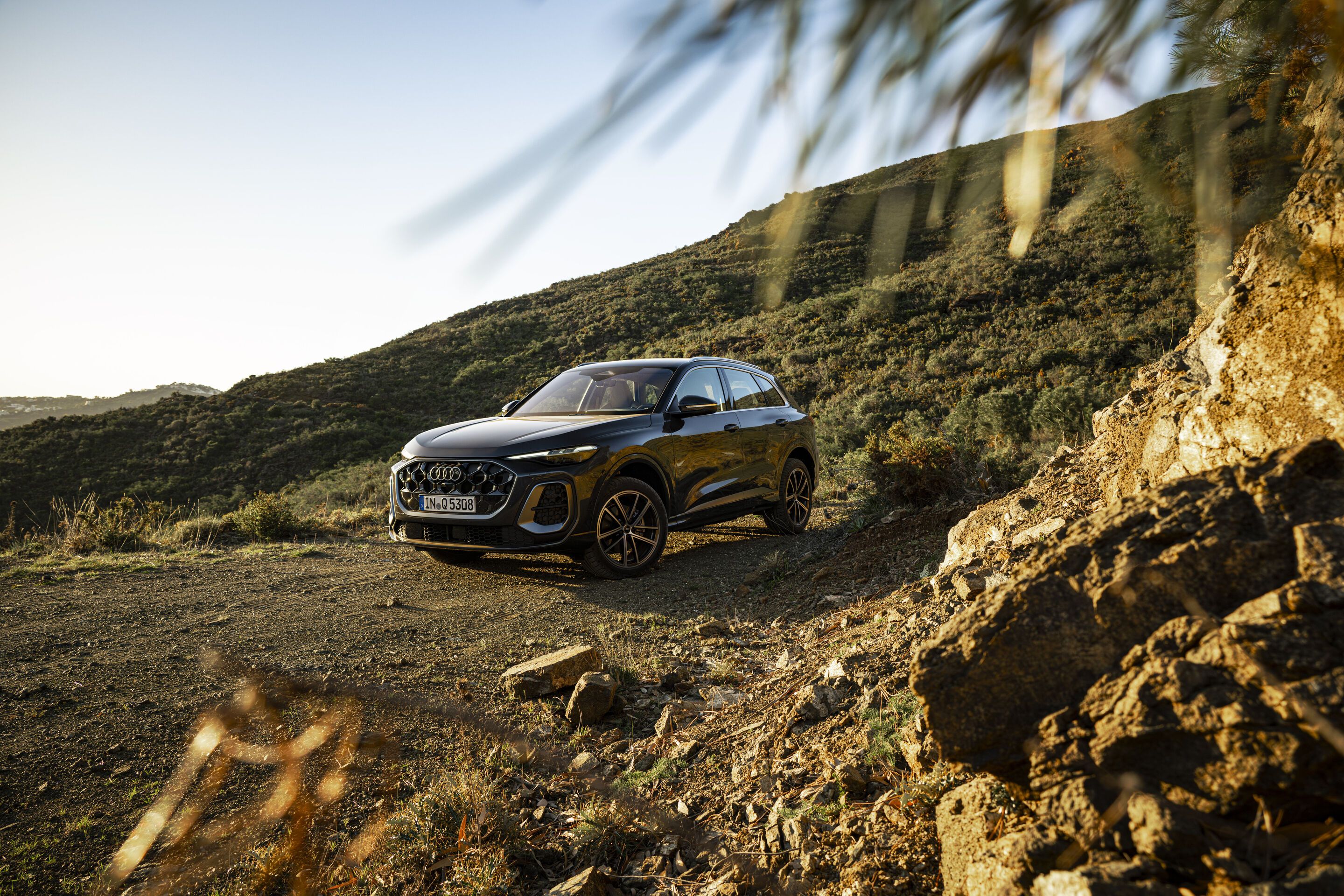
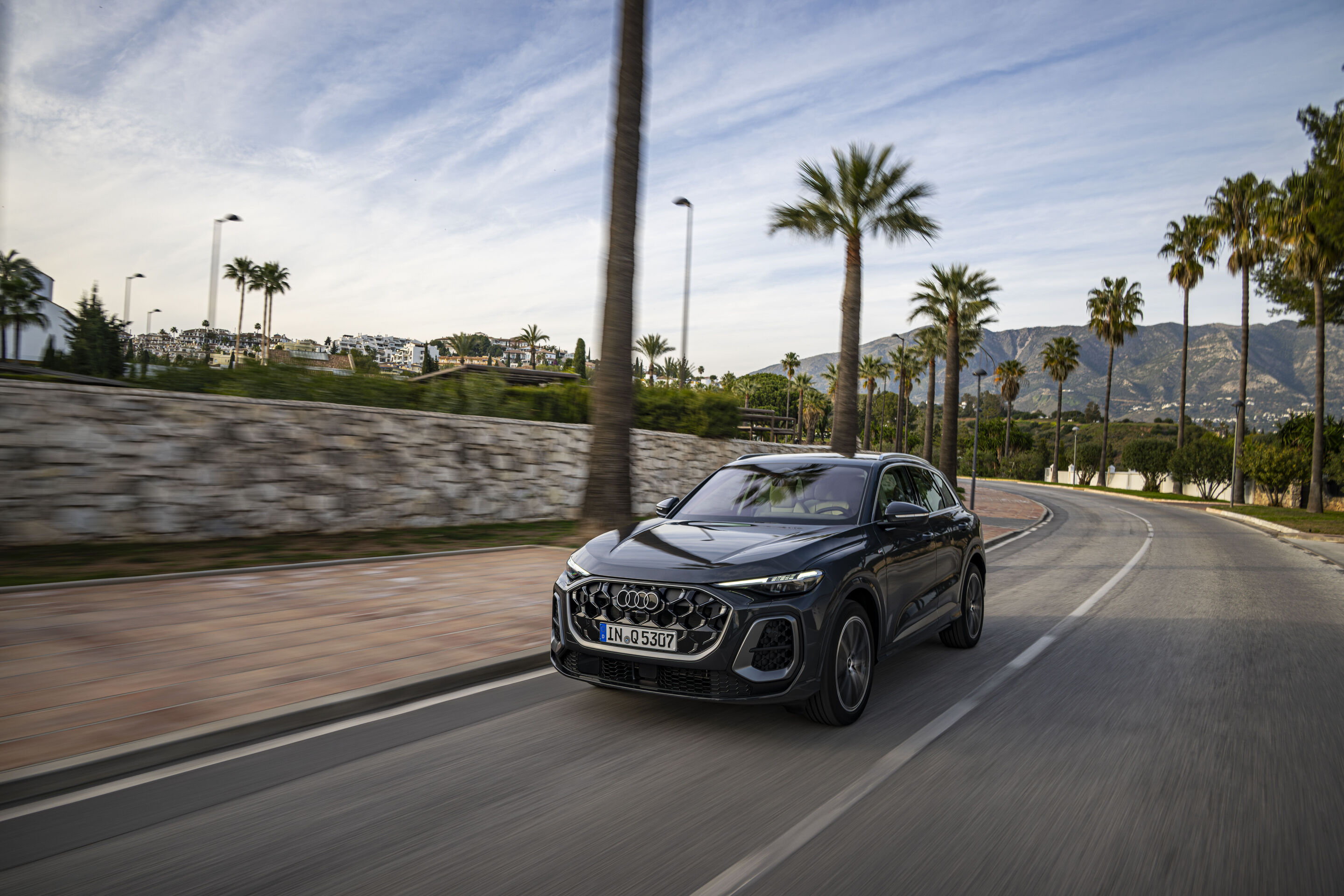
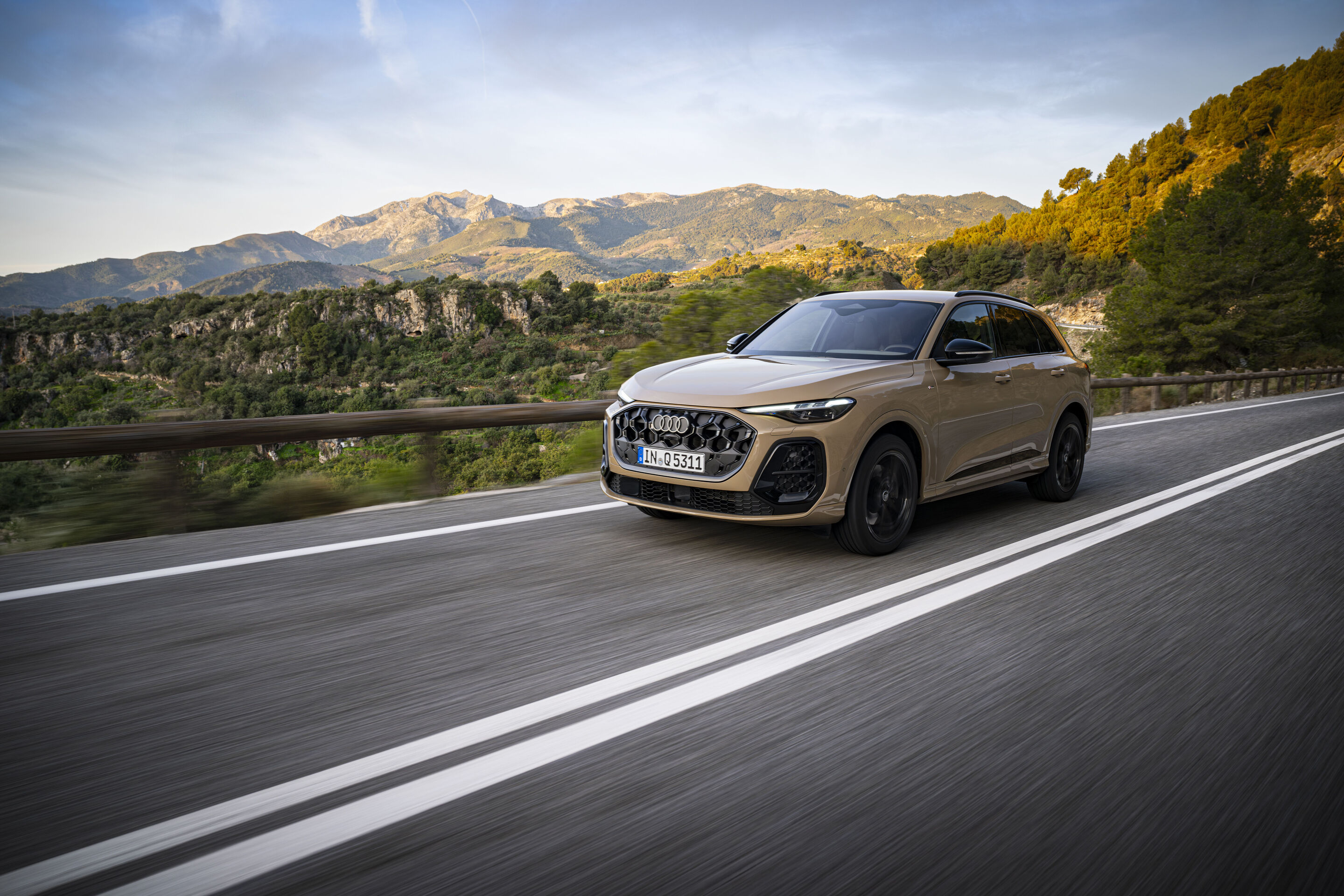
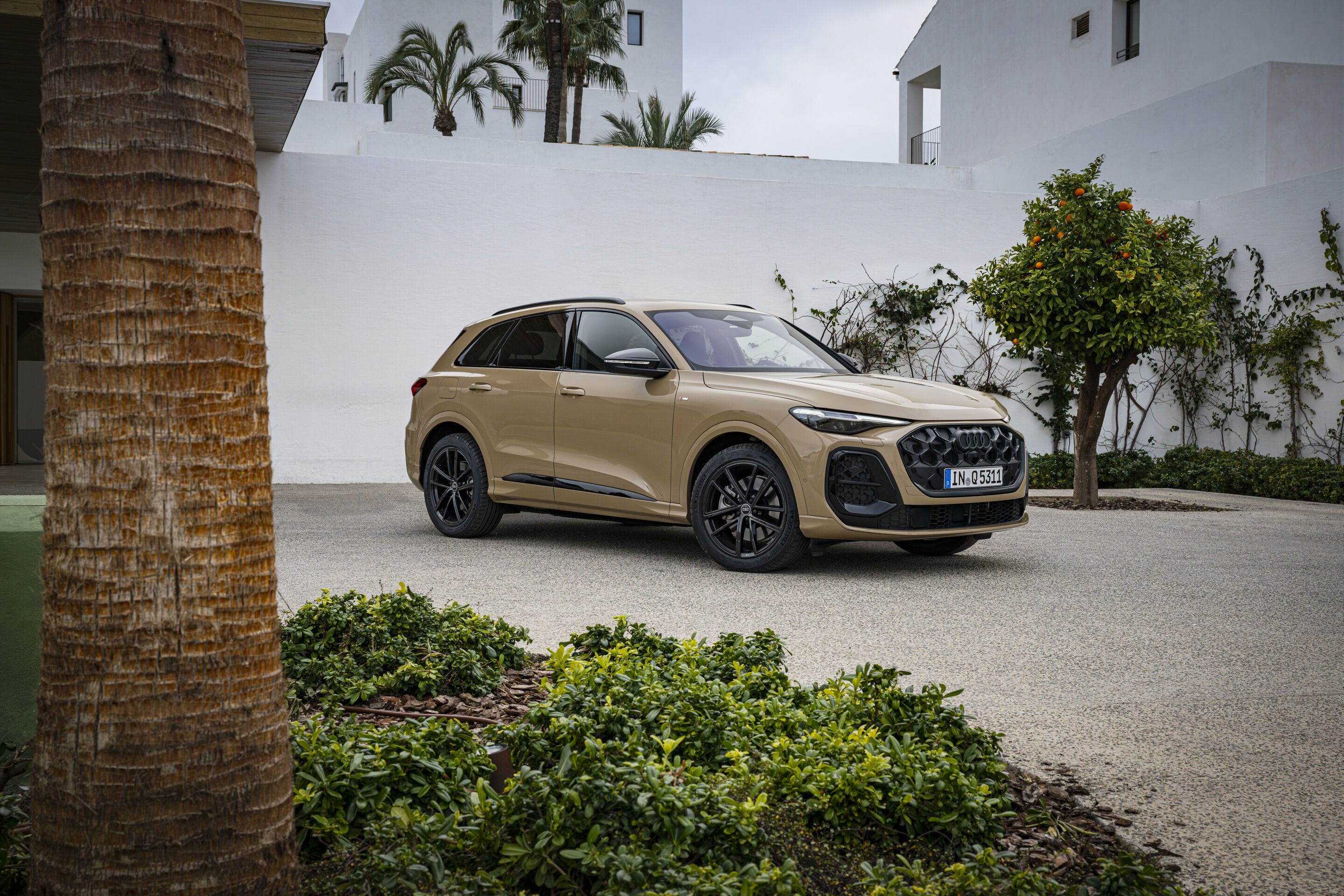
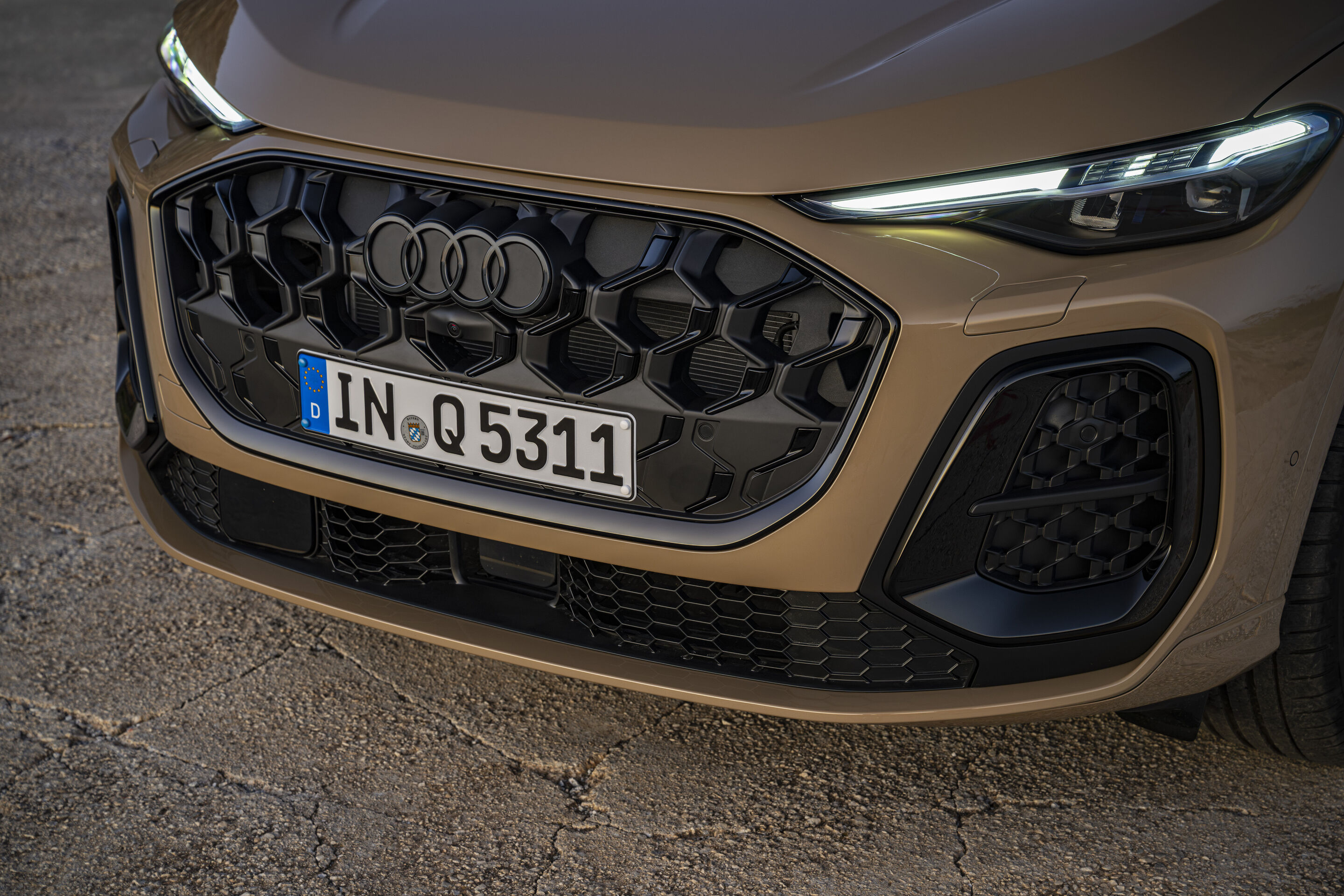
Audi kept the Q5 recognisable but made the third generation visually tighter. A high shoulder line connects the lighting elements and gives the body a longer appearance, while the wide Singleframe grille sits higher at the front and is flanked by functional vertical air curtains. The headlights are more sharply sculpted, and the lower intake integrates the sensors used by the assistance systems.
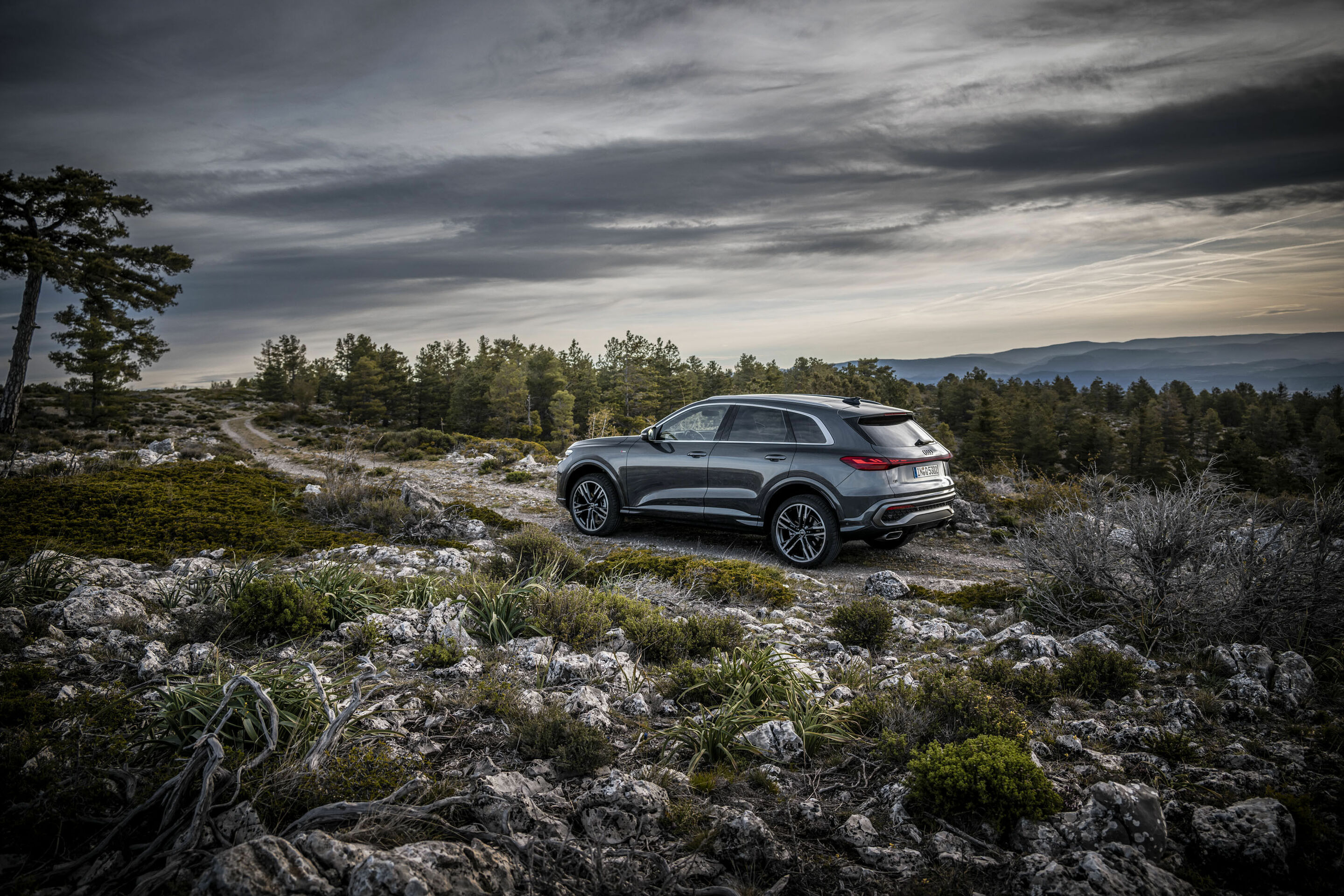
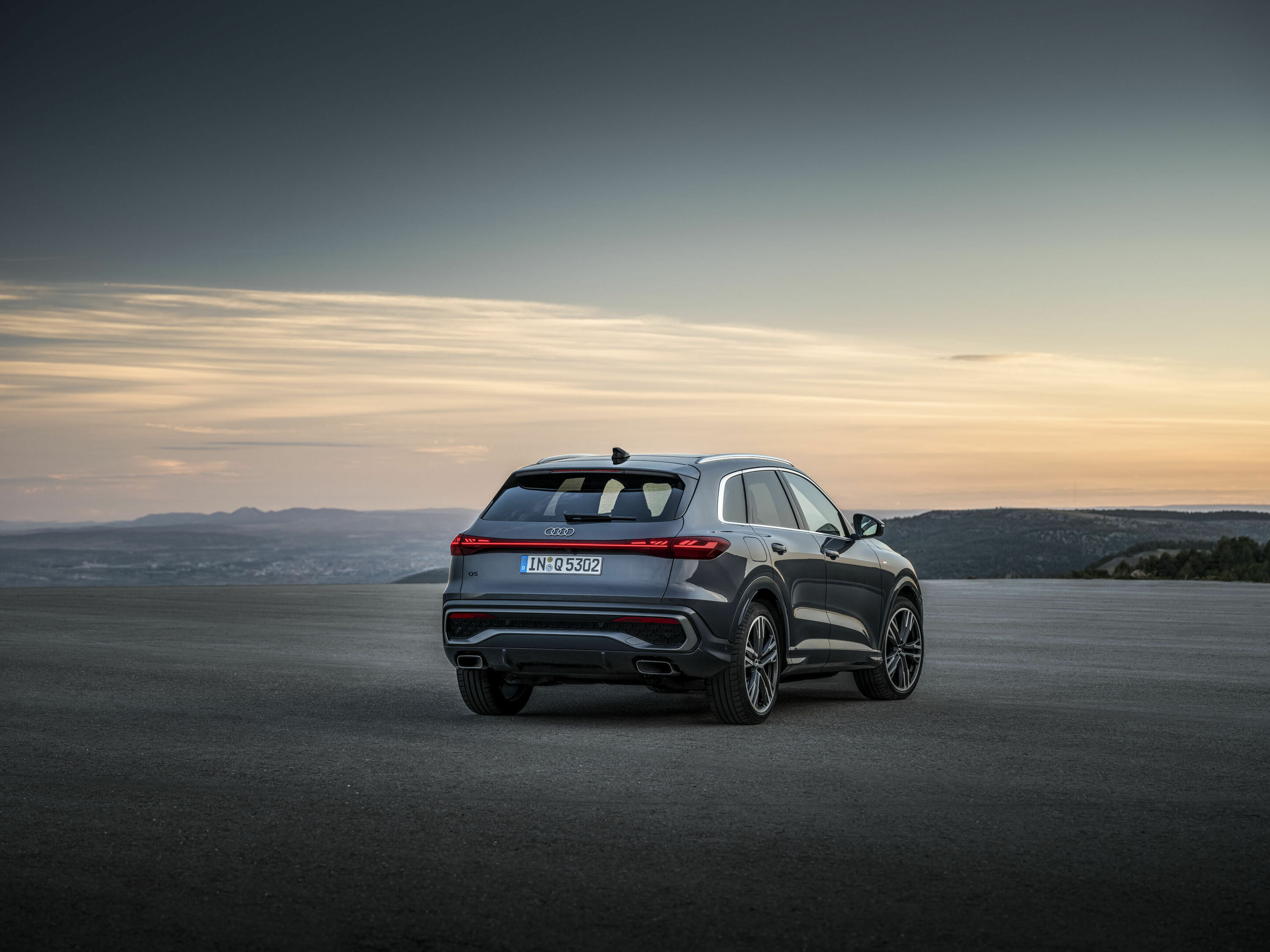
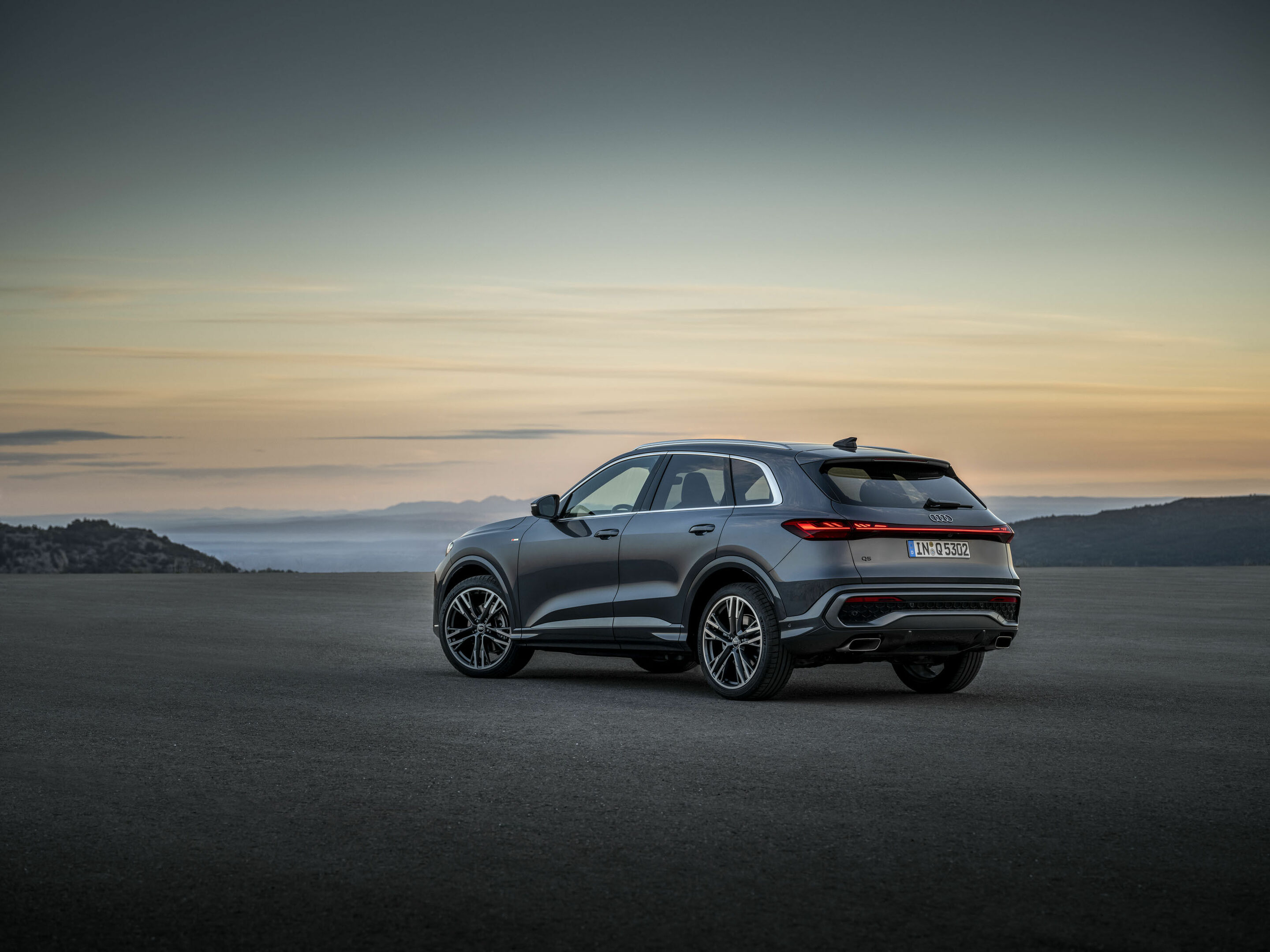
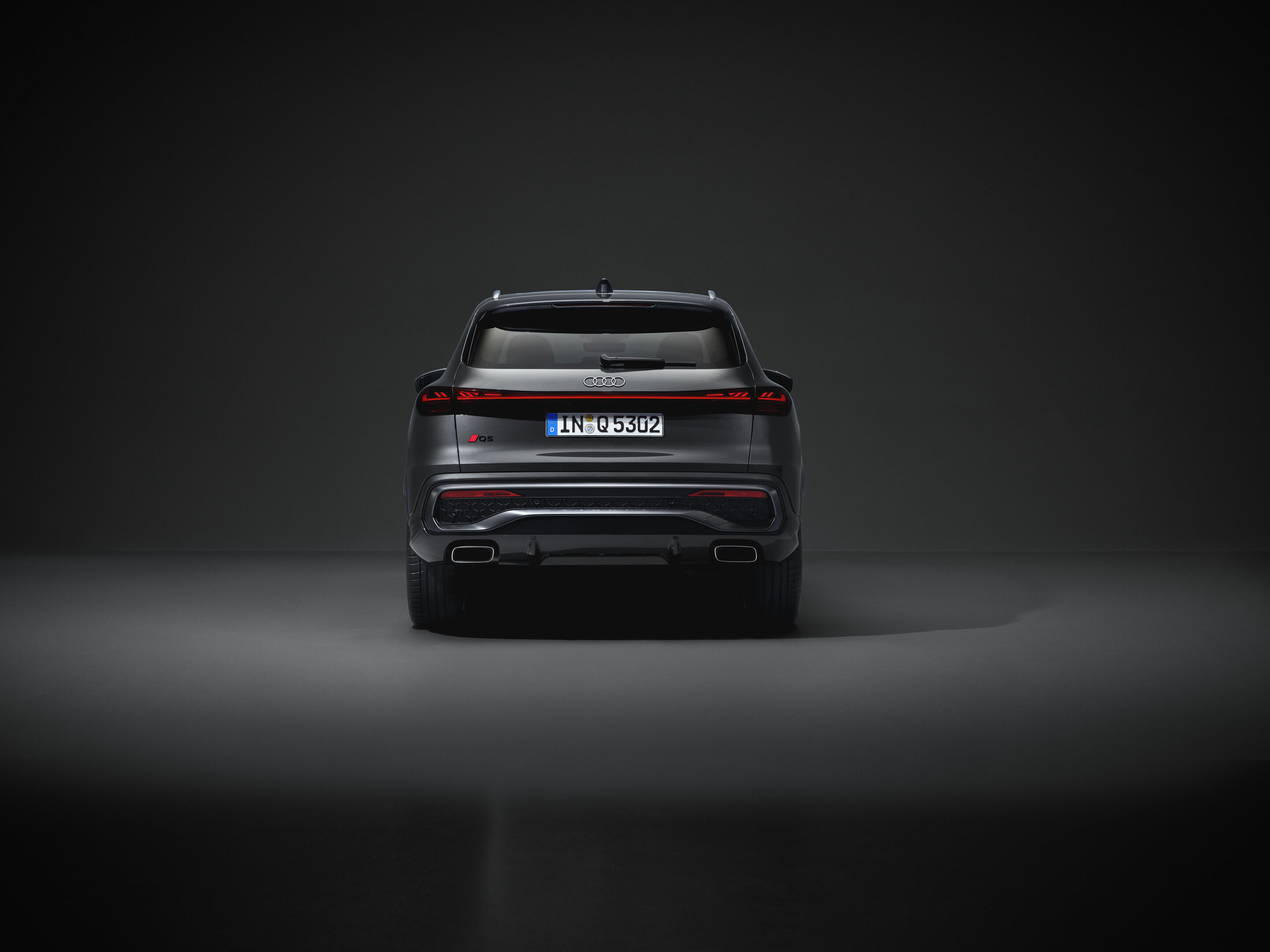
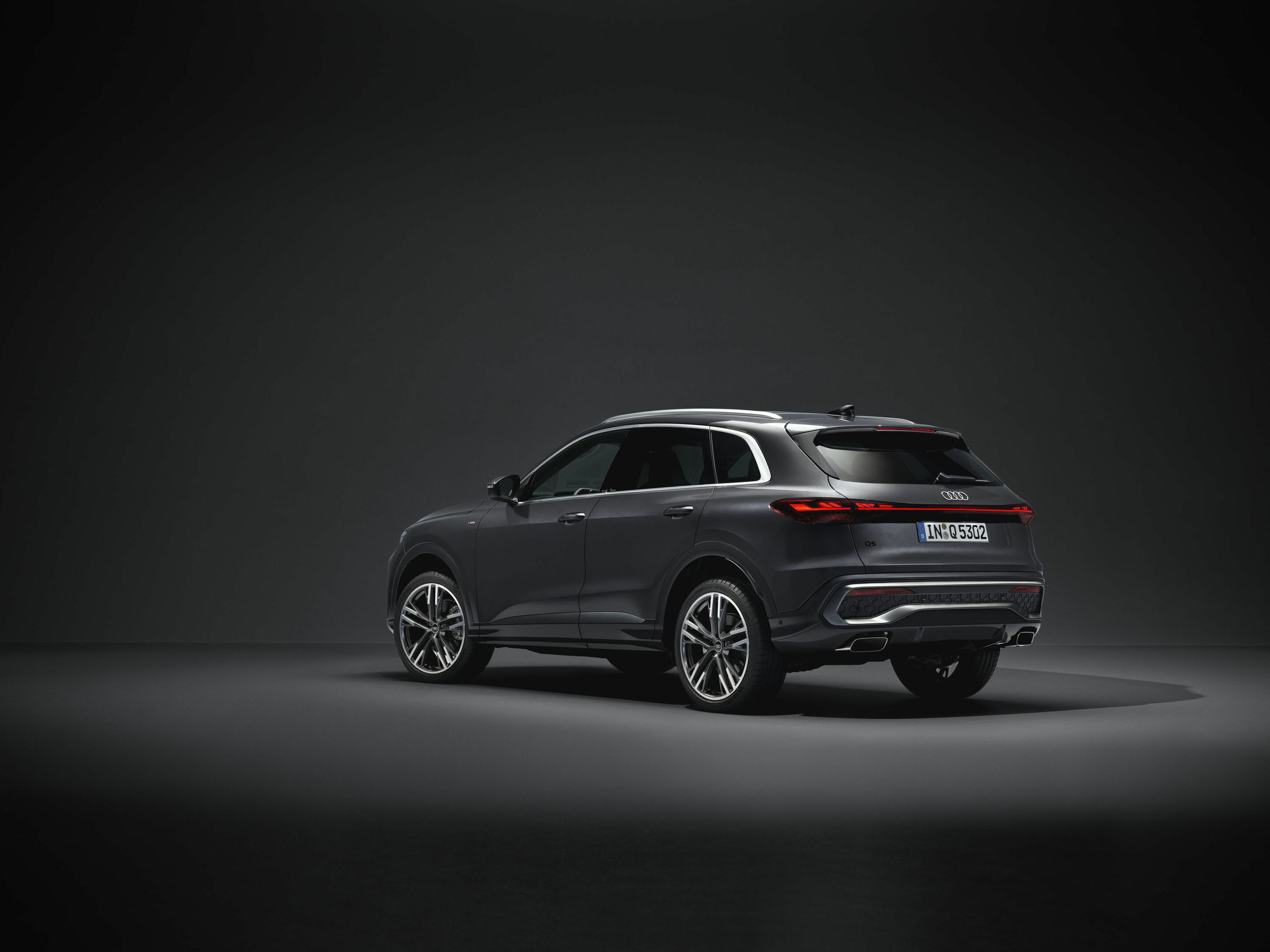
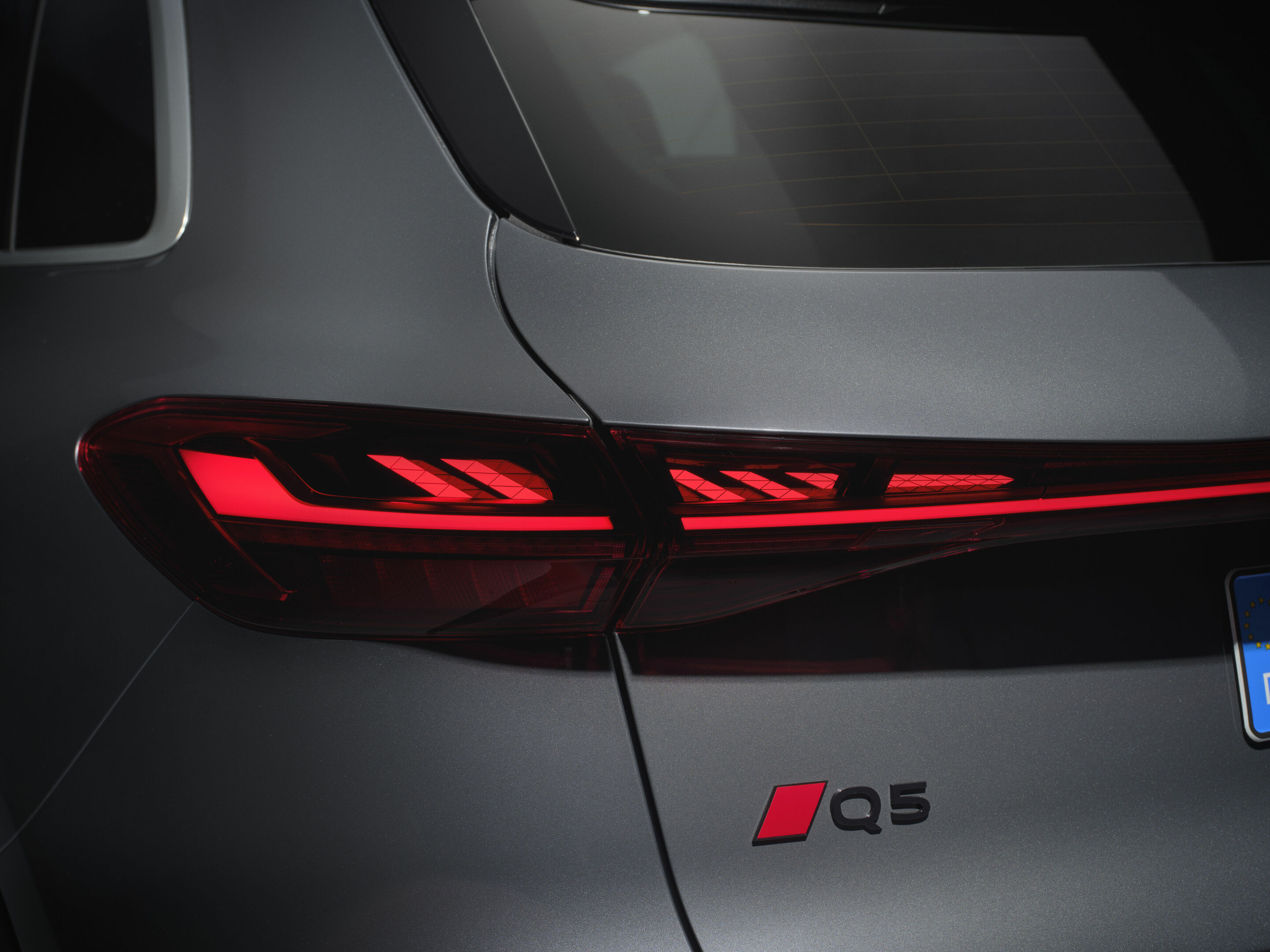
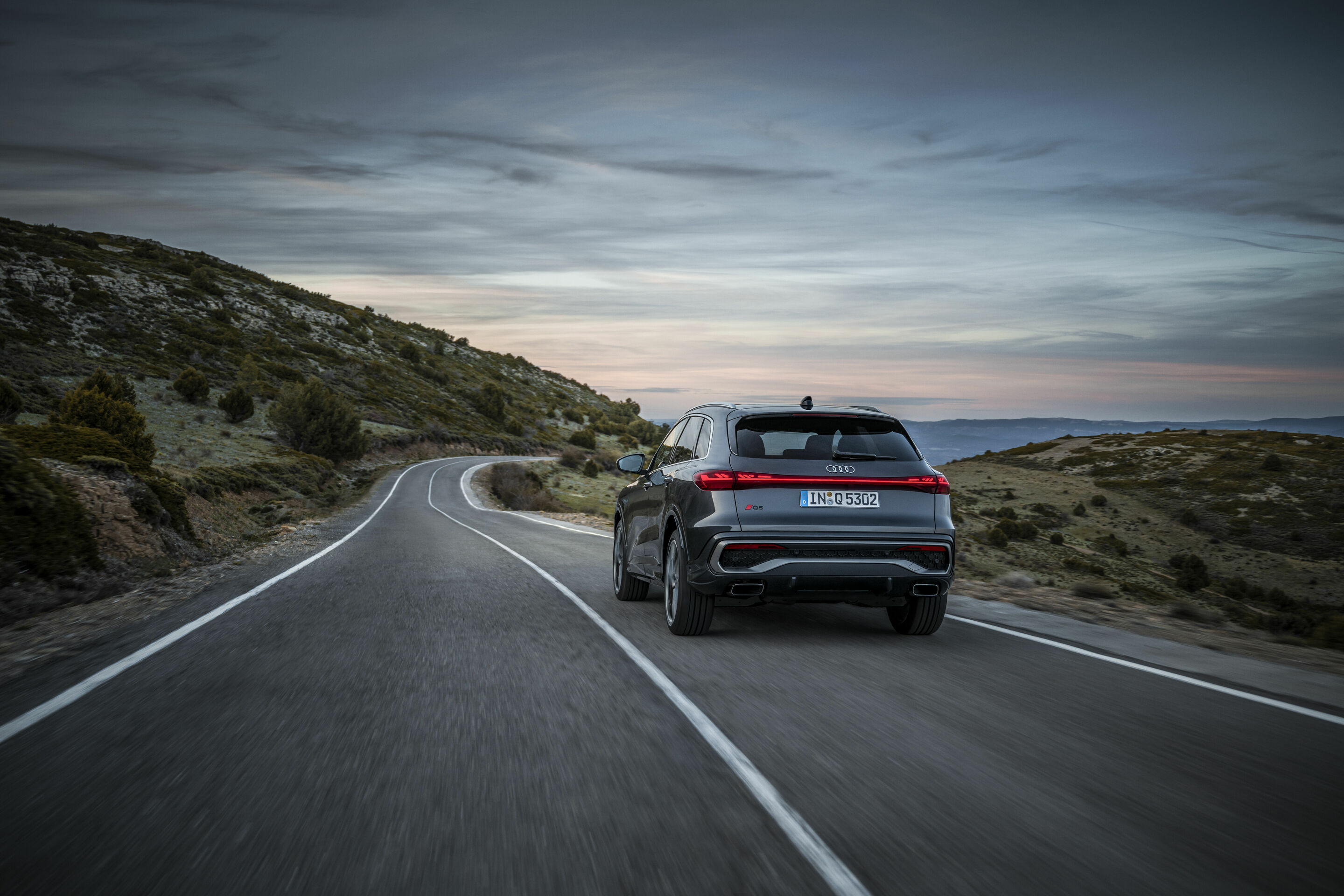
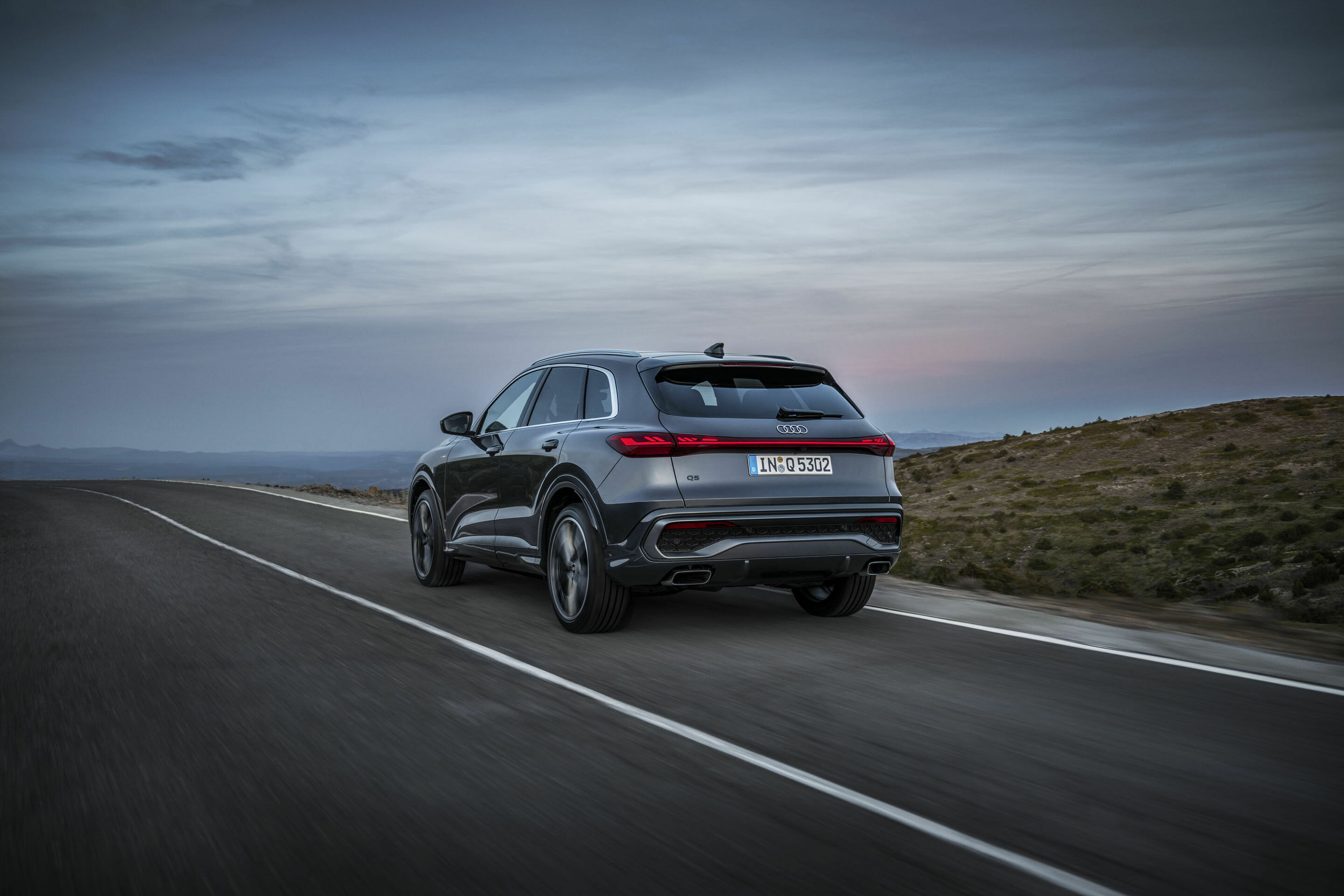
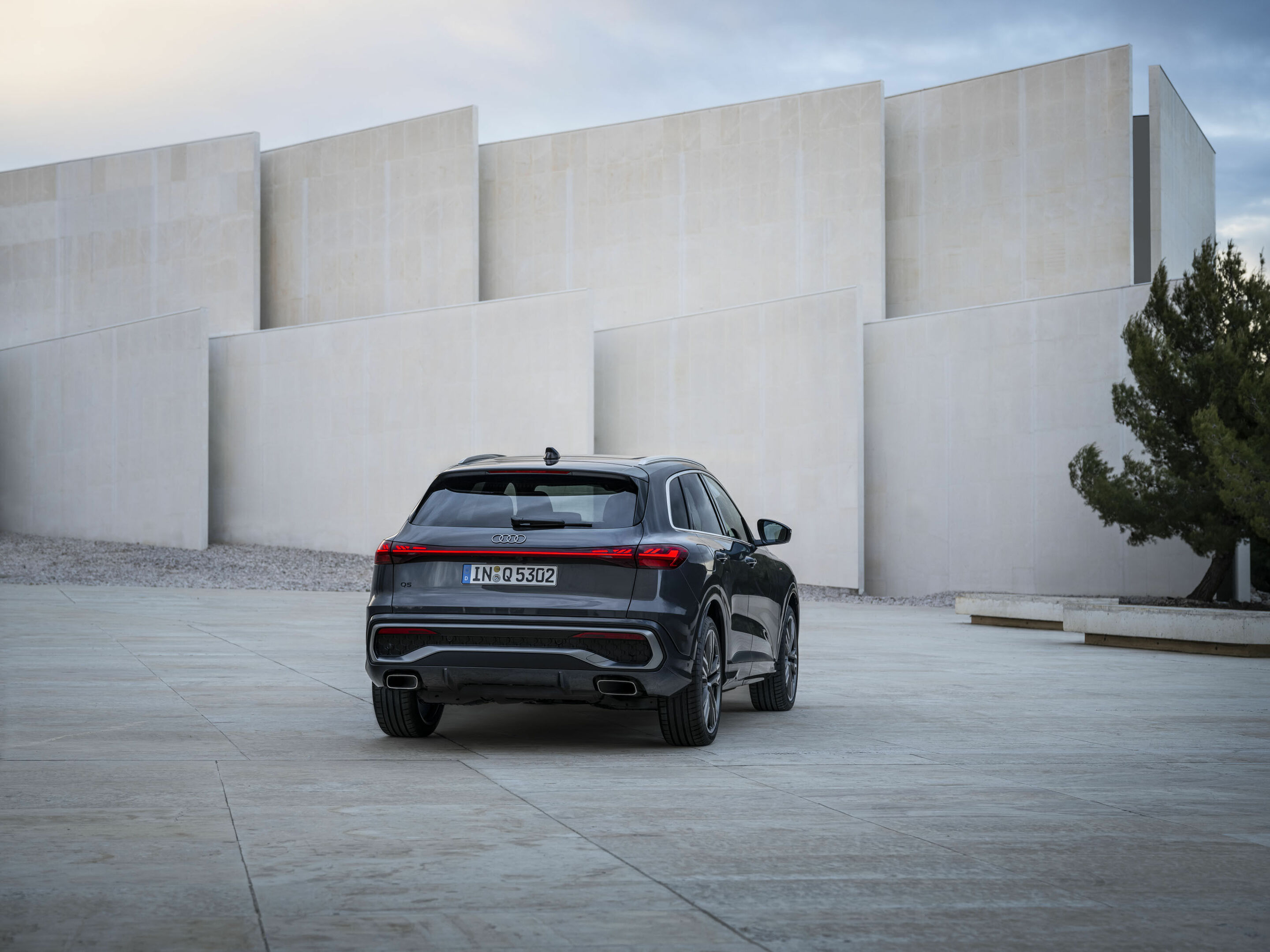
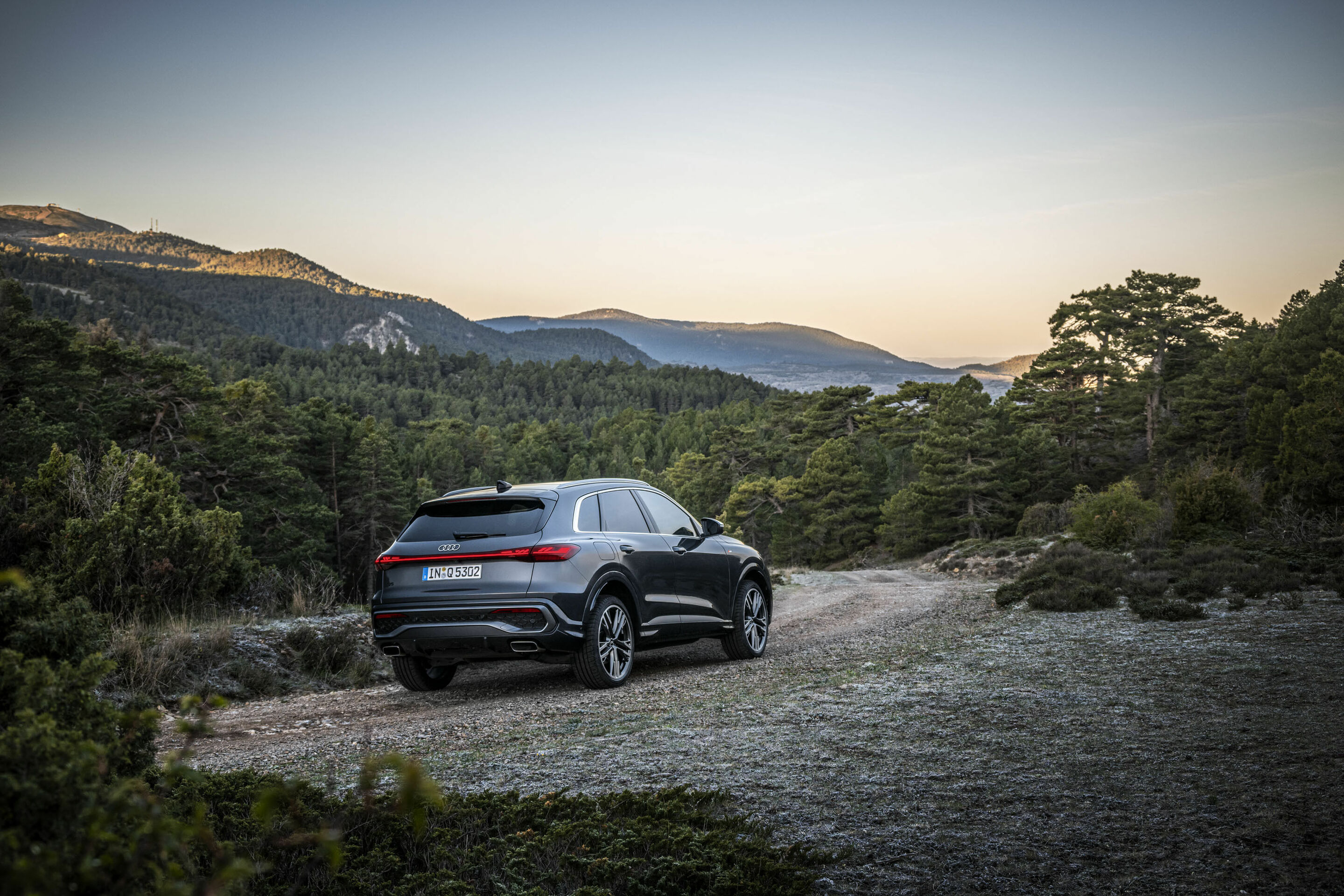
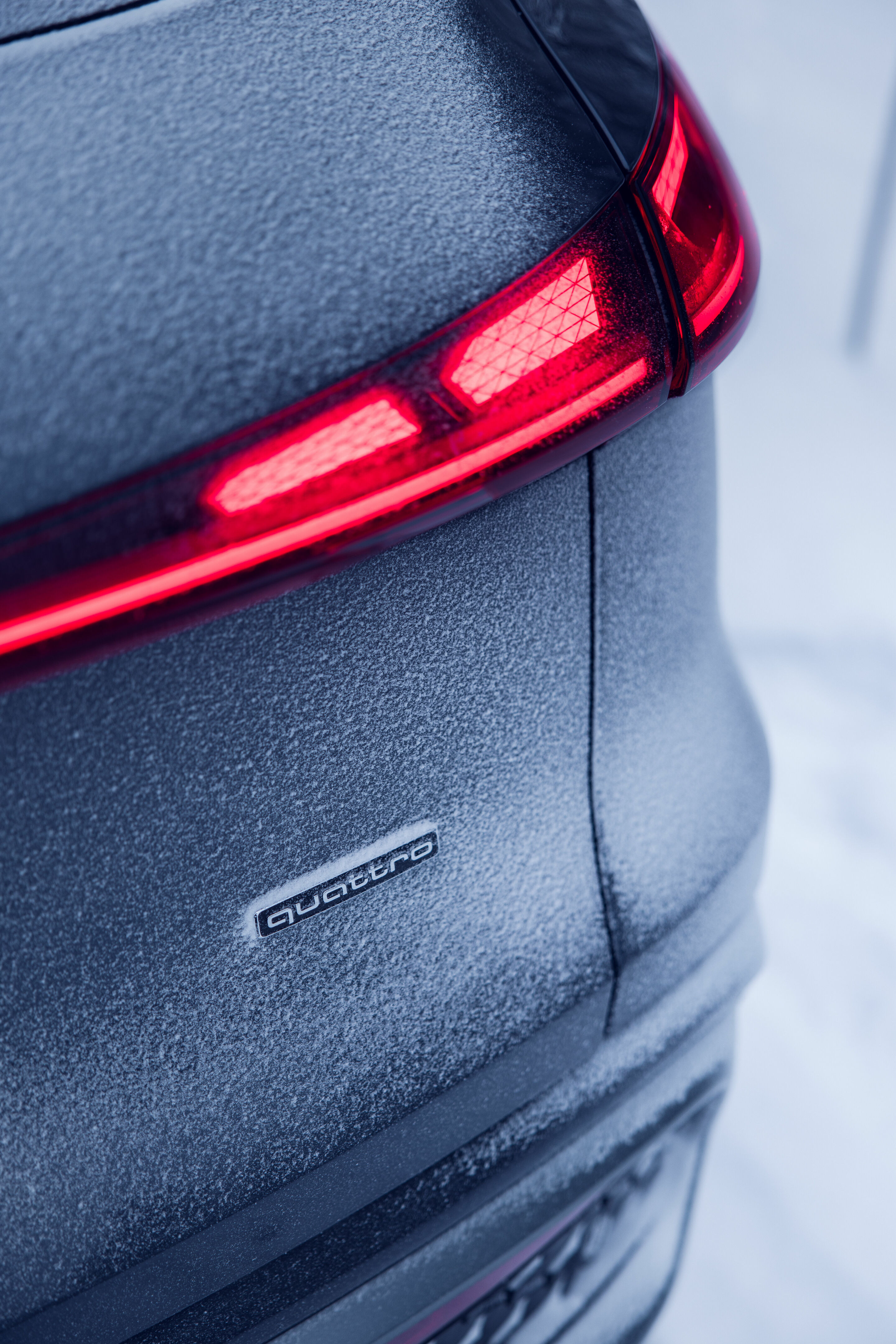
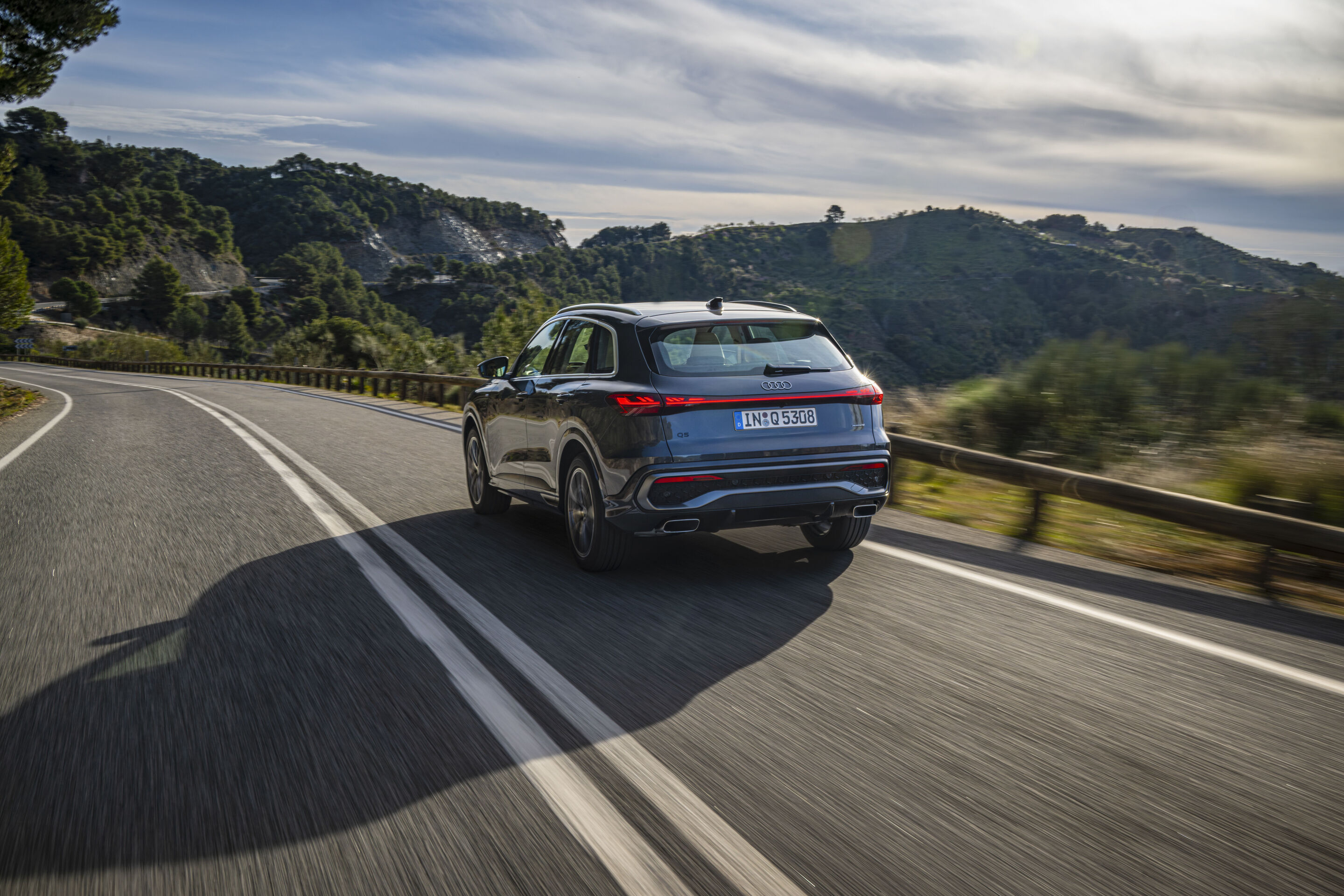
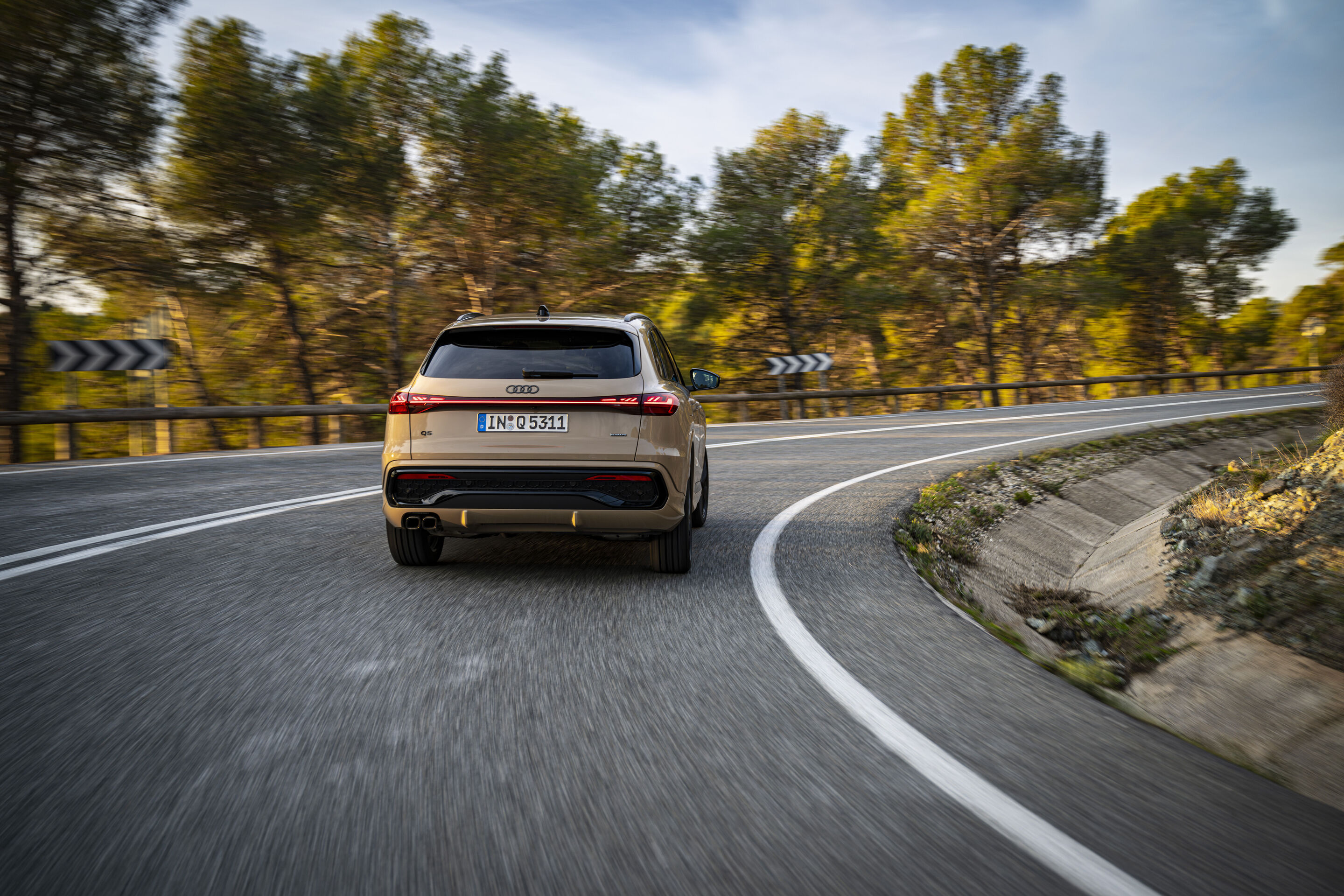
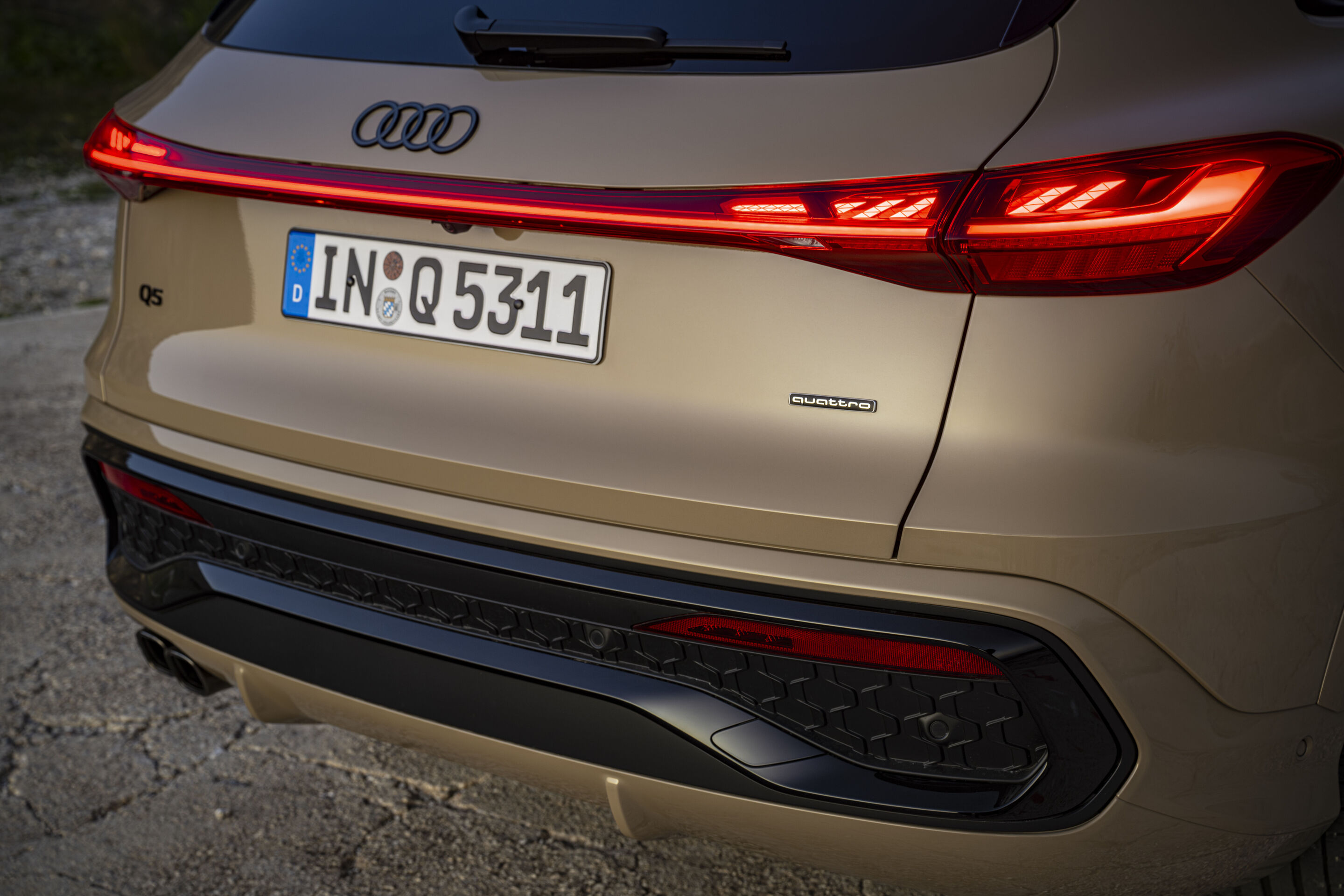
At the rear, Audi reduced the number of visible lines and concentrated attention on the full-width light treatment. The diffuser is integrated into the raised bumper, while the exhaust treatment changes according to engine family. Regular petrol and diesel Q5 versions retain visible functional tailpipes rather than hiding them completely.
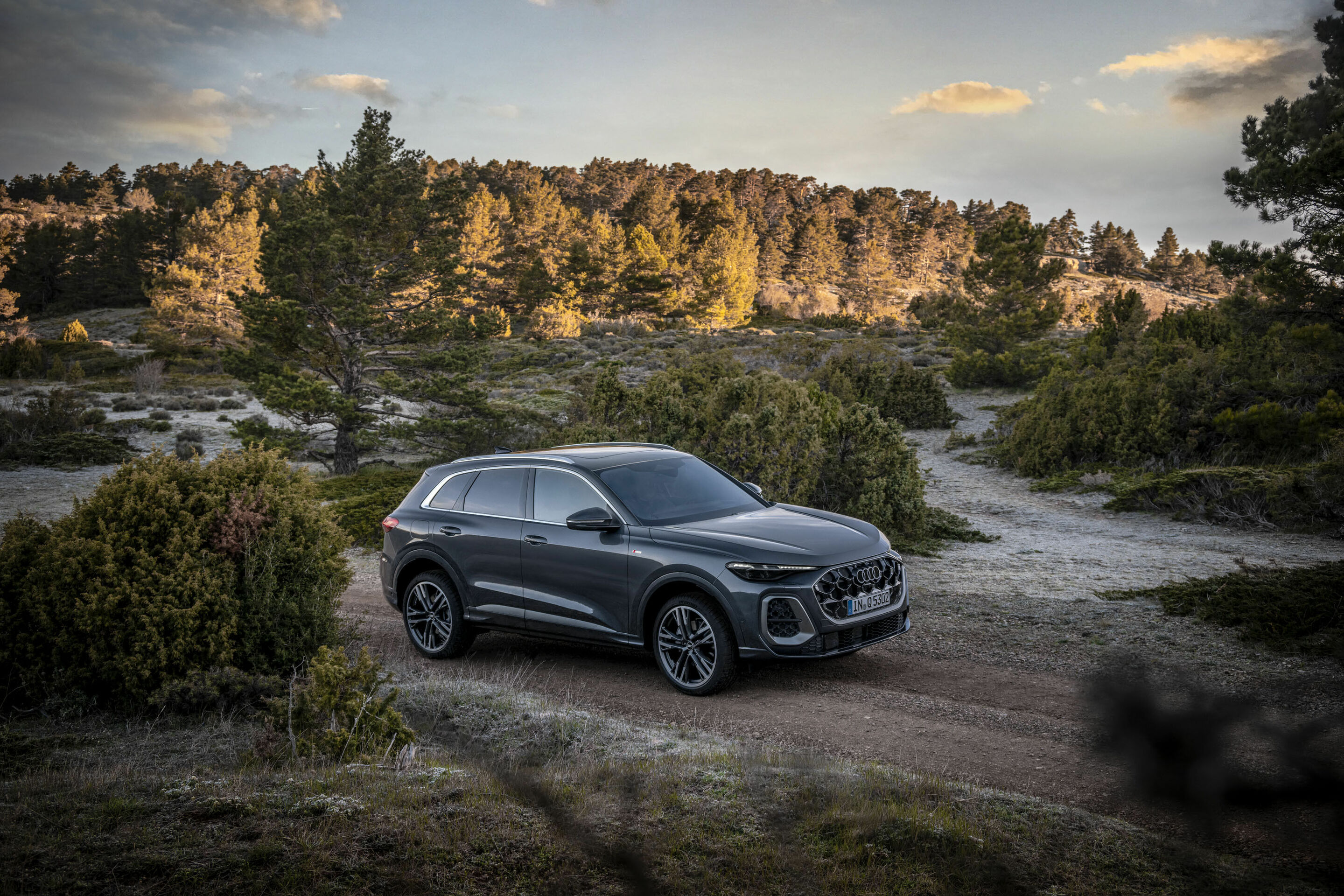
German-market wheel sizes run from 17 to 21 inches depending on engine and exterior line. Aerodynamically optimised wheels are offered in smaller sizes, while S line versions move the visual emphasis toward larger wheels and more pronounced bumper treatment.
Additional exterior angles
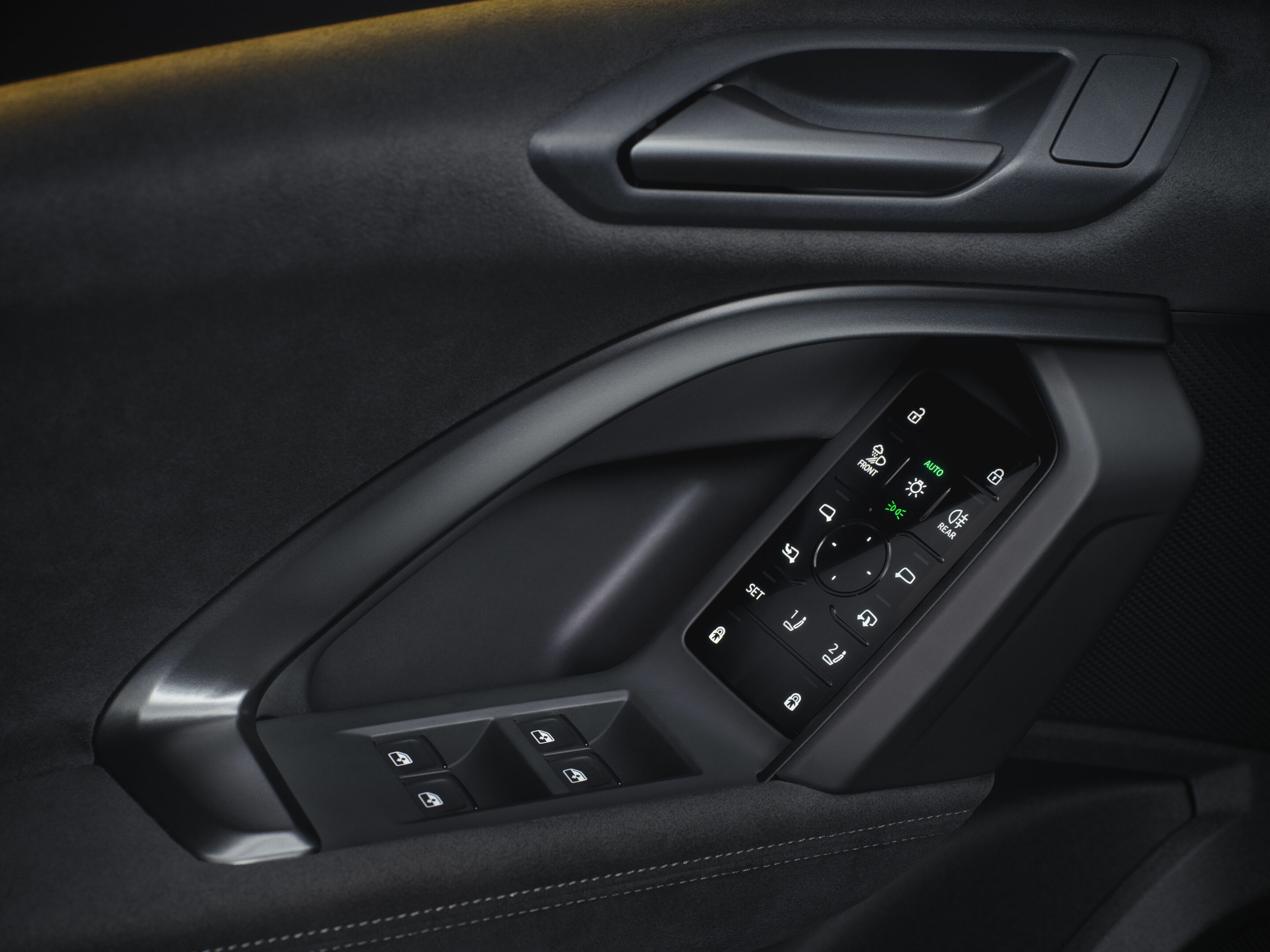
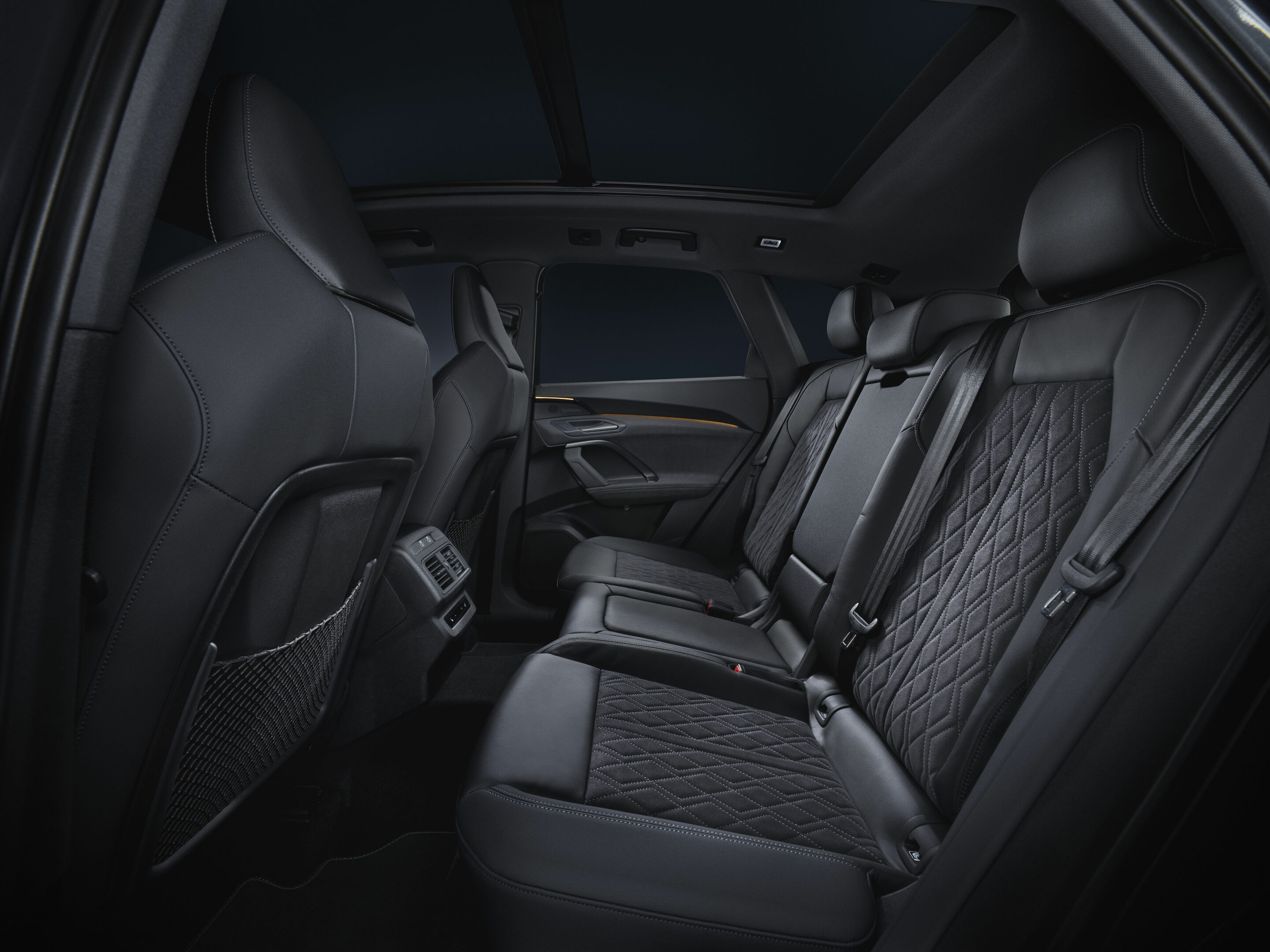
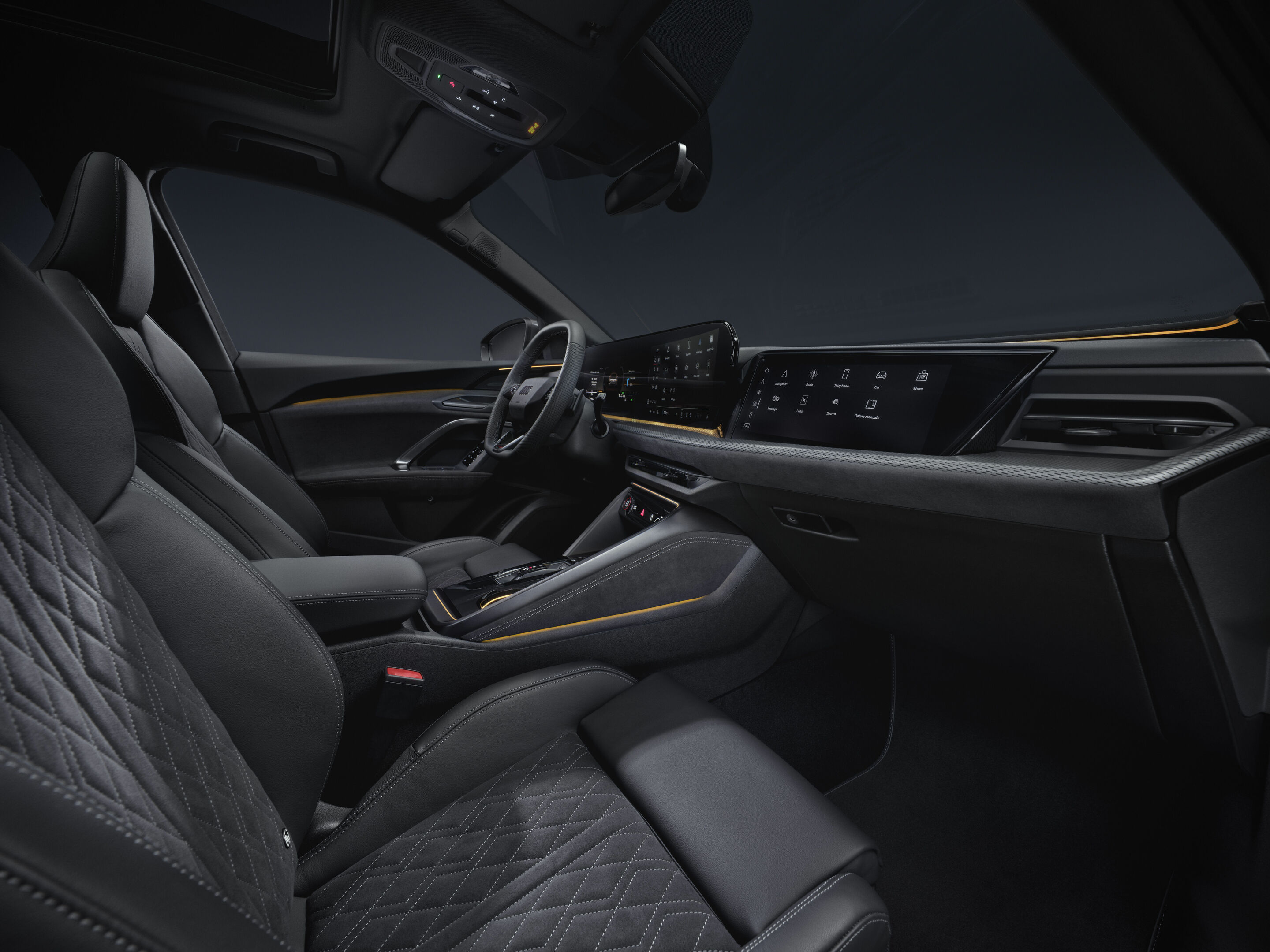
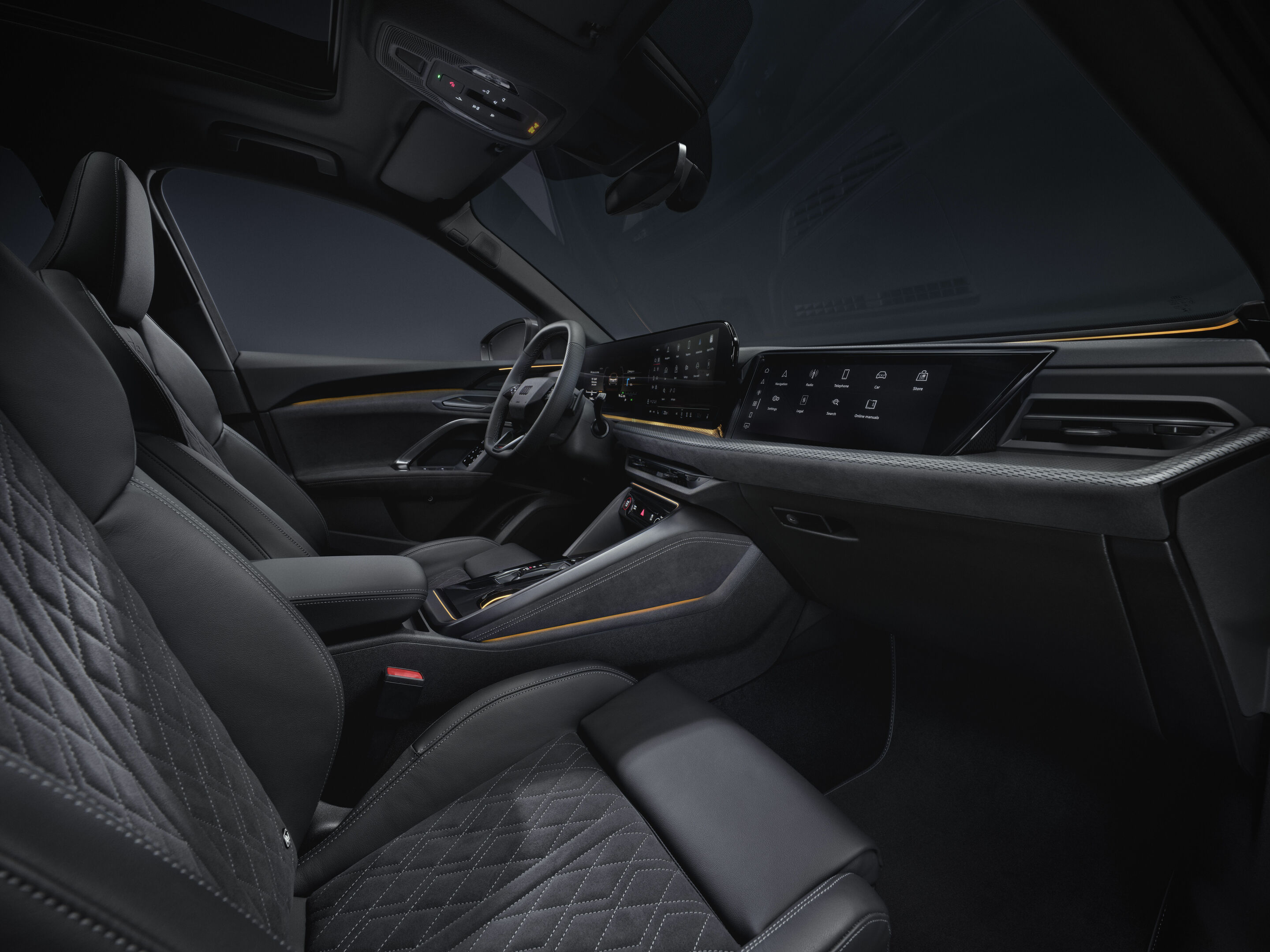
Interior and the Digital Stage
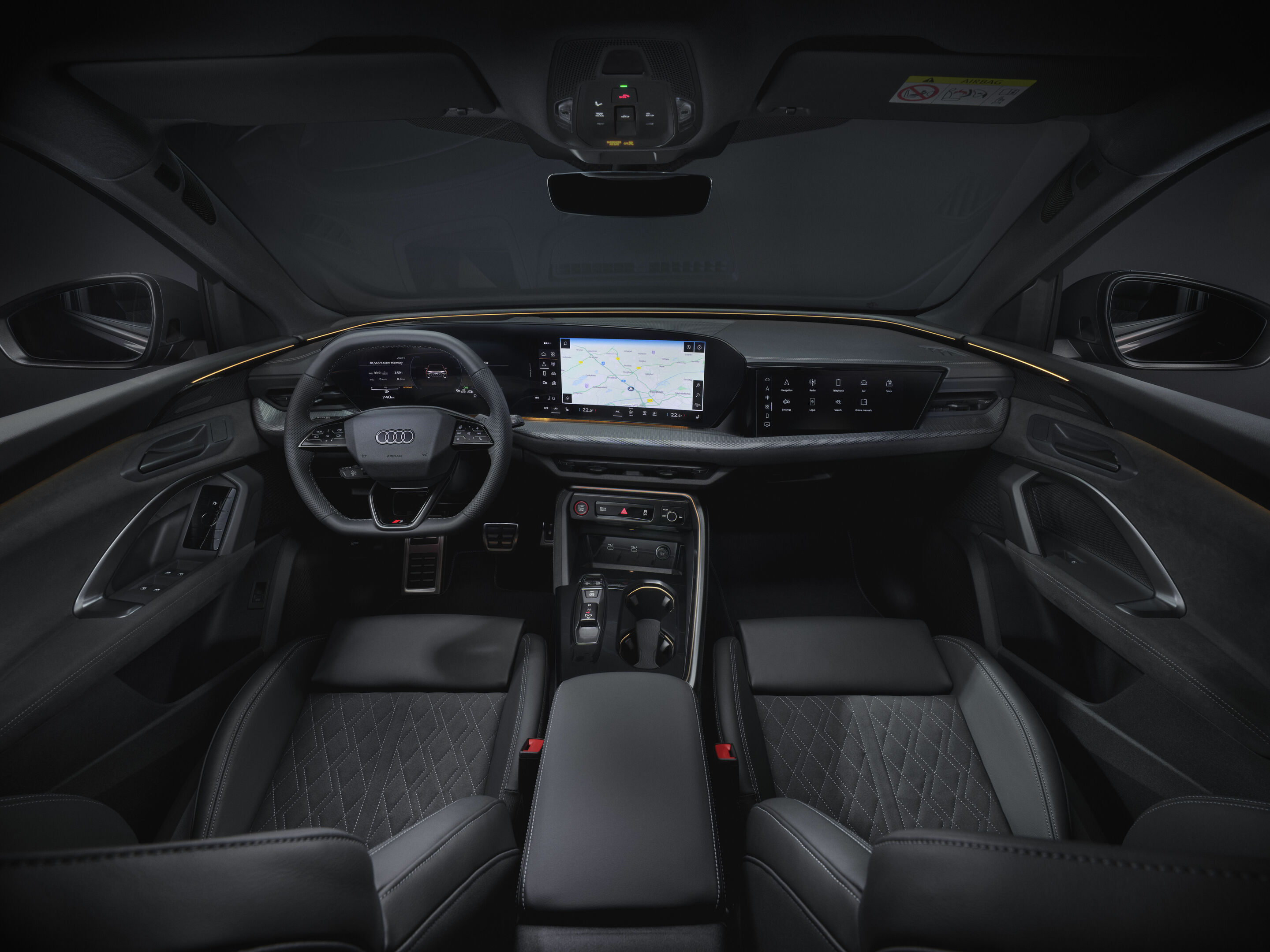
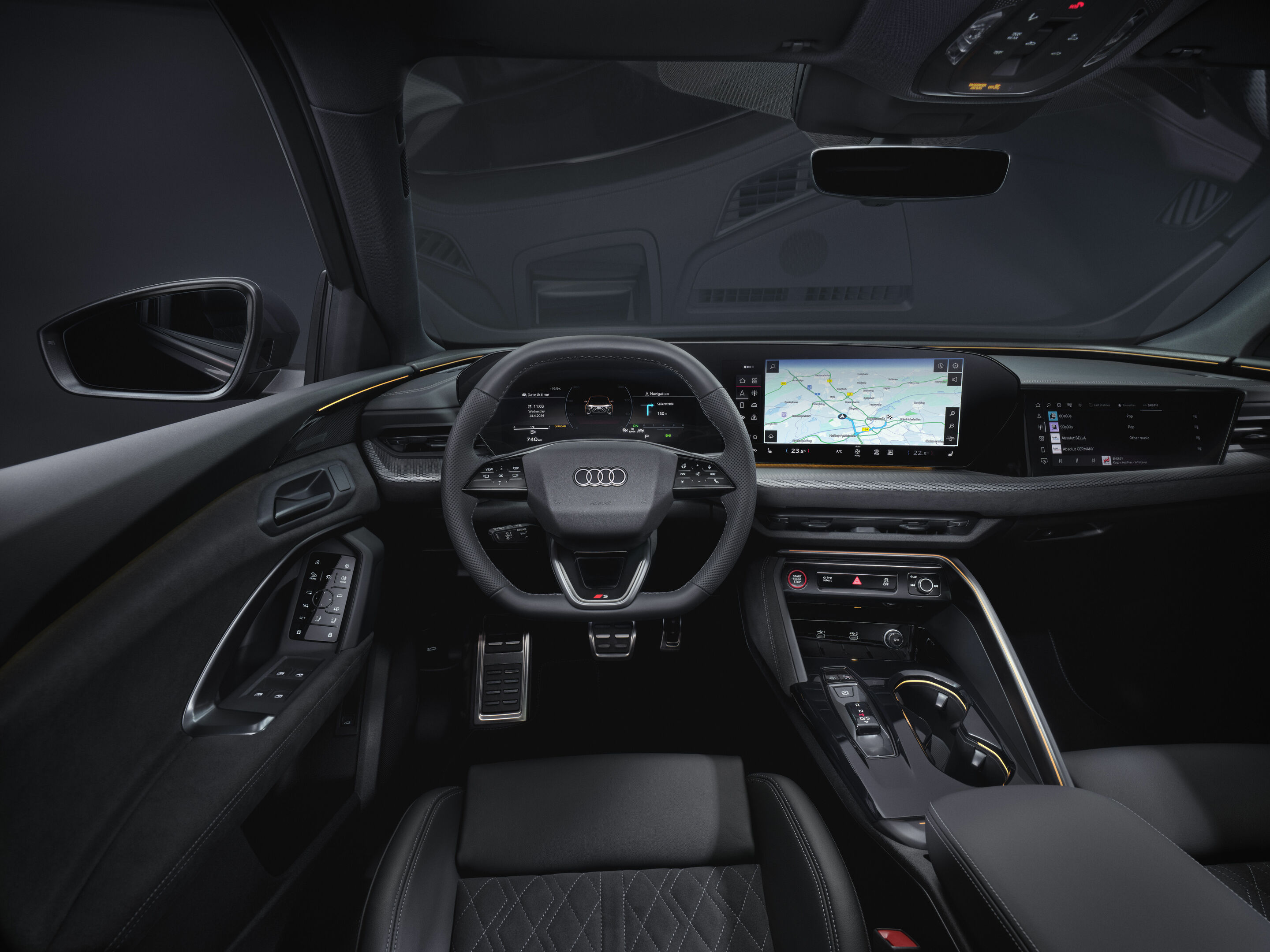
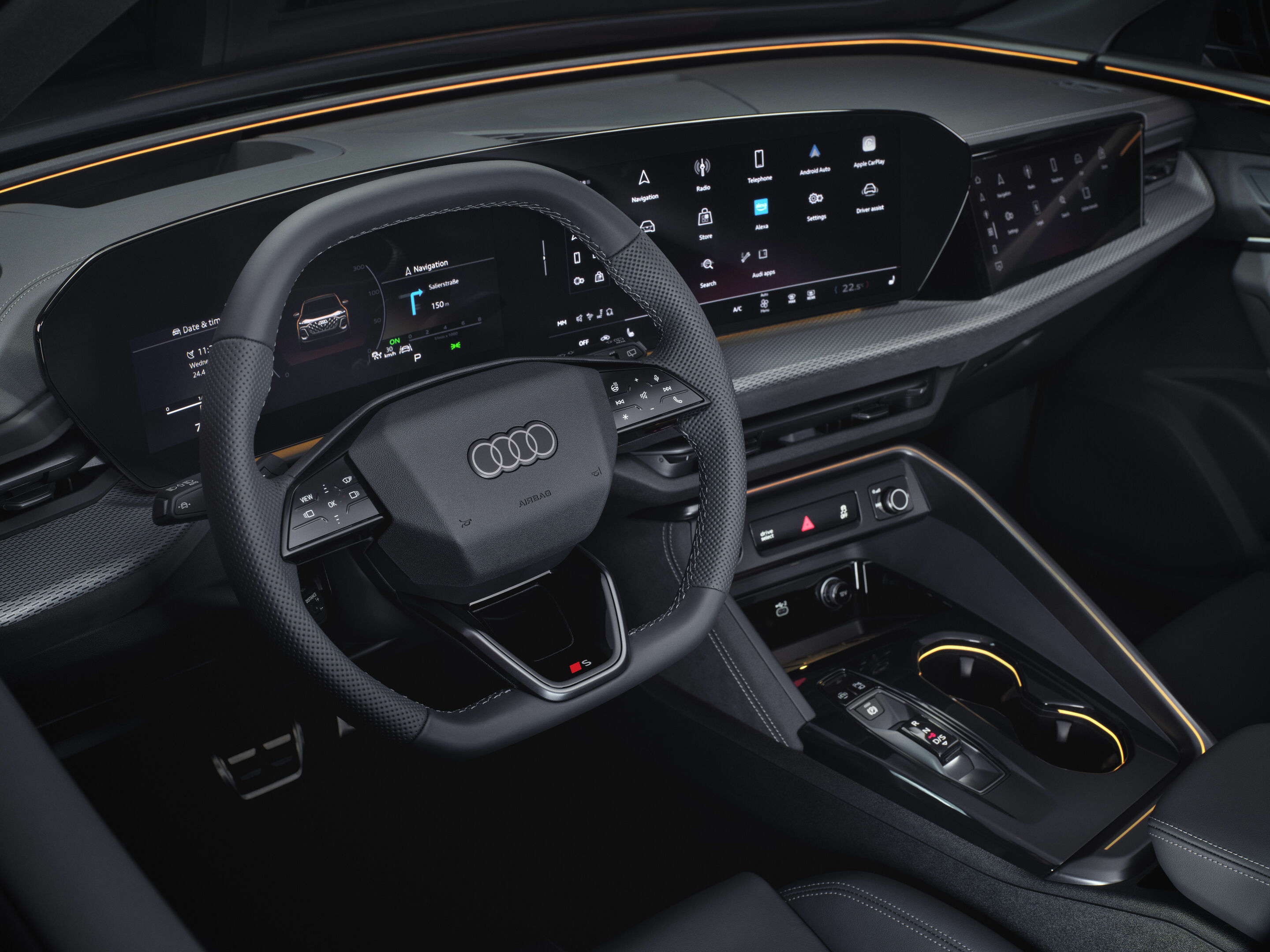
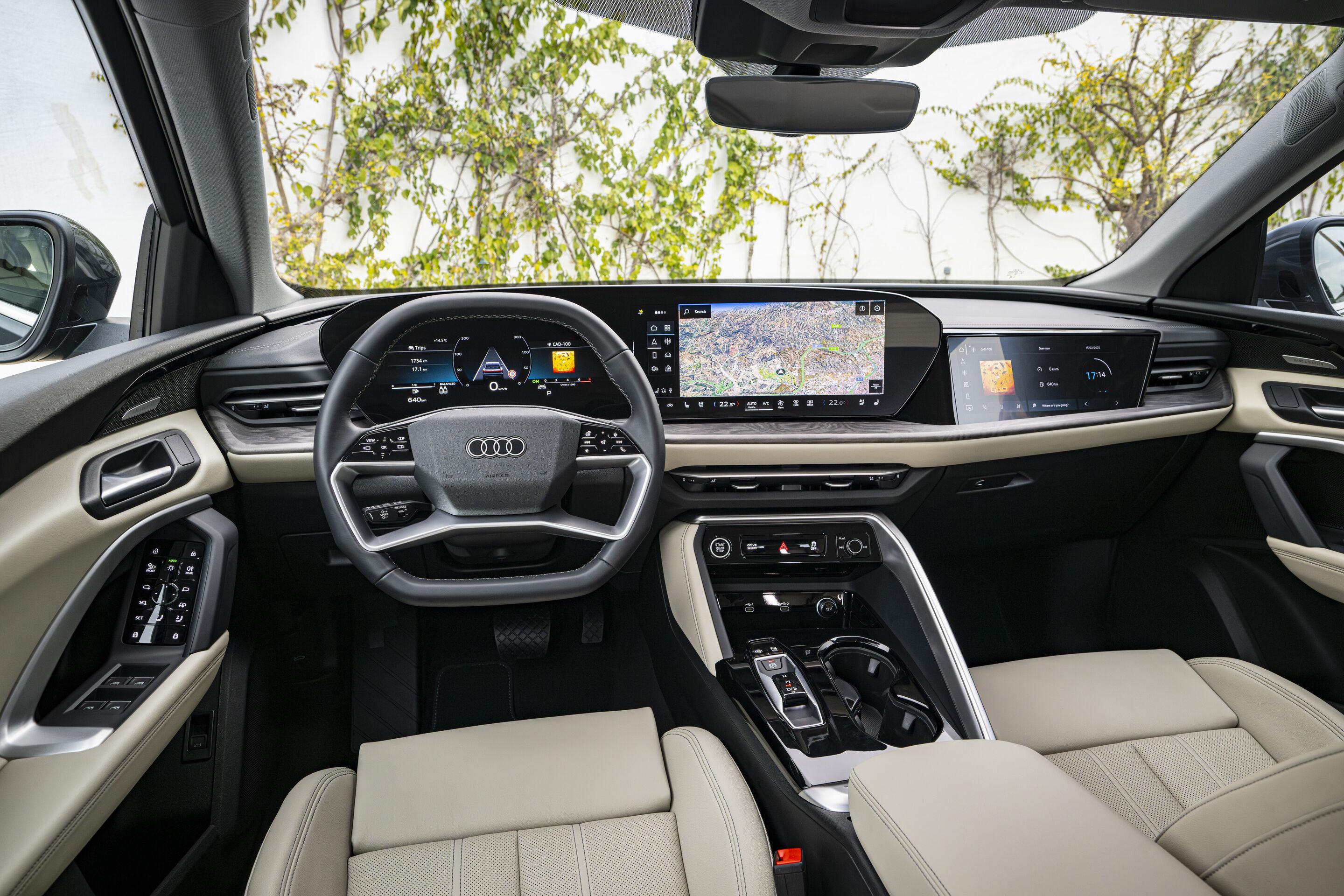
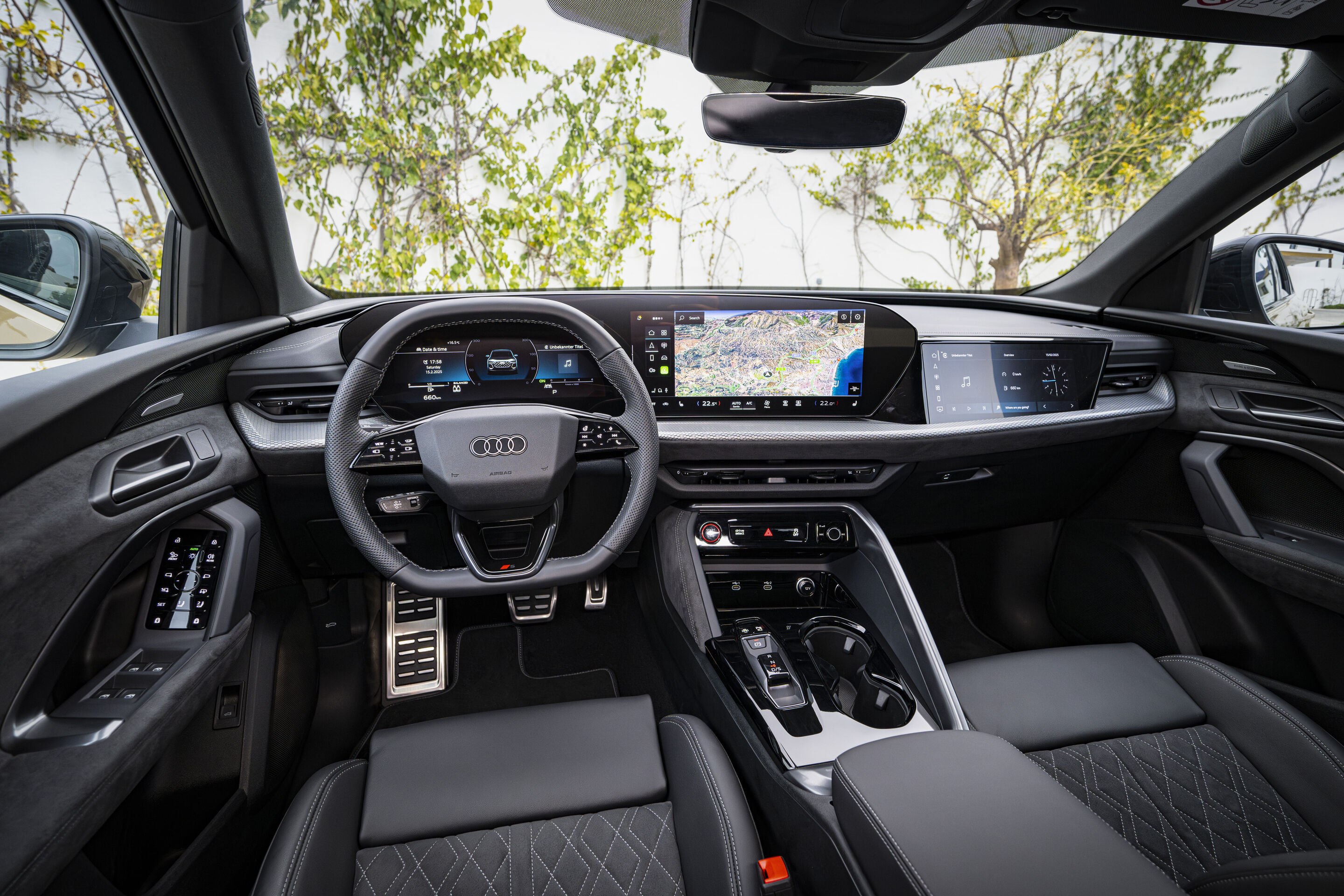
The cabin adopts Audi’s newer 'Digital Stage' layout. A curved OLED panoramic unit combines an 11.9-inch Audi virtual cockpit with a 14.5-inch MMI touch display, placing most driving information and vehicle functions on one visually continuous surface.
An optional 10.9-inch front-passenger display adds a third screen. Audi uses Active Privacy Mode so the passenger can view entertainment or other content without creating the same level of distraction for the driver.
The dashboard itself is intentionally more horizontal than before. Audi describes the upper cabin as a soft-wrap environment, using larger material surfaces to balance the amount of screen technology. Depending on trim, recycled-material textiles such as Kaskade and Dinamica are used alongside more conventional premium finishes.
Ambient lighting is also more functional. The available dynamic interaction light spans the dashboard and can support visual information for selected vehicle functions in addition to providing welcome and ambience effects.
Space, rear-seat flexibility and luggage
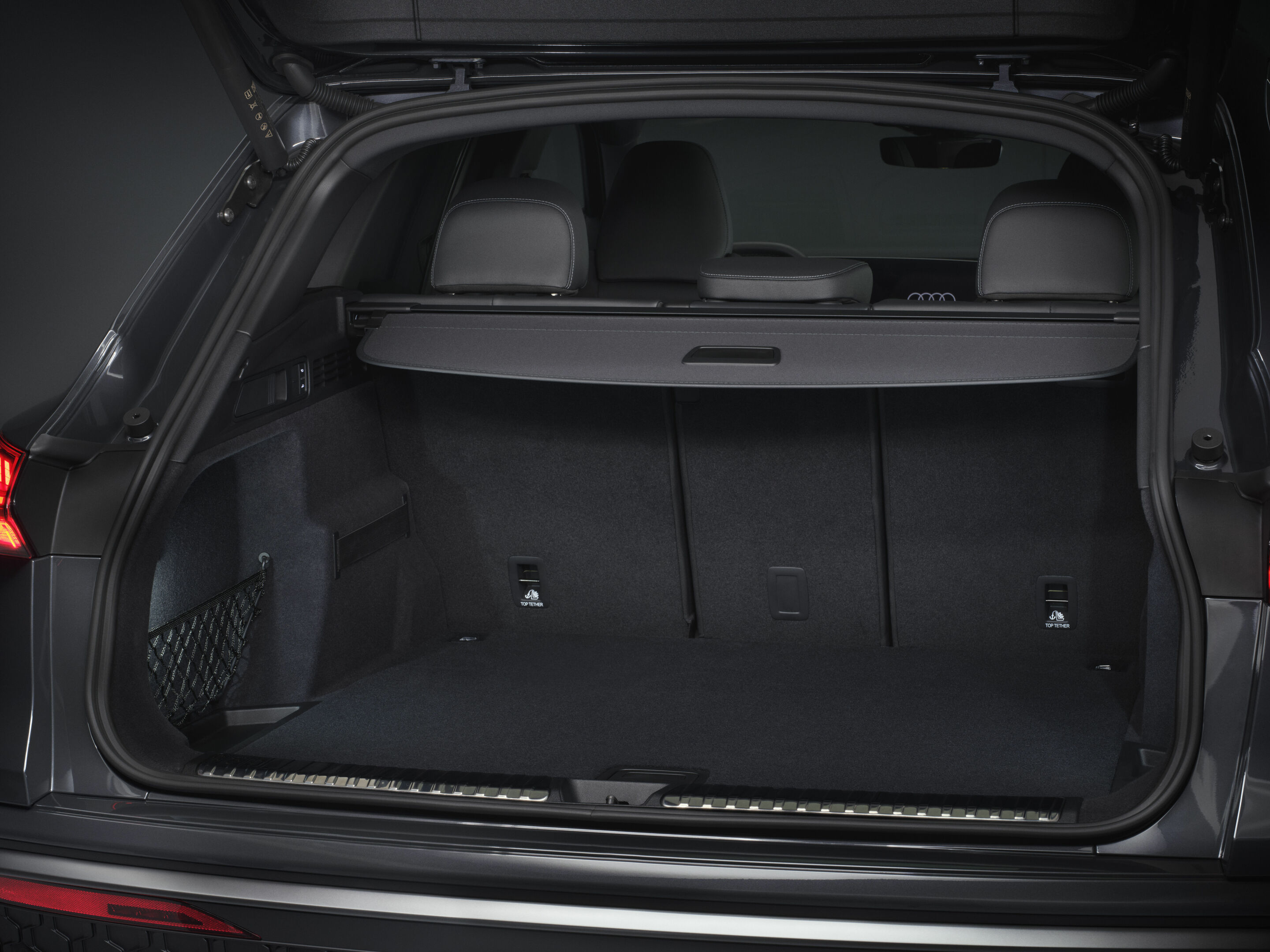
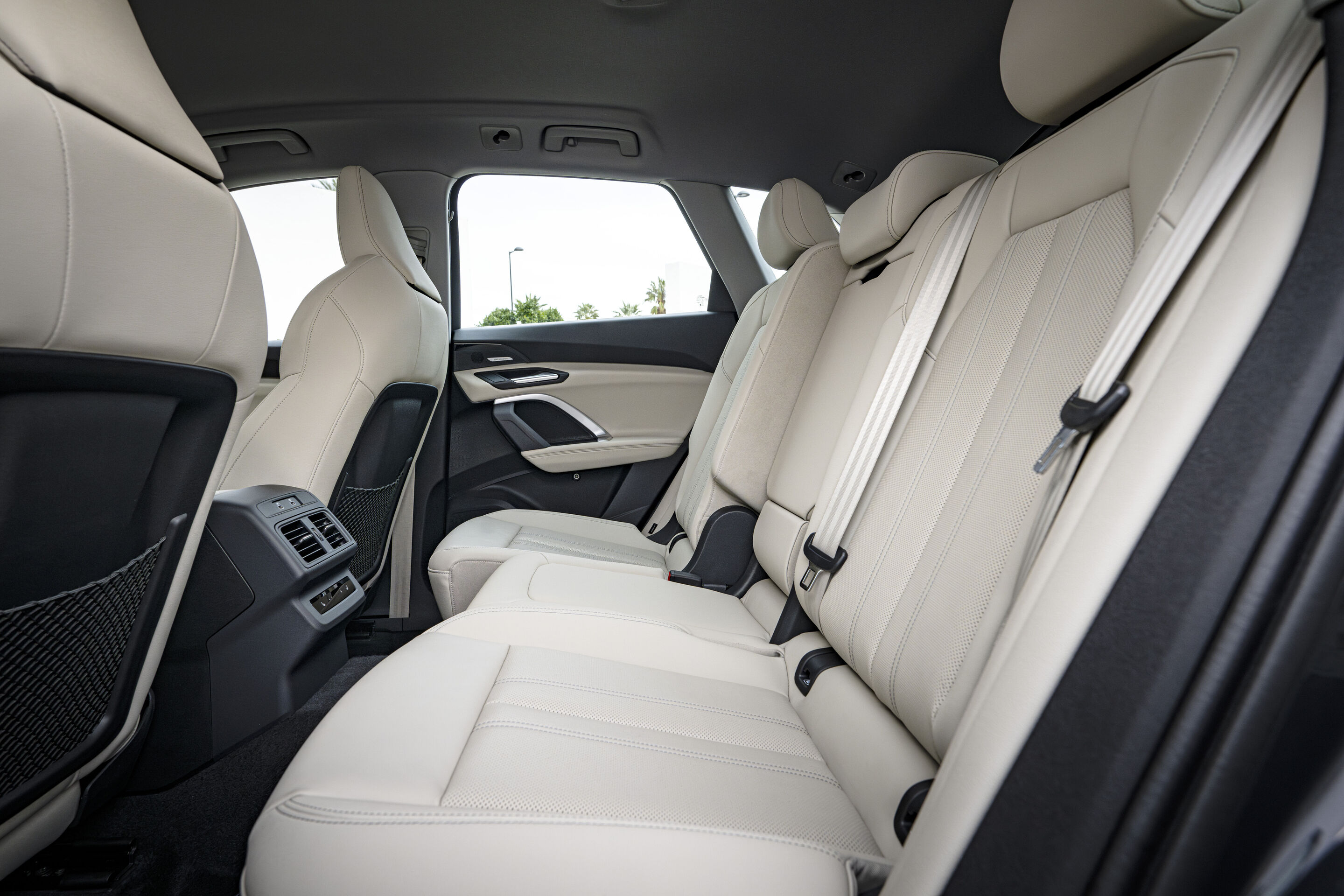
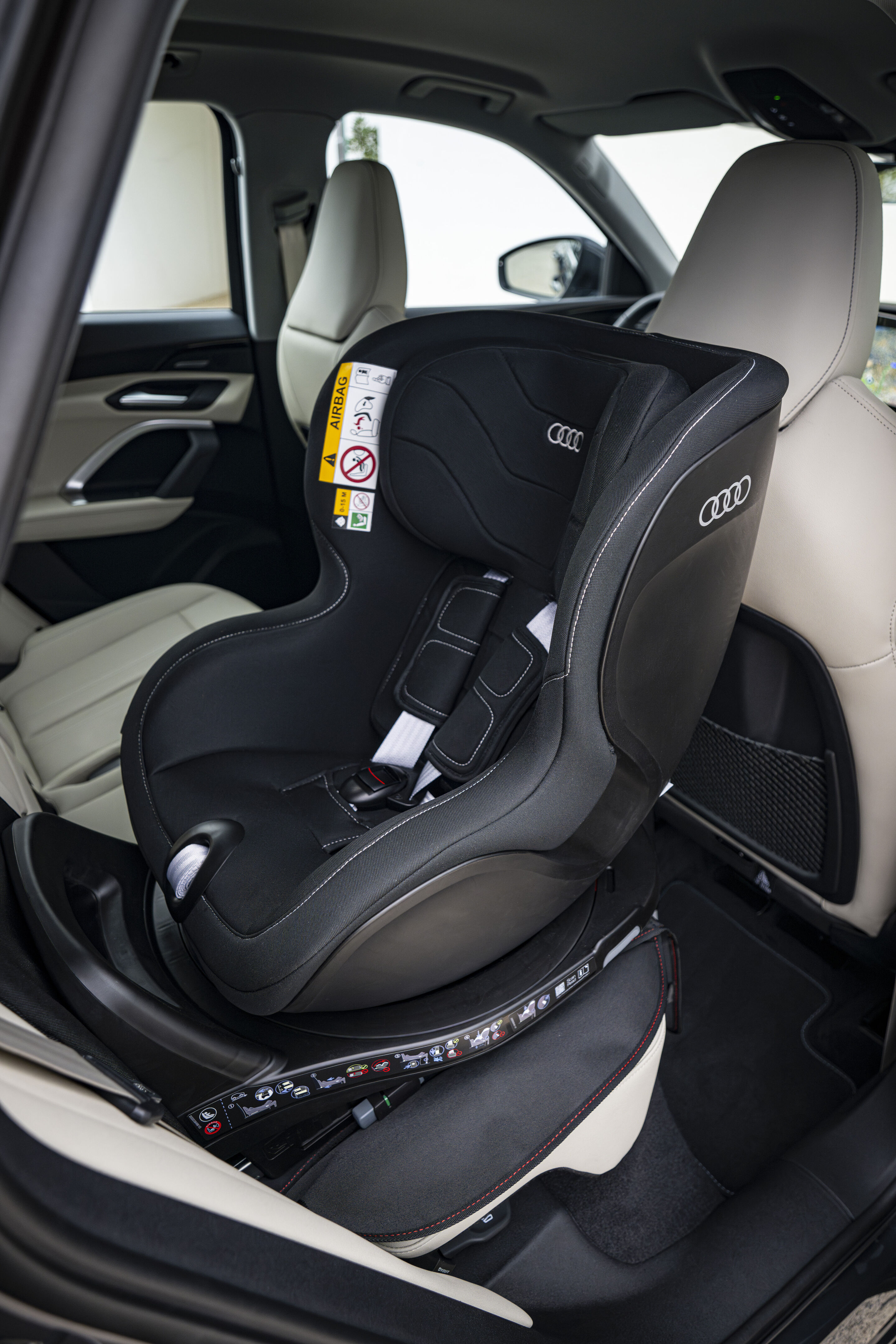
The Q5 SUV is designed to remain a practical family car rather than a style-first crossover. The rear bench can be moved longitudinally and its backrest angle can be adjusted, allowing owners to trade rear-passenger space against luggage capacity when needed.
With the rear seats folded, Audi quotes transport volume of up to 1,473 litres depending on version. A particularly useful detail is the dedicated storage location for the luggage-compartment cover beneath the boot floor, so the cover does not have to be left at home when the full cargo area is required.
Cabin storage has also been expanded. The centre-armrest compartment is larger than before, while a cooled 15-watt inductive phone charger sits in the front console. There are two USB-C ports in front and two in the rear; optional front ports can provide up to 60 watts and rear ports up to 100 watts, enough for larger devices such as laptops.
MHEV plus: how the 48-volt system works
At the launch of the third-generation Q5, Audi equipped the main combustion-engine range with MHEV plus technology. This is more substantial than a simple belt-starter mild-hybrid system because a powertrain generator can contribute up to 18 kW and as much as 230 Nm for short periods.
The 48-volt system uses a 1.7 kWh lithium-iron-phosphate battery. Under deceleration, the powertrain generator can recuperate up to 25 kW. It also allows limited electrically assisted manoeuvring and supports smoother engine-off coasting situations.
Because the climate-control compressor is electrically driven, the cabin can continue to be cooled even when the combustion engine is temporarily switched off. That makes the hybrid system useful for comfort as well as fuel consumption.
Engines and transmissions
The European launch range centred on two 150 kW four-cylinder engines. The 2.0 TFSI produces 150 kW (204 hp) and 340 Nm, with front-wheel drive as standard and quattro available. The 2.0 TDI also produces 150 kW (204 hp), increases torque to 400 Nm and is paired with quattro.
All launch engines use a seven-speed S tronic dual-clutch transmission. Audi later expanded the Q5 range with a 3.0-litre V6 TDI producing 220 kW (299 hp) and 580 Nm, combining MHEV plus with an electrically powered compressor to improve response at low engine speeds.
| Engine | Power | Torque | Drive | Transmission |
|---|---|---|---|---|
| 2.0 TFSI | 150 kW / 204 hp | 340 Nm | FWD; quattro available | 7-speed S tronic |
| 2.0 TDI | 150 kW / 204 hp | 400 Nm | quattro | 7-speed S tronic |
| 3.0 V6 TDI | 220 kW / 299 hp | 580 Nm | quattro | Automatic transmission |
Note: The Q5 SUV e-hybrid and SQ5 SUV are separate derivatives and should have their own New Auto Drive pages and photo albums rather than being mixed into this Q5 SUV gallery.
Chassis, steering and ride
Progressive steering is standard on the current Q5. The chassis range is designed to cover everything from everyday comfort to more controlled high-speed driving, with adaptive damper and air-suspension options available depending on version and market.
The adaptive air suspension can also alter vehicle height. That is useful beyond handling: Audi demonstrates lowering the car to make loading accessories and cargo easier, which is a good example of the Q5’s practical rather than purely sporting chassis brief.
Infotainment, apps and audio
The Q5 uses Android Automotive OS as the basis of its infotainment architecture. Apps can be installed through the integrated application store without depending entirely on a connected smartphone, and core software can be updated over the air.
Audi’s voice assistant is integrated into the digital interface and can control a range of vehicle functions. A configurable head-up display is optional, and Audi allows selected infotainment and communication functions to be operated through steering-wheel controls while information remains in the driver’s line of sight.
For audio, the available Bang & Olufsen Premium Sound System uses 16 speakers and a 685-watt amplifier. Vehicle Noise Compensation adjusts playback to changing cabin noise, while processing developed with Fraunhofer is used to create a broader three-dimensional sound field.
Safety and driver assistance
Standard assistance at launch includes rear parking sensors with distance display, cruise control with speed limiter, lane-departure warning, an efficiency assistant and attention/drowsiness monitoring.
Optional systems go further. Adaptive Driving Assistant plus can support speed, distance and lane guidance using vehicle sensors together with high-resolution map and cloud-based data. Active Front Assist combines emergency braking, evasive assistance, turn assistance and front cross-traffic support, while Park Assist plus and Rear Turn Assist expand low-speed assistance.
Q5 SUV versus the other Q5 variants
The regular Q5 SUV should be treated as its own model page. The Q5 Sportback uses a different roofline and luggage package; the Q5 SUV e-hybrid adds a plug-in-hybrid battery and its own official photography; and the SQ5 SUV is the performance derivative with different engine, chassis and design details.
Keeping those derivatives separate prevents specifications and photos from being mixed together and makes each article more useful for readers comparing a specific version.
Overall
The third-generation Audi Q5 SUV remains a conventional premium midsize SUV in shape and purpose, but underneath it introduces a major technology reset. PPC architecture, the stronger MHEV plus system, a fully redesigned digital cabin and newer lighting and assistance technology bring the model much closer to Audi’s latest-generation products.
Its most important quality is still versatility. The Q5 is large enough for family and long-distance use, its adjustable rear seating gives the luggage area genuine flexibility, and the engine range still gives buyers diesel and petrol choices in markets where those powertrains remain important.
Source & photos: AUDI AG. Official Q5 SUV album and Audi MediaCenter material.