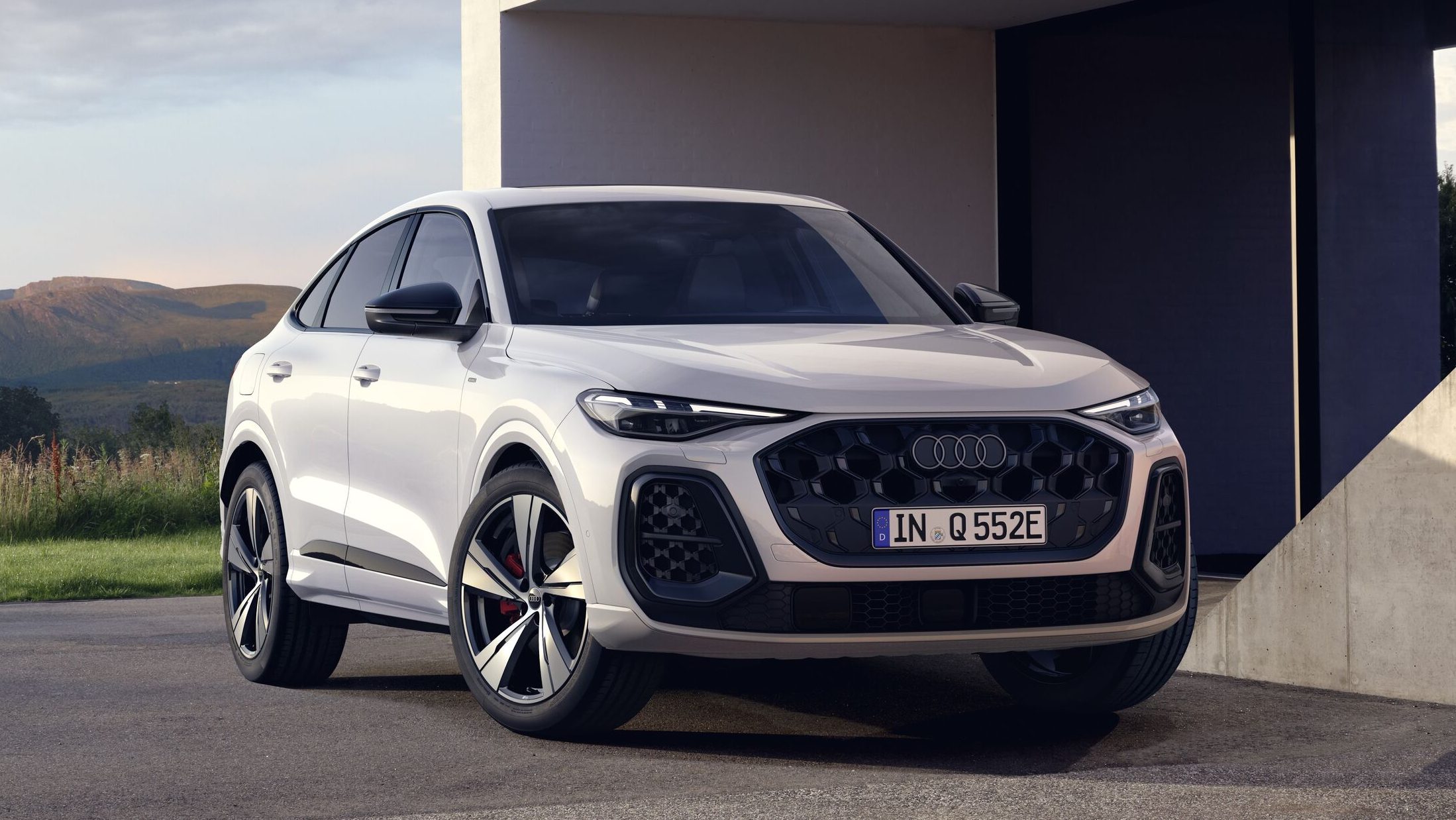
Audi Q5 Sportback e-hybrid — The Audi Q5 Sportback e-hybrid combines the coupe-like roofline of the latest Q5 Sportback with the same new-generation plug-in-hybrid system used by the Q5 SUV e-hybrid. It is aimed at buyers who want meaningful electric commuting capability without giving up the long-distance flexibility of a petrol engine.
This New Auto Drive page focuses only on the current production derivative shown in the official Audi album. Older generations, illustrations and mixed-family assets are deliberately kept out so the photos and technical information remain specific to this version.
Key point
The Sportback e-hybrid offers 220 or 270 kW, up to 100 km of electric range and 11 kW AC charging, while keeping the more dramatic coupe-style silhouette of the Q5 Sportback.
Audi Q5 Sportback e-hybrid at a glance
| System power | 220 kW or 270 kW |
| Combustion engine | 2.0 TFSI, 185 kW |
| Electric motor | Up to 105 kW |
| System torque | 450 Nm / 500 Nm |
| Battery | 25.9 kWh gross / 20.7 kWh net |
| Electric range | Up to 100 km |
| AC charging | Up to 11 kW |
| 0–100% AC charging | About 2.5 hours |
| 0–100 km/h | 6.2 s / 5.1 s |
| Top speed | 250 km/h |
| Boot | 433 litres |
| Maximum cargo | Up to 1,300 litres |
Exterior design
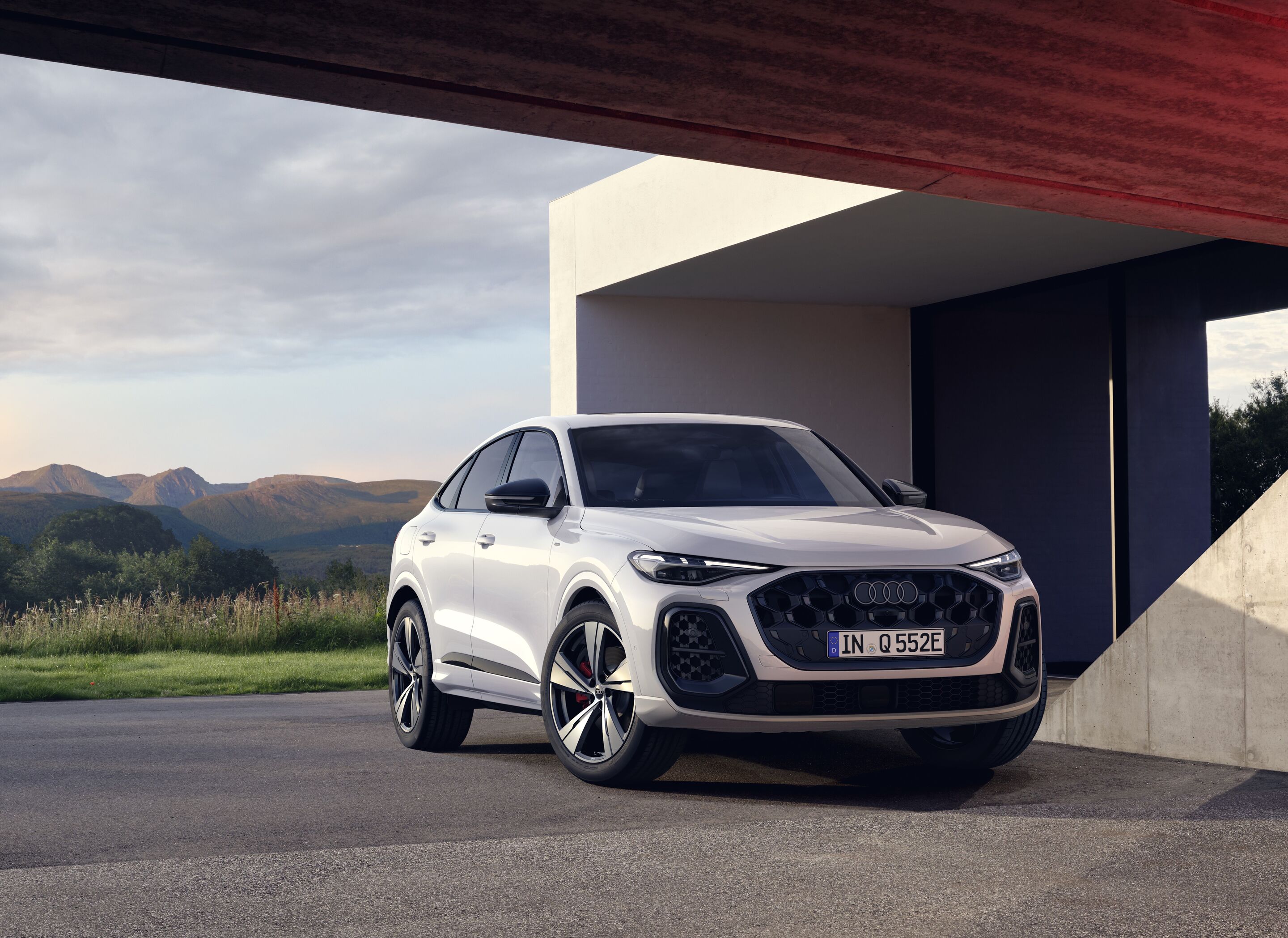
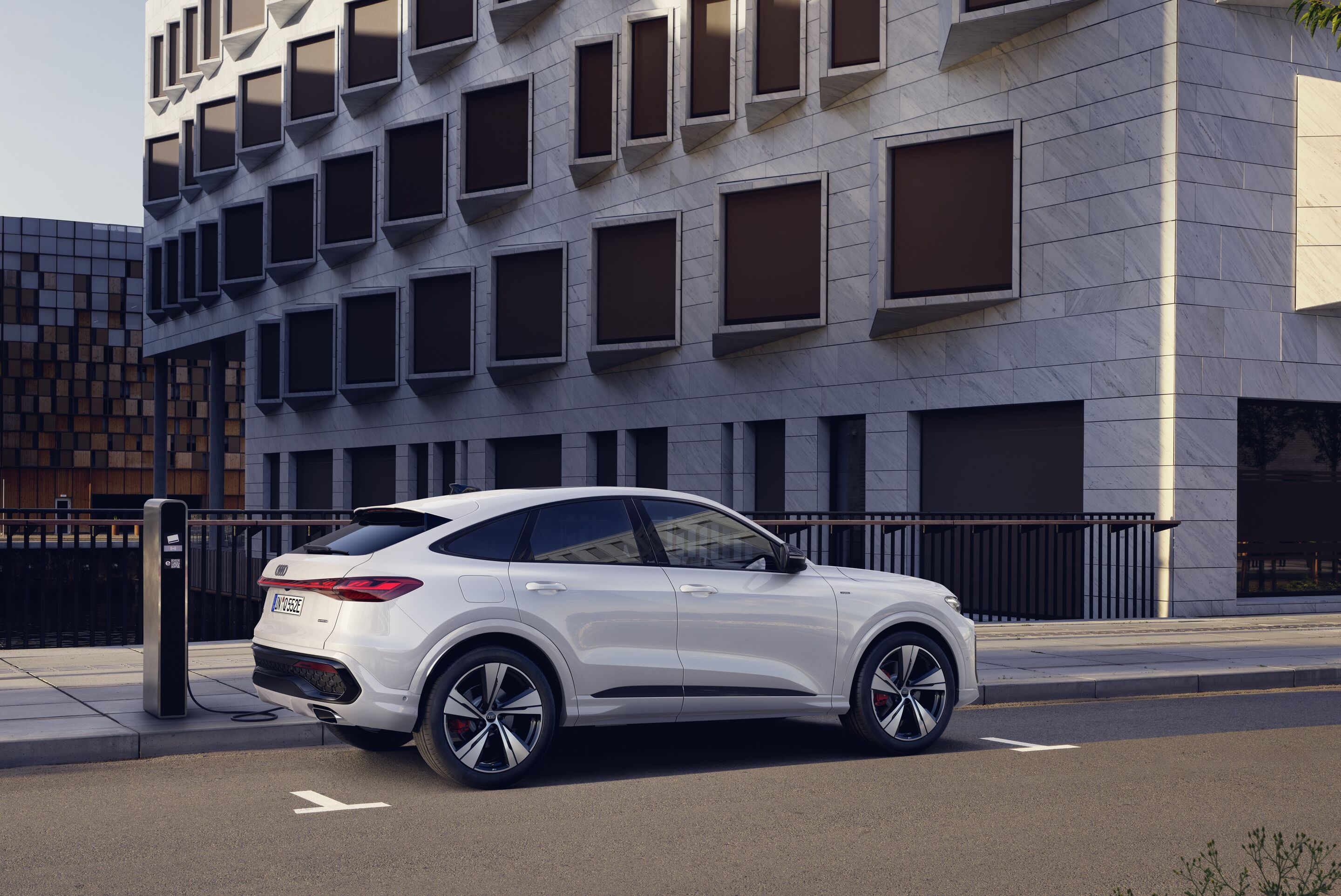
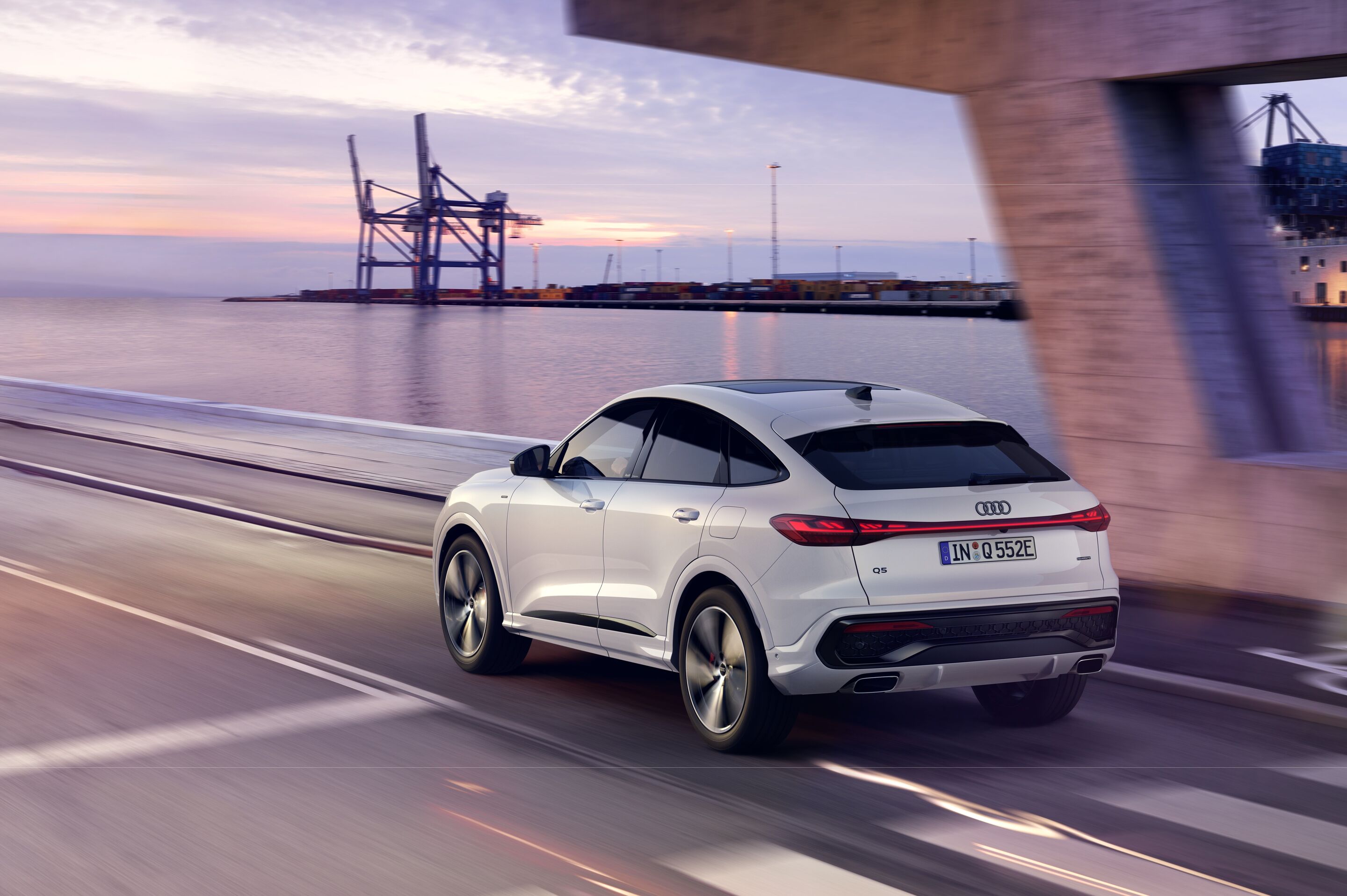
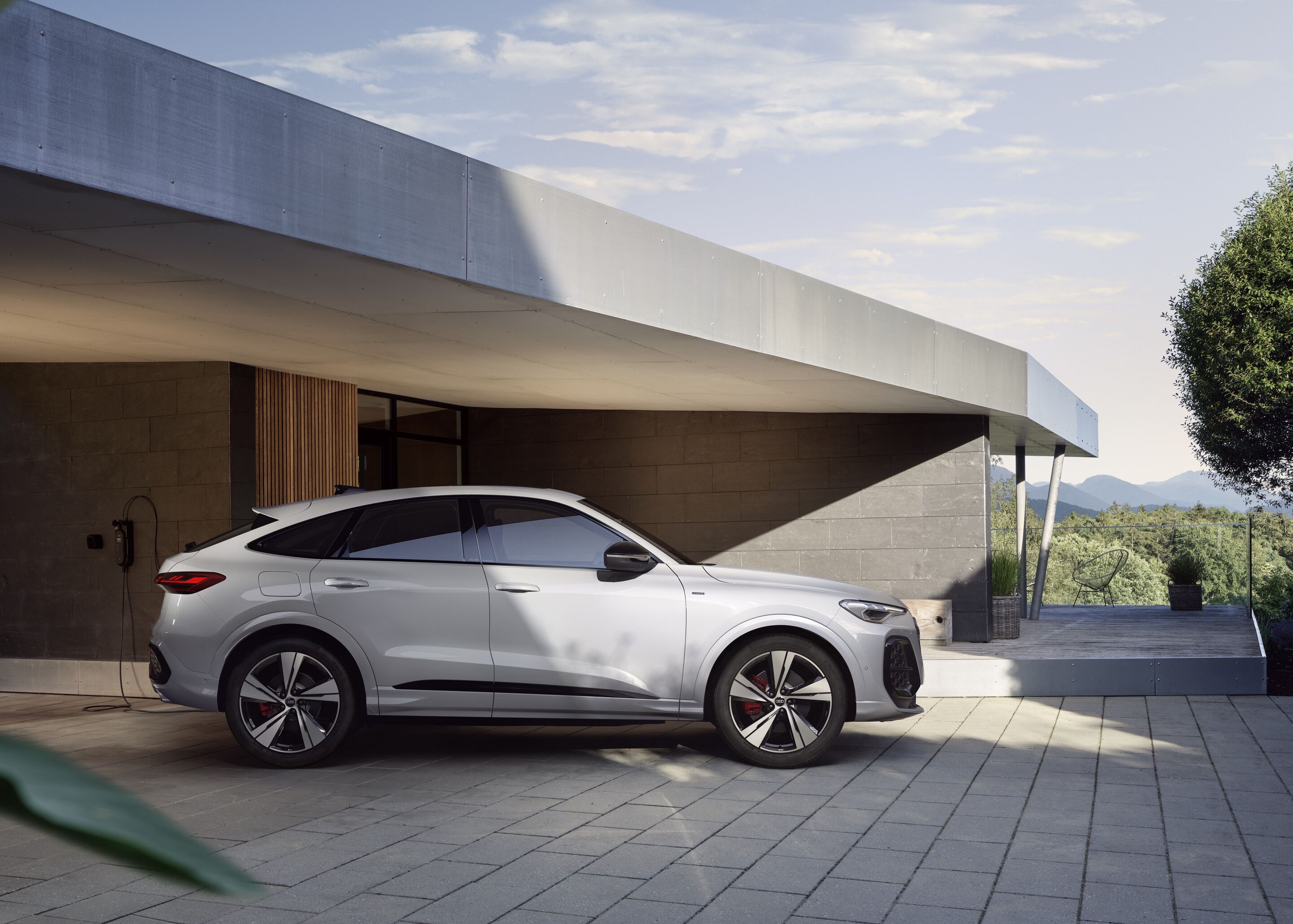
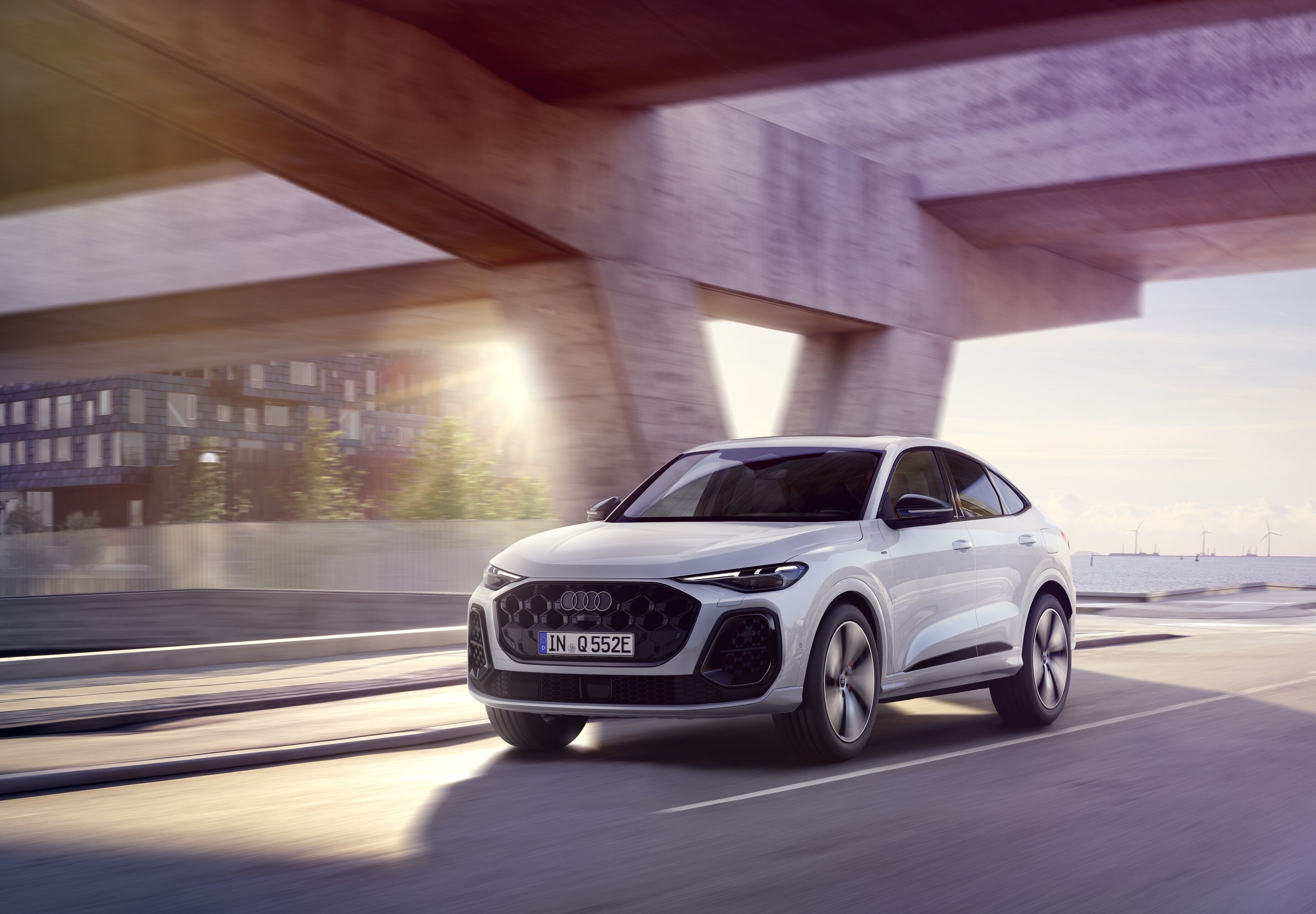
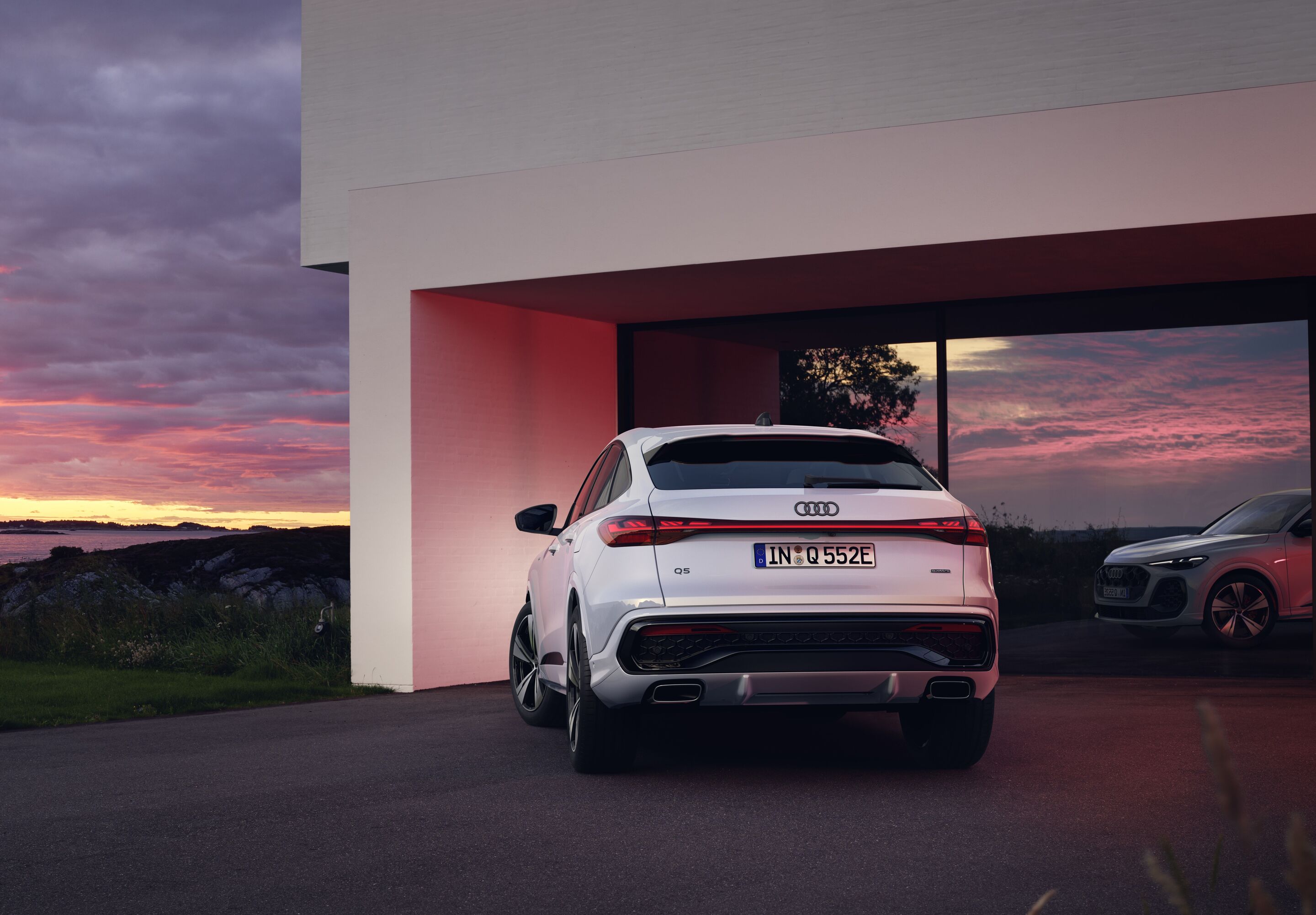
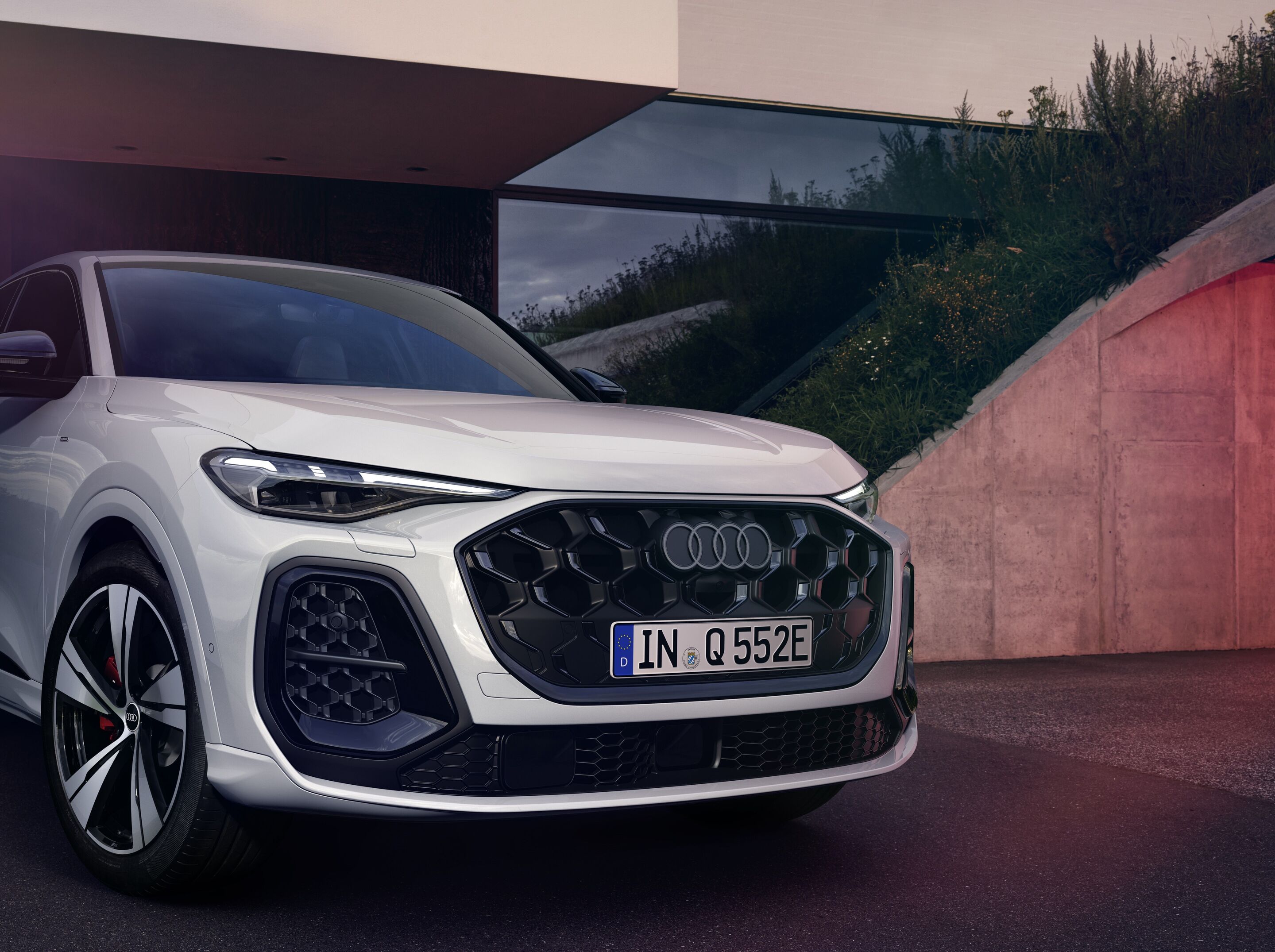
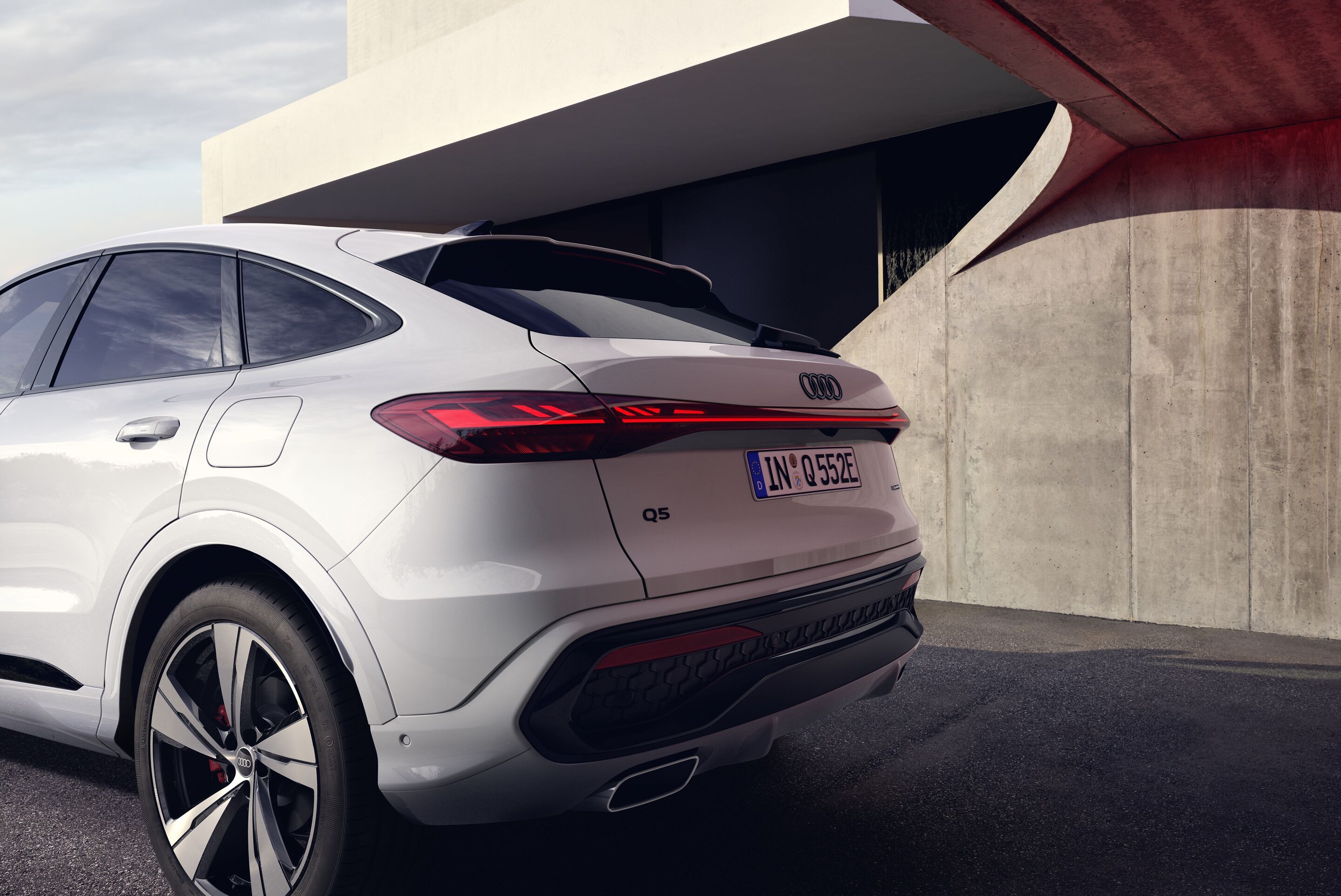
The Sportback’s roofline falls more steeply toward the rear than the Q5 SUV, creating a more coupe-like profile while keeping four doors and a useful rear cabin. The e-hybrid hardware is integrated into this shape without fundamentally changing the visual identity of the regular Sportback.
The exact wheel, trim, lighting and bumper treatment changes with equipment level. Keeping those variations within the correct derivative is important because the Q5 family now covers standard SUV, Sportback, plug-in-hybrid and S performance versions.
Additional exterior views
Interior and digital cockpit
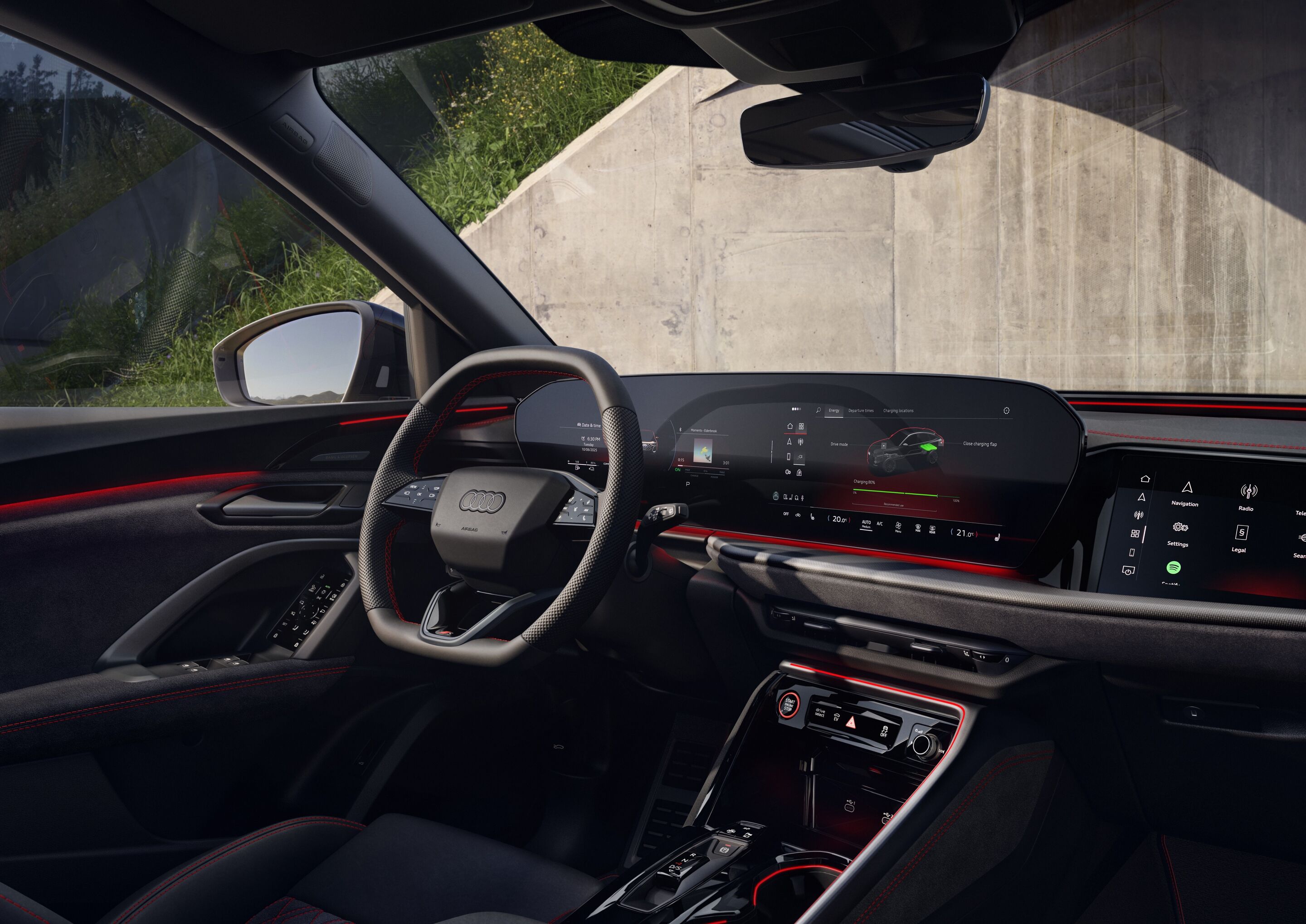
The current Q5 generation uses Audi’s newer Digital Stage concept. The driver faces a curved panoramic display architecture, while infotainment, navigation, connected services and vehicle settings are brought together in the latest MMI environment.
EV mode prioritises electric driving, while hybrid mode blends both power sources and can hold a chosen battery charge level for use later in the route. Recuperation can be varied with steering-wheel paddles, and navigation information can help the system recover energy automatically.
Materials, seat design and decorative trim vary by line and market. Higher specifications add more supportive seating, richer surface treatments, upgraded lighting and additional comfort equipment.
Powertrain and performance
The drivetrain combines a 185 kW 2.0 TFSI, a permanently excited synchronous electric motor and an electrified seven-speed S tronic. System outputs are 220 and 270 kW. The electric motor can deliver up to 105 kW, while total torque reaches 450 or 500 Nm depending on version.
Published consumption, electric range and performance values can vary with wheels, options, temperature, road conditions and market specification. The exact local configuration should therefore be checked when comparing versions.
Practicality and everyday use
The plug-in hardware reduces the luggage volume compared with the conventional Q5 Sportback, but the e-hybrid still offers 433 litres with the rear seats in place and up to 1,300 litres folded. The adjustable rear bench gives owners flexibility between rear-seat comfort and cargo volume.
Everyday usability also depends on rear-seat access, storage around the cabin, the shape of the luggage area and how easily the rear seats can be reconfigured. These details are especially important in a Q5 because the model is intended to combine premium positioning with genuine family use.
Driver assistance, connectivity and comfort
The latest Q5 architecture supports modern parking aids, lane and distance assistance, collision-mitigation functions and connected navigation. Equipment varies by trim, option package and market, so not every system is standard on every car.
USB-C charging, smartphone integration, connected services and optional premium audio are part of the wider digital package. On electrified versions, route and energy functions are integrated more closely with the drivetrain.
How this version fits into the Q5 family
Like the SUV e-hybrid, AC charging peaks at 11 kW and a full 0–100 percent charge takes around 2.5 hours on suitable infrastructure. The 270 kW version also receives a richer standard equipment package.
Separating each derivative also improves the usefulness of the photo archive: a reader looking at this page should not need to guess whether a photographed car is the SUV, Sportback, e-hybrid or SQ5.
Overall
The Audi Q5 Sportback e-hybrid is not simply another body style inside a single generic Q5 page. Its combination of body shape, drivetrain and equipment gives it a distinct role within the current family, which is why New Auto Drive treats it as an individual model page with its own specifications and official photography.
Source & photos: AUDI AG. Official Audi MediaCenter album.